





















Recent Viewer Purchases:
Adventure Travel In The Third World: Everything You Need To Know To Survive
in Remote and Hostile Destinations
How to Stay Alive in the Woods: A Complete Guide to Food, Shelter, and
Self-Preservation That Makes Starvation in the Wilderness Next to Impossible
How to Survive the End of the World as We Know It: Tactics, Techniques, and
Technologies for Uncertain Times
SAS Survival Handbook, Revised Edition: For Any Climate, in Any Situation
Special Forces Survival Guide: Wilderness Survival Skills from the World's
Most Elite Military Units
Found a good "General Survival Articles & Tips" link? Let Us Know!
Misc. Tips & Whatnot |
Stories & Lore | The Rules Of Survival |
Environment/Weather
General:
Making Pitch Sticks ~ By Evard H.
Gibby: (Bulletin of Primitive Technology, Fall 1993) Store a few of these
sticks in your possibles bag or pack for ready use in the field. To use the
pitch stick, in hafting for example, heat the end of the pitch stick over a
small flame and either let the melted pitch drip into the notch of the
handle or daub it in with the pitch stick. When the desired amount of pitch
lines the notch (reheat the pitch in notch over the flame if needed) insert
the blade and wrap with cordage or sinew. File recovered from now
defunct AboTech website and converted to Onsite PDF.
Easy Tick Removal ~ Spring will be here
soon and the ticks will soon be showing their heads. Here is a good way to
get them off you, your children, or your pets. Give it a try.
KNOTS: A knowledge of knots has saved many a life in storm and wreck, and if everyone knew how to tie a knot quickly and
securely there would be fewer casualties in hotel and similar fires where a false knot in the fire escape rope has
slipped at the critical moment and plunged the victim to the ground. Many an accident has occurred through a knot
or splice being improperly formed. Even in tying or roping a trunk, few people tie a knot that is secure and quickly
made and yet readily undone.
Outdoors Kinks, Tips and Tricks ~ 3-Hinge
Fire Rack; The Natural Pothook; Driving Stakes; Weaving A Temporary Minnow
Net; The Palouser; A Camp Knife; A Handy Can-Handle Kink; A Camp
Candlestick; Hot Biscuit To Order; A Tin Can Outfit; Hacksaw Fish Scaler And
Knife; A Twig Cup Handle; Rapid Fire Fish Cleaning; The Self-Pulled Winding
Knot; The Self-Pulled Winding Knot; The Loop Winding Pull; A Camp
Refrigerator; A Turtle Trap; Two Old Friends; Needles And Thread; Tin Can
Range Phone; The Alder Bait; Lighting Fire With Water; Macaroni For Bait; An
Excellent Perch Bait. Excepts from: Kinks; a Book of 250
Hints for Hunters, Anglers & Outers By HARRY N. KATZ 184 pgs 1917
PO 403 Canadian Bushcraft: A Pamphlet on Wilderness Survival in Canadian North - EO 22 Discuss survival psychology and strategy. EO 23 Predict a change in weather. EO 24 Judge a distance. EO 25 Construct an improvised shelter.
Axe And Saw Use: Our Greatest Axeman. Importance Of The Axe. What Kind Of Axe To Use. How To Swing An Axe. How To
Remove A Broken Axe Handle. How To Tighten The Handle In The Head. Accidents. The Brains Of An Axe
Etiquette Of The Axe. How To Sharpen An Axe. How To "Fall" A Tree. How To Swamp. How To Make A
Beetle Or Mall. How To Harden Green Wood. How To Make A Firewood Hod. How To Make A Chopping
Block. The Proper Way To Chop. How To Make Sawbucks For Logs. How To Use A Parbuckle. How To
Split A Log. How To Use A Sawpit
Wilderness & Urban Tips
Insect repellants, foraging, de-skunking, and more.
The
Three-Stick Roycroft Pack Frame by
Dick Baugh: How would you like a pack frame that is comfortable, strong, and can
be made from natural materials in less than 1/2 hour? We were introduced to the
Roycroft pack by Mors Kochansky at the Rabbitstick Rendezvous a few years ago.
What Knot to Use in a Primitive Situation
by Bill Scherer: It's been my observation that every practicing abo should have several knots memorized, ready to be used anytime. If you are making primitive cordage, then learn a few knots to go with it. Someone once asked me why one could not use the same knot in every situation. The answer is that different knots will fit different situations...
Making a Bow From a Sapling
Since this is a project that a lot of people are interested in periodically, I have pulled my thoughts together on this. A bow from a sapling can be as potent a weapon as you could hope for and will take big game, and can be made successfully with a minimum of tools.
Camp Hygiene Keeping an orderly and hygienic
campsite is critical to long-term survival in the field.
Axe Tips: Care & usage of
the axe in survival situations - culled from old newsgroup files.
Cordage:
Ropes & Net tips Culled from old newsgroup files.
Emergency
Lighting ESP Trench Candles Most of the alternatives require a fire or
flame, so use caution. More home fires are caused by improper usage of fires
used for light than for any other purpose. Especially use extra caution with
children and flame. Teach them the proper safety procedures to follow under
emergency conditions. Allow them to practice these skills under proper adult
supervision now, rather than waiting until an emergency strikes.
15 tips to Deer Hunting
Want to improve your odds in the whitetail woods? Give these tag-filling tips a try. By J Wayne Fears: To a whitetail hunter, "success" can be defined in many ways, but if your definition involves taking your share of large-racked bucks, you need more than luck to achieve it...
"DL"
Tips Paul (Survival Primer) met a man in early 2005 who
"lived off the land", without power or running water, with his family,
in remote Misery Bay, Michigan, until he was eighteen. Hunting,
homesteading, knife sharpening, tips. More will be added over time.
Original to this web site. (" DL" is a "made up" set
of initials, having no bearing on any real person's name or initials.)
Survival Forever, Vol.
5, From Sleeping To Spiritual Survival - a guide to natural survival if lost in the wilderness. HERE IS THE ENTIRE VOLUME FIVE ON SURVIVAL IF YOU EVER GET LOST IN THE WILDERNESS. Please copy it in part or in full for FREE; but please do not misrepresent it nor alter it nor sell it for monetary gain as it is copyrighted.
Survival Tips
A whole page of tips from visitors of Wilderness Way website.
[Link rescued 4/9/11 - now hosted onsite!]
The
Quaking Aspens by Paul J. Van Horn
In September and October, many people flock to the high country of Colorado and
other western states to view the beautiful colors of the changing leaves. The
chief attraction for this pilgrimage are the vast groves of quaking aspen trees,
whose oranges and brilliant yellows light up the mountains. In this case though,
beauty is far more than skin deep. Aspen trees offer much more than visual
appeal to the backcountry traveler. Food, medicine, and materials for a host of
different tools can be found in great abundance in these forests.
[Link rescued 4/9/11 - now hosted onsite!]
Survival
tips: Making vessels for liquids and cooking
- Methods to improvise or manufacture vessels. Leather, pottery and more.
Apply Your Outdoor Adventure to Everyday Life
Contributed By: Amanda
Kubie. Amanda Kubie runs a professional coaching business for people who
have completed outdoor adventures. She has instructed and course directed
Outward Bound trips for 10 years.
Trail
Wisdom: Sleep Warm Tips and techniques. Thinking
of turning your winter jaunt into an overnight? Could be a lot of fun, if you
know how to stay warm.
Dangerous
Myths about Outdoor Survival--And the Truth Behind Them.
by B. Tilton. Debunking some common myths.
Bull Whip Kelp
by Dino Labiste: The Bull whip kelp grows in large fields or beds far out from shore and far deeper than any tide lays bare. The beds are located in rocky areas in the subtidal zone and to a depth of several fathoms. Individual bull whip kelp are occasionally torn loose and tossed onto the northern California shoreline by the waves or after a storm.
The Primitive Sauna
by Bill Scherer: The sauna, in its most original form, is a small room with some water thrown on to hot rocks. It has existed in northern Europe long before recorded history. The nomads of what later became Scandinavia probably used a portable sauna similar to those seen among modern nomadic tribes of central Asia. They dug a pit in the ground and built a fire outside of the pit.
Knotting
Dictionary of Kännet Knots illustrated. Warning! None of these knots is
considered 'safe' for climbing! The main purpose of this page is scouting,
not climbing.
Knots
Use these links as a practice and refresher aid. They are not
intended to replace competent training on how to safely and correctly tie
knots. [Link updated 4/12/11]
Care
& Feeding of Cloth Tents. &
Fabrics
and treatments to use in tents. &
Pavilion
poles, stakes and ropes ~ These files are a collection of messages from the
folks who do historical re-enactments.
Environment/Weather
[See also: "Dealing
With Weather" page on SSRsi]
21 Nov 2010 ~ From Kate, a Viewer;
Last year a farm raised man announced there will be a lot of snow this year(funny he does snow removal!). I inquired and he said in the mountains of western Maryland where his brother lives, the hair is long on the horses legs(October). Sure enough, 2009 saw the 3 major snow storms in excess of 12 inches each. Seems worth storing
Well, Kate, 3 months down the time line and it looks like that fella knew what he was talking about. What a winter! MEG
How
to Forecast Weather by Nature by
Darryl Patton An intimate knowledge of his environment already served to
feed, clothe, and medicate primitive man. So, when it came time to explain and
predict the mysteries of nature, he instinctively turned to that source for an
answer.
[Link rescued 4/9/11 - now hosted onsite!]
Snow-Forecast.com
has daily snowfall and temperature forecasts for the worlds mountainous regions
for periods ranging from 6 hours to 72 hours
Wilderness
Survival - Clouds: Foretellers of the Weather Learn about the different
types of clouds and how you can use them to predict the weather. Includes
photos.
Everybody
talks about lighting and yes, there are things you can do about it
What was a beautiful sunny day with large white billowing clouds low on
the horizon has turned progressively darker. The clouds are now almost black,
and the temperature has dropped. You are now sure that you are in for a real
storm . . . but not just any storm: a thunderstorm. One with a spectacular light
show and driving rain. In fact you are about to come face to face with
nature’s largest and most regular display of electricity, lightning.
Be
Lightning Wise! Excellent tips on lightning safety from the US
Scouting Project. [Link updated 4/12/11]
National
Oceanic & Atmospheric Admin. National Warnings Area
- This page provides immediate access to all available warnings for the United States.
"REFRESHES" every 60 seconds to provide you the most current data.
Weather
Lore-Weather By Nature Author:
Renie
Burghardt For eons, man has depended upon close observations of nature
to forecast the weather. In the days when there were no scientific methods of
reading weather patterns, man relied on a keen eye for natural signs which
indicated change. Shepherds and sailors developed a keen sense of observation
and connected the changes in nature with patterns of weather. Farmers watched
cloud movements and the color of the sky to know if it was time to plant and
harvest. Hunters learned if it was a good time to hunt by watching animals and
insects. These observations were passed down through generations, and became
part of culture and education. They are called weather lore.
Nature's
Weather Signs Linda Florence The Leader, June/July 1986 Country people who pioneered in our small west coast town, my
grandparents were dependent on land and sea and alert to nature's weather signs;
a mackerel sky, a counterclockwise shift in the wind, the reactions of animals,
earth and their own bodies to increasing humidity and falling barometric
pressure. Not only cloud formations and sky colors, but numerous subtle signs
that perhaps even they might not readily identify helped them form their
predictions.
[Link rescued 4/9/11 - now hosted onsite!]
Winter
Weatherlore and Folklore Forecasts Folklore is
different from weatherlore, but both are interesting and entertaining, and both
have been around for thousands of years. Folklore are beliefs based on
fear and superstition. Weatherlore is based on observation of the
environment and the effects that changes in the weather have on insects,
animals, birds and people.
[Link rescued 4/9/11 - now hosted onsite!]
Weather
World Weather Folklore - More than
200 weather folklore sayings to help you forecast short-range and long-range
changes in temperature and humidity, plus how ro use insect songs to determine
how warn it is.
[Link rescued 4/9/11 - now hosted onsite!]
Various
tent styles in bad weather.
Back to Top
The Rules Of Survival:
Backwoods Surgery & Medicine: A
few suggestions on how to treat the commoner injuries and diseases that may
befall those who seek recreation in the remote wilds. The rules will
necessarily be brief and from the nature of things easily followed. The
woods loafer should learn them and be prepared whenever the occasion arises.
Works on first aid, written ostensibly for the guidance of the laymen, are
apt to presuppose a far greater supply of surgical necessities than the
hunter cares to burden himself with. It is one thing to apply surgical
measures, having at hand a well-filled emergency bag, and quite another to
render the same assistance with nothing to depend upon but your native
adaptability. My intention is to tell in the plainest and simplest manner
possible how to render intelligent assistance to an injured comrade, using
only the fewest appliances and those of the most primitive character.
Fire by Chemical Reaction
by Bob Gillis and Dino Labiste: Although this fire making technique is not primitive technology, it is worth mentioning in terms of survival skills. Fire can be produce by chemical reaction using potassium permanganate mixed with antifreeze from a car radiator or glycerin. Potassium permanganate used to be found in first aid kits and was utilized as a mild antiseptic.
How to Spend the Night Outdoors Without a Sleeping Bag or Tent By Christopher Nyerges. You can let a camper take all the gear they want, but I've learned that four items provide the strongest link to "civilization." Thus, the hiker who wants to be the most self-sufficient should learn how nature can provide these items: food, matches, toilet paper, and a sleeping bag. The availability of these four items provides a psychological link to our ordered, "regular" world we call civilization. Take away these four and you can start to develop genuine survival skills...
Vapor
Barriers for Winter Comfort [Author unknown] This guide is designed to
introduce the concept of vapor barriers. Are you tired of your sleeping bag
turning into a wet, soggy mess? Are you always cold in the outdoors? Do you have
cold feet? Have you ever thought that "waterproof-breathable" is not
all it is cracked up to be? Then read on!
Camping in cold weather
Cold weather camping as defined by BSA is “camping in weather where the average daily temperature is below 50 degrees Fahrenheit and conditions are cold, wet or windy.” The most important thing to remember about cold weather camping is to KEEP DRY. Moisture will reduce the insulating properties of almost everything...
See Also: Snow Camp Rules
ORGANIZING
THE SURVIVAL CAMP An old newsgroup article on layout of a campsite and
organizational command structures for group camps.
Field
Expedient Campsite Gear: Hints, tips
and instructions culled from some newsgroup long ago. Hints on making chairs,
tables, ladders and more.
Survival
Soap Making Two recipes
BE AWARE AND BE PREPARED - KNOW THE BASIC TOOLS FOR SURVIVAL By: Linda A. Potter (This article was featured in Survival Preparedness Journal Volume 5, 1997) The list is endless of "WHAT IF'S". The point is to BE PREPARED and take the emergency out of emergencies. A few simple tools and necessities can mean the matter of life or death.
BACKPACK SURVIVAL BY DUNCAN LONG There's a lot of confusion about what survival means. One of the most dangerous ideas--as far as I'm concerned--is that of "backpack survival." A "back-pack survivalist" is a survivalist that plans on leaving his home ahead of a disaster and taking to the woods with only what he can carry out with him. He plans to survive through a strategy that is a sort of cross between the Boy-Scout-in-the-woods and Robinson Crusoe...
2003
Edible Wild Plants, Angier-Trail Guide text document see also:
2003
Medicinal Plants | Backyard Aspirin
| Cattails Supermarket of the Swamp| Edible good article
| Medicinal Important Notes
A
Faith Based Survival Compendium [PDF] Christian survivalists
will enjoy this text. Non-Christians who can't get past the religious overtone
will only be denying themselves good information that may save their life. See
also: Preparedness Essentials (Second Draft) in Praise of Our Lord Jesus Christ and Written under His Inspiration and Tuteledge ~ a Compilation of My Existing Journal Entries about Survival Matters. I'm not sure who the author/compiler is, but it might be Paul at Survival
Primer.
Art
of Survival PDF Format This information is taken from "The Art of Survival Pamphlet" prepared by Papa Bear Whitmore. It is meant as a guide only and perhaps an inspiration to look further into the art of survival. It is designed to make you aware that something indeed could happen to you. Graveyards are full of people who said, “It could never happen to me.” The information was secured by actual survival trips into Colorado’s high country in winter weather and sub-freezing temperatures.
[Link rescued 4/9/11 - now hosted onsite!]
Survival
Notes, a book by George Riggs
[Link rescued 4/9/11 - now hosted onsite!]
Wapato:
Indian Potato by John Kallas Wapato (Sagittaria latifolia), one of the few Native American
names that we still use, is also known as arrowhead, arrowleaf, duck potato, and
Indian potato. It is not known as arrowroot. Sagittaria latifolia and Sagittaria
cuneata can be found in swamps all over North America. They both produce edible
tubers. In the northwest, both the plant and the tubers it produces are referred
to as wapato. This was originally a northwestern regional name, but has now
gained widespread use.
[Link rescued 4/9/11 - now hosted onsite!]
Poison
Ivy: Protecting Yourself Naturally by Randal Jones Usually, a person’s resistance to the plant will
diminish with each exposure. This is why some individuals, who for years have
never been affected by poison ivy, acquire a blistering rash. At any rate, the
best way to make sure that you do not get a case of poison ivy is to immunize
yourself. And the easiest way to immunize you is to ingest poison ivy.
MEG's NOTE: I've never heard of
this- but that doesn't make it true or untrue. PLEASE
DISCUSS THIS WITH A QUALIFIED DOCTOR BEFORE TRYING IT!!!!!
I'd also recommend a healthy dose of Benadryl be on hand
"just in case..."
[Link rescued 4/9/11 - now hosted onsite!]
Sassafras:
The Real One by Randal
Jones Sassafras' medicinal value was first introduced to the Europeans in the mid-1950's. Around this time, a naive group of French Huguenots attempted to colonize a very small section, of what is now, northeastern Florida. These Frenchmen failed miserably. They failed because they did not grow any food! They relied on the indigenous people for almost everything. Needless to say, these Frenchmen got to know the habits of their native saviors very well. And, there were two such habits that the French colonists thought were worthy of note. One was the smoking of tobacco and the other was the consumption of sassafras.
[Link rescued 4/9/11 - now hosted onsite!]
June
Bug Medicinal Insect by Brent Ladd When toasted in hot
ashes, the internal body parts and juices of the bug congeal into a nugget of
pure golden nutrition. After peeling off shriveled legs, wings, and wing case,
the remaining orb of nourishment can be eaten one at a time or by the handful.
[Link rescued 4/9/11 - now hosted onsite!]
Earth
Medicine: Talc by T. R.
Zimmermann Talc is a soft, hydrous compound composed of magnesium silicate, also known as soapstone, steatite, or grease rock. The mineral is widespread, often occurring in limestone formations, eroded clays, and in metamorphosed schist and gneiss strata where it forms either thick veins or as a mass of stone.
[Link rescued 4/9/11 - now hosted onsite!]
Prickly
Pear Cactus by Christopher Nyerges Imagine a plant which can provide you with several year-round foods, as well as a sweetener, an ice cream flavoring, a red dye, a hair conditioner, flour, and still be a drought tolerant burglar fence. This versatile plant is the prickly pear cactus, providing food, medicine, dye, and landscaping. It is not isolated to remote Arizona deserts, but is found throughout the United States.
[Link rescued 4/9/11 - now hosted onsite!]
Finding
Direction by Christine Matsko Various Field Expedient methods
[Link rescued 4/9/11 - now hosted onsite!]
Surviving Our double Standards
- I think that we should at least question ourselves about our double standards
regarding life and death.
The
Attitude of Survival A wilderness emergency could possibly happen to
anyone, anywhere. When confronted with an unexpected survival situation man has
the potential to overcome many challenges, beat incredible odds, and come out a
survivor. But just what is survival anyway? Survival is the art of surviving
beyond any event. To survive means to remain alive; to live. Survival is taking
any given circumstance, accepting it, and trying to improve it, while sustaining
your life until you can get out of the situation. And
most importantly, survival is a state of mind.
Knots
on the Web The most comprehensive list of knot and
rope links I've found.
Knotting
Dictionary of Kännet Knots illustrated. Warning! None of these knots is
considered 'safe' for climbing! The main purpose of this page is scouting,
not climbing.
Knot
Enough Knots? Then try this page for an endless assortment! Good
rope links, too.
Dehydration,
Written by David R. Reed. Kind of short, but good enough info.
Survival,
Escape, Resistance, Evasion by Dave Reed. Good read. (<G>)
Survival
– the Last Laugh! Well written, easy to read and covering a wide
scope of topics with a bit of humor thrown in. Excellent resource & highly
educational tool from a man who practices what he preaches.
The
Best of "Survival Talk": Capt. Dave’s collection of
perennial favorites: Barter Items, Survival Guns, and Vehicle Survival Kits.
"Beyond
The Basics" is an article from Capt. Dave's Survival Guide
containing the "Seven Steps for Survival Success" and a decent
treatise on survival awareness. Good
Stories & Lore:
Rain and Survival, a Difficult
Task: © 2004 Gary L. Benton: The lightning streaked out with long white angry fingers as it reached out in the dark early evening sky. A loud crash of thunder sounded in the forest a few seconds after the lightening flashed. The rain was falling harder now as the man looked desperately for some type of shelter. He was lost, and had been that way since the night before...
Thirty Years in the Jungle!
By Christopher Nyerges © 2003: On January 24, 1972, two residents of the village of Talofofo in the southern part of Guam were out hunting along the Talofofo River when they heard a sound in the tall reeds. They thought it was an animal or maybe a child in the bushes, but out came a very old and wild appearing Japanese man carrying a shrimp trap. The hunters were started at first, and after a few confused words, they subdued 56-year-old Shoichi Yokoi and took him back to their corrugated metal home in the jungle, about an hour's walk away.
Winter
Count '04 Ten Years in the Dirt by
Dude McLean and Alan Halcon "Winter Count" of old was when various Indian tribes gathered each winter to see who had been born, who died, who got married, to socialize, to work on tools for survival, and to await the Spring.
[Link rescued 4/9/11 - now hosted onsite!]
Realities
of Going Primitive by Brent Ladd [Part
2] So, you have been
considering a change of pace? Want to leave the rat race behind? Possibly even
bypassing the cabin on the hill with sheep, chickens, and an organic garden, and
diving head long into that wild lake of your dreams called Primitive Lifestyle?
Great! I welcome the company. You see, I took the plunge two years ago, and I am
still swimming with my head above water, though just barely at times...
[Link rescued 4/9/11 - now hosted onsite!]
The
Rendezvous Era by Oracle It is a bright spring morning in the year 1807. Manual Lisa and his brigade of 60 hired trappers are deep in the heart of northwest beaver country. On Lisa's order, they turn their keel boats toward shore. Lisa and John Colter jump from their keel boat, and wade a short distance to the rocky bank; they are standing at the junction of the Bighorn and Yellowstone Rivers. This landing of Lisa and his hired men ended a 170-year history of traditional beaver trade with the Indians.
[Link rescued 4/9/11 - now hosted onsite!]
True
Life Survival Stories Lessons Learned
The
Guns at the End of the World VERY
interesting article, by David Rothenberg, about the extremes of survivalist
theory and survivalism. This article may make you feel a bit uncomfortable, but
if it does, you’d better re-evaluate your own philosophies. It IS possible to
go too far… don’t lose sight of what you are preparing for, but in the
process, don’t lose sight of life, itself.
The
Best of "Survival Talk":
Capt. Dave’s collection of perennial favorites: Barter Items, Survival Guns,
and Vehicle Survival Kits.
"The
Gaseous Winner" :
Karen Bohm-Hood's journal of a week long survival experience in the wilds. Very
fun read with lots of good info & some pix as well. Check it out! [Link updated 4/12/11]
The
True Survival Story of A.H. Braun -
This is the story based on documents of First Lieut. A.H. Braun during WWII.
Survival
tales: the case of the Uruguayan crash in the Andes - A description of
the accident of the FAU F-27 in the San Juan Andes, in 1973.
Survival
tales: mysterious deaths on Mount Aconcagua - An accident with murder
undertones, and a failed expedition.
Survival
tales: trapped at 4.000 meters - The real-life tale of a group of travelers
trapped in the high Andes.
Survival
tales: lost at 6.000 meters - The survival story of Rev. Piers Grant
Ferris on Mount Aconcagua.
Survival
tales: murder at Wulaia - The tale of the sole survivor of the H.M.S.
Allen Gardiner.
Survival
tales: blizzard in the Patagonian Andes- A real-life tale of survivors
in Patagonia.
Survival
tales: accident in Tierra del Fuego - A description of a car accident at
the end of the world.
Survival
tales: mysterious lights in the Andes - The tale of some disappeared in
a Patagonian mountain.
Survival
Stories A collection of stories from
viewers of the Alpha Group website.
Misc. Tips & Whatnot:
The
Preparedness Nuggets Pages A HUGE collection of
possibly helpful and generally interesting "tips" on 1001 different
preparedness topics, arranged in no particular order at all. Nothing much
in-depth, but definitely worth a visit. Bring a lunch!
The
Online Guide to Safe Scouting. An excellent reference covering all
manner of topics including Adult Leadership, Aquatics, Camping, Drug, Alcohol
& Tobacco abuse, Emergencies, 1st Aid, Firearms, Sports &
Outdoor Activities and more.
Download the print friendly version. This is the full .pdf version. Please
use the online version for the most up to date information. This was published
03/04/2011.
Traveling
Lite, but Well, on the Trail - The why and the what, all in a pan.
OA
Guide to General Emergency Procedures Pretty good
article on emergency decision making processes.
"FM
21-76: Survival": This is the big one, folks
- 40 megs of vital survival info compiled to keep our troops alive in all
terrains and biomes. Develop a survival pattern that lets you beat the enemies
of survival. This survival pattern must include food, water, shelter, fire,
first aid, and signals placed in order of importance. For example, in a cold
environment, you would need a fire to get warm; a shelter to
protect you from the cold, wind, and rain or snow; traps or snares to get food;
a means to signal friendly aircraft; and first aid to maintain
health. If injured, first aid has top priority no matter what climate you
are in. Change your survival pattern to meet your immediate physical needs as
the environment changes. As you read the rest of this manual, keep in mind the
keyword SURVIVAL and the need for a survival pattern
"FM
5-103: Survivability" The purpose of this
manual is to integrate survivability into the overall AirLand battle structure.
Survivability doctrine addresses when, where, and how fighting and protective
battlefield positions are prepared for individual soldiers, troop units,
vehicles, weapons, and equipment. This manual implements survivability tactics
for all branches of the combined arms team. Battlefield survival critically
depends on the quality of protection afforded by the positions. The full
spectrum of survivability encompasses planning and locating position sites,
designing adequate overhead cover, analyzing terrain conditions and construction
materials, selecting excavation methods, and countering the effects of direct
and indirect fire weapons. This manual is intended for engineer commanders,
noncommissioned officers, and staff officers who support and advise the combined
arms team, as well as combat arms commanders and staff officers who establish
priorities, allocate resources, and integrate combat engineer support.
Please Read The Website Disclaimer!
Copyright 1986-2012, The Survival & Self-Reliance Studies Institute (SSRsi), All
Rights Reserved
Site conceptualized, designed, created & maintained by MEG Raven
Snail Mail: SSRsi, PO Box 2572 Dillon, CO. 80435-2572
Page updated
4/12/11
Recommended Gear:
Leatherman New Wave Multi-Tool with Nylon Sheath
Ontario 18 in. Military Machete
... and ...
Machete Sheath 18"
Knife Sharpener
SOG S10B-K Tech Bowie, Black TiNi
Fiskars Pro
Chopping Axe
Axe & Hatchet Sharpener
... and ...
2-1/4" Replacement Stone
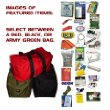
Total Wilderness Survival Kit

Emergency Thermal Blankets

Aquamira Frontier Emergency Water Filter System
Emergency Fire Starter
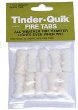
Tinder-Quik 10 pack
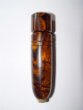
2nd Generation, Coco Bolo, Fire Piston
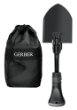
Gerber - Gorge Folding Shovel

Esbit Pocket Stove
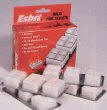
Esbit Solid Fuel Tablets
 Light
My Fire Titanium Spork
Light
My Fire Titanium Spork

CELOX First Aid Temporary Traumatic Wound Treatment 2g, 10-Pack
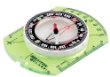
Brunton Classic Compass