





















IN0531 Combat In Built-Up Areas Army Sub-Course – Excerpts
b. Prepared Firing Position. A prepared firing position is one built or improved to allow the firer to engage a
particular area, avenue of approach, or enemy positions reducing his exposure to return fire. Examples of prepared
positions include the following:
•  Barricaded windows.
•  Fortified loopholes.
•  Sniper positions.
•  Antitank positions.
•  Machine gun positions.
(1) The natural firing port provided by windows can be improved by barricading the window, leaving a small hole for
the firer's use (Figure 2-35). The barricading may be accomplished with materials torn from the interior walls of the
building or any other available material. When barricading windows, avoid the following:
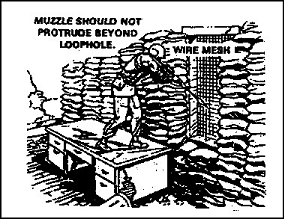
•  Barricading only the windows to be used as firing ports. The enemy will soon determine the
barricaded windows are firing positions.
•  Neat, square, or rectangular holes easily identified by the enemy. A barricaded window
should not have a neat, regular firing port. The window should keep its original shape so the
position of the firer is hard to detect. Firing from the bottom of the window gives the firer the
advantage of the wall because the firing port is less obvious to the enemy. Sandbags are used
to reinforce the wall below the window and to increase protection for the firer. All glass must be
removed from the window to prevent injury to the firer. Lace curtains permit the firer to see out
and prevent the enemy from seeing in. Wet blankets should be placed under weapons to
reduce dust. Wire mesh over the window keeps the enemy from throwing in hand grenades.
(2) Although windows usually are good firing positions, they do not always allow the firer to engage targets in his
sector.
(a) To avoid establishing a pattern of always firing from windows, an alternate position is required such as the
prepared loophole (Figure 2-36). This involves cutting or blowing a small hole into the wall to allow the firer to
observe and engage targets in his sector.
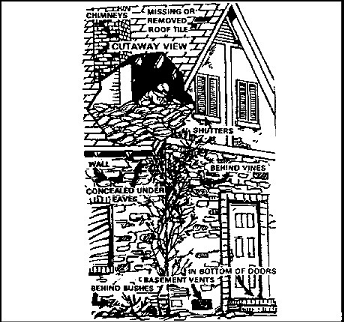
(b) Sandbags are used to reinforce the walls below, around, and above the loophole. Two layers of sandbags are
placed on the floor under the firer to protect him from an explosion on a lower floor (if the position is on the second
floor or higher). A wall of sandbags, rubble, furniture, and so on, should be constructed to the rear of the position
to protect the firer from explosions in the room.
(c) A table, bedstead, or other available material provides overhead cover for the position. This prevents injury to
the firer from falling debris or explosions above his position.
(d) The position should be camouflaged by knocking other holes in the wall, making it difficult for the enemy to
determine which hole the fire is coming from. Siding material should be removed from the building in several places
to make loopholes less noticeable.
(3) A chimney or other protruding structure provides a base from which a sniper position can be prepared. Part of
the  roofing material is removed to allow the sniper to fire around the chimney. He should stand inside the building
on the beams or on a platform with only his head and shoulders above the roof (behind the chimney). Sandbags
placed on the sides of the position protect the sniper's flanks.
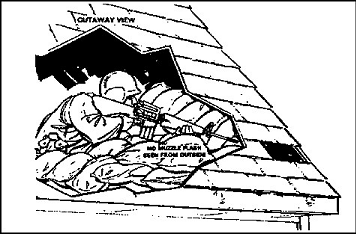
(4) When the roof has no protruding structure to provide protection, the sniper position should be prepared from
underneath on the enemy side of the roof. The position is reinforced with sandbags, and a small piece of roofing
material should be removed to allow the sniper to engage targets in his sector (Figure 2-37). The missing piece of
roofing material should be the only sign a position exists there. However, other pieces of roofing should be removed
to deceive the enemy as to the true sniper position. The sniper should be invisible from outside the building, and
the muzzle flash must be hidden from view.
(5) Some rules and considerations for selecting and occupying individual firing positions are as follow:
• Make maximum use of available cover and concealment.
• Avoid firing over cover; when possible fire around it.
• Avoid silhouetting against light-colored buildings, the skyline, and so on.
• Carefully select a new firing position before leaving an old one.
• Avoid setting a pattern; fire from both barricaded and unbarricaded windows.
• Keep exposure time to a minimum.
• Begin improving a hasty position immediately after occupation.
• Use construction material for prepared positions that is readily available in a built-up area.
• Remember, positions providing cover at ground level may not provide cover on higher floors.
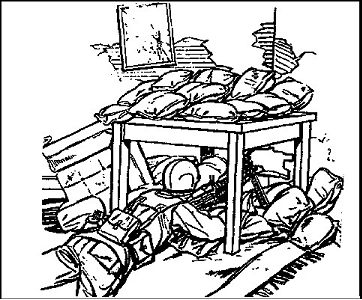
Available materials, such as desks, overstuffed chairs, couches, and other items of furniture, should be
integrated into the construction of bunkers to add cover and concealment (Figure 2-44).
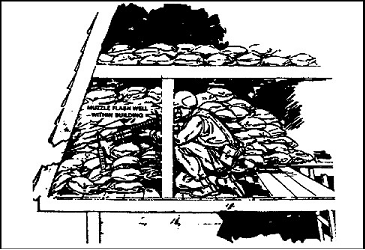
(16) Although grazing fire is desirable when employing the machine gun, it may not always be practical or
possible. Where destroyed vehicles, rubble, and other obstructions restrict the fields of grazing fire, the gun can be
elevated to where it can fire over obstacles. Therefore, firing from loopholes on the second or third story may be
necessary. A firing platform can be built under the roof (Figure 2-45) and a loophole constructed. Again, the exact
location of the position must be concealed by knocking off shingles in isolated patches over the entire roof.
Please Read The Website Disclaimer!
Copyright 1986-2012, The Survival & Self-Reliance Studies Institute (SSRsi), All
Rights Reserved
Site conceptualized, designed, created & maintained by MEG Raven
Snail Mail: SSRsi, PO Box 2572 Dillon, CO. 80435-2572