





















Found a good "Desert Survival" link? Let Us Know!
Desert
Navigation Techniques Staying on Course, Staying Found
Finding
Water In the Desert What
to Look For When Parched - Finding water in the jungle is relatively
easy--just wring out your shirt for starters. But in the desert, when mile after
mile of sand and rock stretches in a shimmering sea before your eyes, the search
for water can become somewhat tenuous.
Desert Travel & Survival
Tips. by R. Maschek. How to
avoid problems while traveling in the desert.
What
is a Desert? There are almost as many definitions of deserts and
classification systems as there are deserts in the world. Most classifications
rely on some combination of the number of days of rainfall, the total amount of
annual rainfall, temperature, humidity, or other factors. In 1953, Peveril Meigs
divided desert regions on Earth into three categories according to the amount of
precipitation they received. In this now widely accepted system, extremely arid
lands have at least 12 consecutive months without rainfall, arid lands have less
than 250 millimeters of annual rainfall, and semiarid lands have a mean annual
precipitation of between 250 and 500 millimeters. Arid and extremely arid land
are deserts, and semiarid grasslands generally are referred to as steppes.
The
Desert Environment - Deserts in the Southwestern United States are areas of
extreme heat and dryness, just as most of us envision them.
Death Valley
and Death Valley
National Park - Click on 'History and Culture'. and
Death
Valley National Park pictures
Surviving Out In The Desert Southwest.
Good advice from the US Scouting Project. [Link
updated 4/12/11]
Desert
Survival Safety Tips ( submitted by John E. Akers June 1993) When planning a
trip into the desert, always inform someone as to where you are going, your
route and when you expect to return. Stick to your plan.
(pdf) [Link recovered 4/12/11 - now hosted on site!]
The
Great Basin-Mojave Desert region This site takes a while to load, but
once it's loaded there is more info than you would believe on the Mojave region.
Careful study of this article will no doubt increase survival potential in this
area.
(pdf) [Link recovered 4/12/11 - now hosted on site!]
Chihuahuan
Desert Home Page Huge resource on this area. See also:
The Chihuahuan Desert Region
and CHIHUAHUAN DESERT [Links
updated 4/12/11]
Phoenix
Fire Department Desert Survival page Basic tips.
(pdf) [Link recovered 4/12/11 - now hosted on site!]
Animals
Of The Desert The more you learn about the animals of the desert, the better
your chances of survival (by following the RIGHT ones to water). This short fact
sheet has some good info. [Link
updated 4/12/11]
Scorpions
- We Have Scorpions in Arizona! There is no doubt, we do have scorpions in Arizona. Here are some things to know about scorpions in general, Arizona's venomous bark scorpion in particular, and how to keep scorpions away from you and your family.
Fluid
Replacement Recipes for Dehydration.
(pdf) [Link recovered 4/12/11 - now hosted on site!]
SUSTAINING
SOLDIER HEALTH AND PERFORMANCE IN SOUTHWEST ASIA.
Members of the U.S. Army Medical Research and Materiel Command (USAMRMC)
prepared this handbook of preventive medicine guidance to assist unit leaders in
Southwest Asia (Saudi Arabia & Kuwait). This handbook is
intended as a guide and reference for unit Commanders and NCOs. It includes
pointers for sustainment of health and performance throughout predeployment,
deployment, operations and redeployment. It addresses a broad range of important
health issues including: environmental exposure, avoiding disease hazards,
hydration and nutrition, managing work and stress, NBC protection, concerns for
women soldiers and maintaining morale. Excellent information for desert
survival. [Link
updated 4/12/11]
SUSTAINING SOLDIER HEALTH AND PERFORMANCE IN SOMALIA.
U.S.
military forces are deploying to Somalia, an alien and formidable environment
along the northeastern African coast. Deploying soldiers, sailors, and airmen
will confront a very harsh climate, exposure to disease risks, military stresses
associated with peacekeeping duties, and the psychological burdens of witnessing
an unfolding human tragedy. While covering Somalia, this text has excellent
information on desert, disease, and psychological survival. Check it out. [Link
updated 4/12/11]
WINNING
IN THE DESERT. While primarily for the Saudi Arabia & Iraq area, the desert info is excellent for nearly
any desert type biome. Also has a cool map of the middle east.
TIPS ON FIGHTING IN THE DESERT
Desert Safety Guidelines and Tips.
Scouts are meant to go the extra distance and venture into areas most people
fear to tread. That was one of the original purposes of scouting. Scouts do this
because they are prepared by their training for the different surroundings they
will encounter. [Link
updated 4/12/11]
"FM 90-3: Desert Operations" Army & Marine Corps manual for desert op.s.
A key reference for commanders & staff regarding how the desert affects personnel, equipment
& operations. It will assist them in planning and conducting operations in
desert environments.
"Backcountry Disease"
Dusty
Dan lays out a brief article on such goodies as Lyme's, Giardia, Rabies,
Hantavirus (the new bad boy of respiratory disease) & Bubonic Plague. What
about Anthrax? Not here. Courtesy of the National Park Service - US Dept. of the
Interior.
"Bites & Stings"
Excellent
article on snake, gila, insect & "killer bee" bites and stings.
Includes signs & symptoms + treatments.
(pdf) [Link recovered 4/12/11 - now hosted on site!]
"Desert Environment: What is a Desert?"
Desert USA presents an in depth article on the desert environment, in
general. Good overview. Follow the links to short articles on the four regional
deserts of the U.S.
Desert
Insects & Spiders There are several poisonous insects you may encounter in the desert. While healthy
adults usually survive these encounters, you should be aware that they are potentially life-threatening to young children, older folks, or anyone with allergies. See also:
Poisonous
Reptiles and Desert
JPEGS [Links
updated 4/12/11]
Finding
Water in Desert Survival Situations Much of the Colorado Plateau
consists of semi-arid desert with few reliable water sources. Don't count
on finding water unless you have firsthand knowledge of the area and know what
you are doing.
(pdf) [Link recovered 4/12/11 - now hosted on site!]
Outdoor
survival techniques: for the desert Description: Desert survival
techniques that you will need if ever lost in the desert, how to get water, food
and shelter.
(pdf) [Link recovered 4/12/11 - now hosted on site!]
Fog
collection Robert Schemenauer and Pilar Cereceda describe the unique
process of collecting fog as a complementary source of water supply.
(pdf) [Link recovered 4/12/11 - now hosted on site!]
How
do animals and plants survive in the Sonoran Desert, Arizona , USA ?
A PowerPoint presentation supplied by North
Chadderton School, Oldham, Lancashire, England
The
Fine Art of Desert Survival By Gregory McNamee. There's
something about a summer visit to Death Valley that makes me grateful to live in
the comparatively lush and mild desert of Arizona.
(pdf) [Link recovered 4/12/11 - now hosted on site!]
Tricks
to finding water in the desert The ability to transport and find water
is perhaps the most crucial element for survival in the desert. In extreme
temperatures the human body can require over a gallon of water a day.
DR. EA ADOLPH WATER SURVIVAL TABLE This
table shows how long a man can live with various amounts of water in various
temperatures IN the SHADE and assuming that he is not physically active.
Desert
Survival is Never Easy © 2004 Gary L. Benton. Many areas of the
world are arid and seem to completely lacking water. I wrote the word “seem”
on purpose. In fact, these areas do receive water, but not regularly. Some
deserts can go for long periods, perhaps years, without water and then
experience a heavy rain. For a survivor though, the desert environment is a
harsh and often victorious enemy. It is unforgiving of mistakes and often your
first mistake will be your last.
Desert
Survival 101 Approach the desert with caution and respect.
Dehydration and disorientation are two of the more lethal mistakes people make
out here. Carry water with you at all times. Being prepared for all
contingencies will make your discovery of Arizona smooth and enjoyable.
Desert
Survival The most important item in any survival kit should be
common sense. The more the better. Know what you are really capable of doing.
You are not superman and your vehicle is not a trophy truck. You can have some
pretty exciting adventures if you learn to trust knowledge and skills that you
really have. Know what your limits are. Know when to stop. See also:
Desert
Plants &
Desert
Soils &
San
Felipe Climate on this site.
Death
Valley and the Art of Desert Survival by
Gregory McNamee. Death Valley need not live up to its name if you know the
proper techniques of desert survival. Those techniques are transferable, too;
once you learn them, you can apply them to any desert anywhere - even to an
unseasonably warm day in Dorset, for that matter...
Surviving
out in the Desert Southwest There are
three enemies to people in the desert: hypothermia, dehydration and hypothermia.
The following guidelines will help you to avoid these enemies. Great scouting
tips.
Please Read The Website Disclaimer!
Copyright 1986-2012, The Survival & Self-Reliance Studies Institute (SSRsi), All
Rights Reserved
Site conceptualized, designed, created & maintained by MEG Raven
Snail Mail: SSRsi, PO Box 2572 Dillon, CO. 80435-2572
Page updated
4/12/11
Recommended Gear:
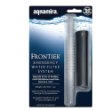
Aquamira Frontier Emergency Water Filter System
Microfiber
Emergency Blanket
S.O.L. Thermal
Bivvy Sack
Camelbak Thermobak Omega 3L (100oz)
Emergency Fire Starter
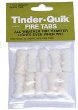
Tinder-Quik 10 pack
2nd Generation, Coco Bolo, Fire Piston
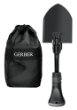
Gerber - Gorge Folding Shovel
Knife Sharpener
SOG S10B-K Tech Bowie, Black TiNi
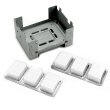
Esbit Pocket Stove
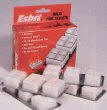
Esbit Solid Fuel Tablets
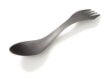 Light
My Fire Titanium Spork
Light
My Fire Titanium Spork

CELOX First Aid Temporary Traumatic Wound Treatment 2g, 10-Pack
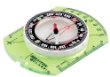
Brunton Classic Compass