




















Found a good "North American History 1850-1900 AD" link?
Let Us Know!
Links (for more detail) to specific events would be greatly appreciated!
Excerpts
from : Henry Carey - The Harmony of Interests: Agricultural, Manufacturing &
Commercial (1851)
1851: Crystal Palace In a glass
conservatory in London, the Great Exhibition begins. Among the 14,000 exhibits
were Colt's repeating pistol, Goodyear's vulcanized rubber, and Gail Borden's
meat biscuit. More than six million visitors from around the world attended. The
exhibition became a model for all World Fairs to come.
Excerpts
from : Henrey Carey - The Slave Trade, Domestic and Foreign. (1853)
Expansion
In The Pacific
Commodore Matthew C. Perry,
commander of the United States naval forces in the China seas, was a staunch
expansionist. Back in 1852 he warned President Fillmore that the British, who
had already taken control of Hong Kong and Singapore, would soon control all
trade in the area. Perry recommended that the United States take "active
measures to secure a number of ports of refuge" in Japan. President
Fillmore agreed with Perry. In 1853 he ordered the Commodore to open
negotiations with the Emperor of Japan.
Franklin
Pierce's
Inaugural
address, 1853 see also: 1853
- Franklin Pierce, Inaugural Address
1853
- Excerpts from : Henry Carey, The Slave Trade, Domestic and Foreign.
The
Abolitionist Hymn
Kansas-Nebraska
Act May 30, 1854 see also: 1854
- Kansas Nebraska Act
1854
- Abraham Lincoln Speaks on the Kansas Nebraska Act
Burning
of the Steamship City of Newark (1855)
1855-1863
- Julia Louisa Lovejoy, Selected Letters from Kansas
Excerpt
from : Frederick Law Olmsted: A journey in the Seaboard Slave States, 1856
Charles
Sumner, On the Crime Against Kansas, 1856
1856
- Scott vs. Sandford, The Dred Scott Case
1856
- Republican Party Platform
1857: Passenger Elevator Elisha Graves
Otis dramatically demonstrates his passenger elevator at the Crystal Palace
Exposition in New York by cutting the elevator's cables as it ascends a 300 foot
tower. Otis' unique safety braking system prevents the elevator from falling;
his business prospects rise.
James
Buchanan's
Inaugural
address, March 4, 1857 see also: 1857
- James Buchanan, Inaugural Address
Testimony
of the Canadian Fugitives
1858: Burglar Alarm
Edwin
T. Holmes of Boston begins to sell electric burglar alarms. Later, his workshop
will be used by Alexander Graham Bell as the young Bell pursues his invention of
the telephone. Holmes will be the first person to have a home telephone.
1858
- John Brown's Raid [in a Contemporary Newspaper]
1858
- William Seward, The Irrepressible Conflict, October 25
1859: Oil Well
Drilling
at Titusville, Pennsylvania, "Colonel" Edwin Drake strikes oil at a
depth of 69.5 feet. Prior to that, oil, which had been used mostly as a
lubricant and lamp fuel, had been obtained only at places where it seeped from
the ground. Western Pennsylvania witnesses the world's first oil boom.
1859
- Juan Nepomuceno Cortina to the inhabitants of the State of Texas, September
Juan
Cortina, Proclamation to the Mexicans of Texas, November
John
1859 - Brown's Final Address to the Court, November 2
An
Early Play About John Brown, from "The Kansas Historical
Quarterly"
Valley
Of The Shadow : The Valley Project details life
in two American communities - one Northern and one Southern - from the time of
John Brown's Raid through the era of Reconstruction. In this archive dating from
the Fall of 1859 to the fall of 1870 you may explore thousands of
original letters and diaries, newspapers and speeches, census and church
records, left by men and women in Augusta County, Virginia and Franklin County,
Pennsylvania. Giving voice to hundreds of individuals, the Valley Project tells
forgotten stories of life during the era of the Civil War.
1860: Repeating Rifle B.
Tyler Henry, chief designer for Oliver Fisher Winchester's arms company, adapts
a breech-loading rifle invented by Walter B. Hunt and creates a new lever action
repeating rifle. First known as the Henry, the rifle will soon be famous as
simply the Winchester.
1860
- Abraham Lincoln, Cooper Institute Address, February 27
1860
- Democratic Platform (Douglas Faction)
1860
- Democratic Platform (Breckenridge Faction)
1860
- Republican Platform 1860
"Lincoln
and Liberty" [lyrics of a campaign song]
And
music
Avalon:
Collection of Documents of the Confederate States of America
[This collection includes many short documents and major papers:]
November 6, 1860 - Abraham Lincoln, who
had declared "Government cannot endure permanently half slave, half
free..." is elected president, the first Republican, receiving 180 of 303
possible electoral votes and 40 percent of the popular vote.
1860
- Amendments Proposed in Congress by Senator John J. Crittenden. December 18
Dec 20, 1860 - South Carolina secedes from the Union. Followed within two months by
Mississippi, Florida, Alabama, Georgia, Louisiana and Texas.
1860
- The Crittendon Compromise
A
Bill to Permit Free Persons of Color to Select Their Own Masters and Become
Slaves 1860-61 Senate Session
Abraham Lincoln
1861
- Confederate States of America. Constitution for the Provisional Government;
February 8
1861
- Amendments Proposed by the Peace Conference, February 8-27
Feb 9, 1861 - The Confederate States of
America is formed with Jefferson Davis, a West Point graduate and former U.S.
Army officer, as president.
1861
- A Resolution for the Appointment of Commissioners to the Government of the
United States of America; February 15
1861
- Jefferson Davis, Inaugural Address, February 18
1861
- Inaugural Address of the President of the Provisional Government of thee
Confederate States; February 18
1861
- Lincoln's 1st Inaugural Address
1861
- Letter of President Davis to President Lincoln February 27
1861
- Confederate States of America Veto Message February 28 (Slave Trade)
Henry
Maine. Ancient Law
1861
- Declarations of Causes of Secession [Civil War]
1861
- Ordinances of Secession The ordinances of secession were the
actual legal language by which the seceded states severed their connection with
the Federal Union. The declarations of causes, given elsewhere on this Web site,
are where they tended to disclose their reasons for doing so, although only four
states issued separate declarations of causes. The political theory of the time
among secessionists required that the act of secession be carried out by a
specially elected convention or by referendum. In this sense the "secessions" of
both Missouri and Kentucky were flawed, as neither was carried out in this
manner. The Missouri secession ordinance was passed by a rump legislature and
never approved by the people at large. The Kentucky secession ordinance was
adopted by a convention of 200 participants representing 65 counties, held in
Russellville.
1861
- South Carolina's Address to the Slaveholding States
1861
- Address of George Williamson to the Texas Secession Convention
1861
- Speech of E.S. Dargan to the Alabama Secession Convention
1861
- First Message of Governor Isham Harris to the Tennessee Assembly
1861
- Second Message of Governor Isham Harris to the Tennessee Assembly
March 4, 1861 - Abraham Lincoln is sworn
in as 16th President of the United States of America.
1861
- Constitution of the Confederate States of America; March 11
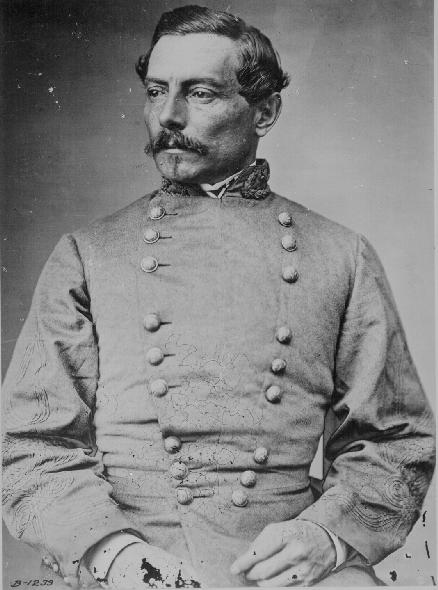
April 12, 1861 - At 4:30 a.m. Confederates
under Gen. Pierre
Beauregard open fire with 50 cannons upon Fort Sumter in Charleston,
South Carolina. The Civil War begins.
April 15, 1861 - President Lincoln issues
a Proclamation calling for 75,000 militiamen, and summoning a special session of
Congress for July 4. Robert E. Lee, son of a Revolutionary War hero, and a 25
year distinguished veteran of the United States Army and former Superintendent
of West Point, is offered command of the Union Army. Lee declines.
April 17, 1861 - Virginia secedes from the Union, followed within five weeks by Arkansas,
Tennessee, and North Carolina, thus forming an eleven state Confederacy with a
population of 9 million, including nearly 4 million slaves. The Union will soon
have 21 states and a population of over 20 million.
1861-
Proclamation of Jefferson Davis Authorizing Privateers April 17
April 19, 1861 - President Lincoln issues
a Proclamation of Blockade against Southern ports. For the duration of the war
the blockade limits the ability of the rural South to stay well supplied in its
war against the industrialized North.
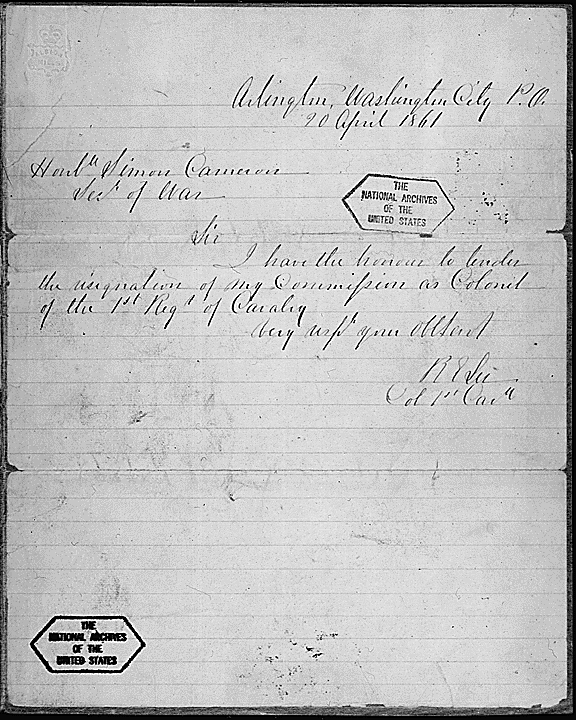
April 20, 1861 - Robert E. Lee resigns
his commission in the United States Army. "I cannot raise my hand
against my birthplace, my home, my children." Lee then goes to Richmond,
Virginia, is offered command of the military and naval forces of Virginia, and
accepts.
1861
- Message to Congress of the Confederate States, April 29 (Ratification of the
Constitution)
Words
to the The Battle Hymn of the Republic
Text
of Dixie Land [The most popular Southern marching song]
And
Music
The
Constitution of the Confederate States of America (1861)
July 4, 1861 - Lincoln, in a speech to
Congress, states the war is..."a People's contest...a struggle for
maintaining in the world, that form, and substance of government, whose leading
object is, to elevate the condition of men..." The Congress authorizes a
call for 500,000 men.
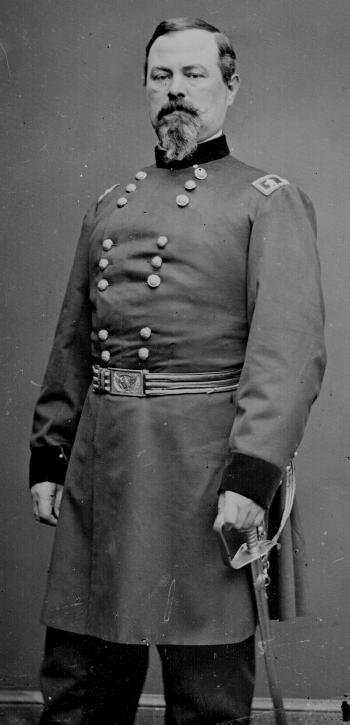
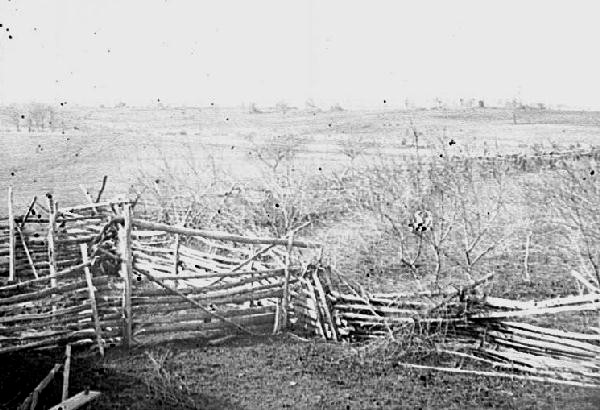
July 21, 1861 - The Union Army under Gen. Irvin
McDowell suffers a defeat at Bull
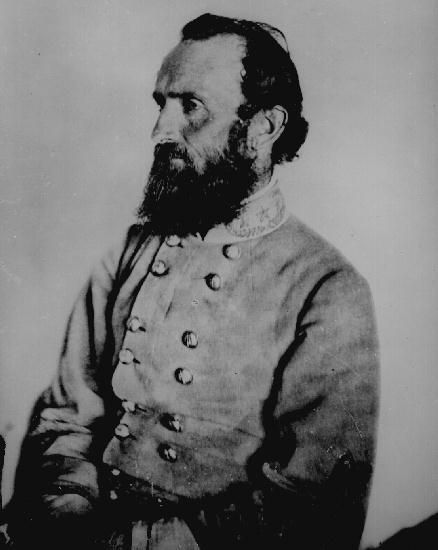
Run 25 miles southwest of Washington. Confederate Gen. Thomas
J. Jackson earns the nickname "Stonewall," as his brigade
resists Union attacks. Union troops fall back to Washington. President Lincoln
realizes the war will be long. "It's damned bad," he comments.
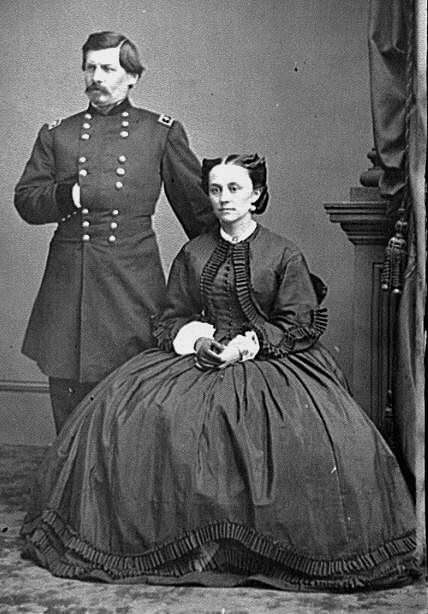
July 27, 1861 - President Lincoln appoints
George B. McClellan as Commander of the Department of the Potomac, replacing
McDowell. McClellan tells his wife ,
"I find myself in a new and strange position here: President, cabinet, Gen.
Scott, and all deferring to me. By some strange operation of magic I seem to
have become the power of the land."
Sept 11, 1861 - President Lincoln revokes Gen. John C. Frémont's unauthorized military
proclamation of emancipation in Missouri. Later, the president relieves Gen. Frémont
of his command and replaces him with Gen. David Hunter.
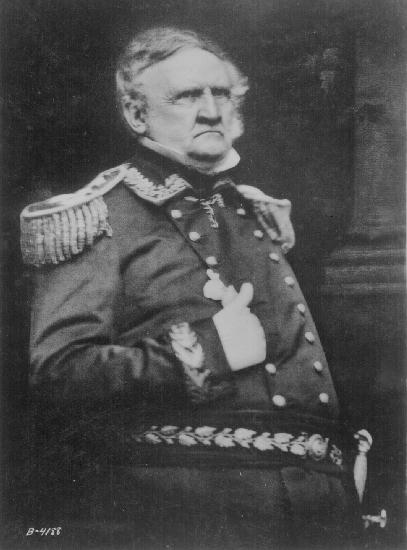
Nov 1, 1861 - President Lincoln appoints McClellan as general-in-chief of all Union forces
after the resignation of the aged Winfield
Scott . Lincoln tells McClellan, "...the supreme command of the Army
will entail a vast labor upon you." McClellan responds, "I can do it
all."
Nov 8, 1861 - The beginning of an international diplomatic crisis for President Lincoln as
two Confederate officials sailing toward England are seized by the U.S. Navy.
England, the leading world power, demands their release, threatening war.
Lincoln eventually gives in and orders their release in December. "One war
at a time," Lincoln remarks.
Jan 31, 1862 - President Lincoln issues
General War Order No. 1 calling for all United States naval and land forces to
begin a general advance by Feb 22, George Washington's birthday.
Feb 6, 1862 - Victory for Gen.
Ulysses S. Grant in Tennessee, capturing Fort Henry, and ten days later Fort
Donelson. Grant earns the nickname "Unconditional Surrender" Grant.
Feb 20, 1862 - President Lincoln is struck with grief as his beloved eleven year old son,
Willie, dies from fever, probably caused by polluted drinking water in the White
House.
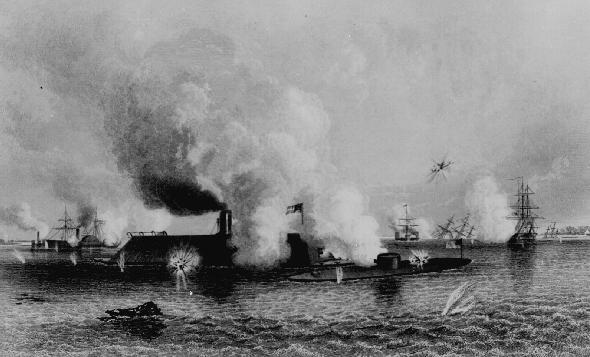
March 8/9, 1862 - The Confederate Ironclad 'Merrimac' sinks two wooden Union ships then battles
the Union Ironclad 'Monitor' to a draw. Naval warfare is thus changed forever,
making wooden ships obsolete. Engraving
of the Battle
1862: Battle of the Ironclads For the
first time, two armored ships battle each other at sea. The Union Monitor,
designed from scratch by John Ericsson, features a two-cannon revolving turret
and eight-inch plate armor. The Confederate Merrimac, a wooden hulled ship
hastily outfitted with iron plates, holds it own against the Monitor. The two
battle to a draw.
In March - The Peninsular Campaign begins
as McClellan's Army of the Potomac advances from Washington down the Potomac
River and the Chesapeake Bay to the peninsular south of the Confederate Capital
of Richmond, Virginia then begins an advance toward Richmond. President Lincoln
temporarily relieves McClellan as general-in-chief and takes direct command of
the Union Armies.
McClellan
Letter to Lincoln on His Evacuation from the Penninsula Campaign, 1862
April 6/7, 1862 - Confederate surprise attack on Gen. Ulysses S. Grant's unprepared troops at
Shiloh on the Tennessee River results in a bitter struggle with 13,000 Union
killed and wounded and 10,000 Confederates, more men than in all previous
American wars combined. The president is then pressured to relieve Grant but
resists. "I can't spare this man; he fights," Lincoln says.
Treaty
Between United States and Great Britain for the Suppression of the Slave Trade
April 7,1862
April 24, 1862 - 17 Union ships under the
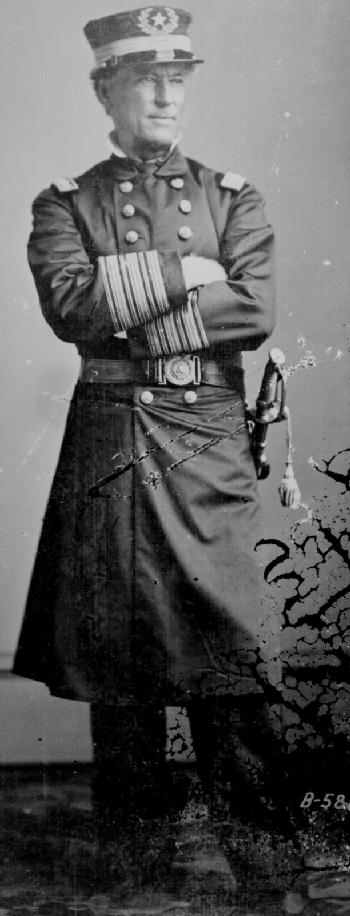
command of Flag Officer David
Farragut move up the Mississippi River then take New Orleans, the
South's greatest seaport. Later in the war, sailing through a Rebel mine field
Farragut utters the famous phrase "Damn the torpedoes, full speed
ahead!"
1862
- The Homestead Act, May 20 see also: The
Homestead Act of 1862 (May) An explanation of the
importance of the famous land act. Includes text of the act.
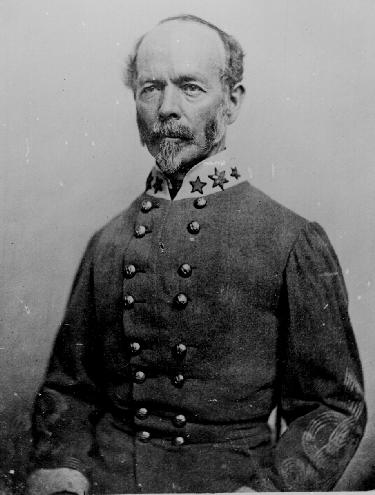
May 31, 1862 - The Battle of Seven Pines as Gen. Joseph
E. Johnston 's Army attacks McClellan's troops in front of Richmond and
nearly defeats them. But Johnston is badly wounded.
June 1, 1862 - Gen. Robert E. Lee assumes command, replacing the wounded Johnston. Lee then
renames his force the Army of Northern Virginia. McClellan is not impressed,
saying Lee is "likely to be timid and irresolute in action."
June 25-July 1 - The Seven Days Battles as Lee attacks McClellan near Richmond,
resulting in very heavy losses for both armies. McClellan then begins a
withdrawal back toward Washington.
1862
- The Pacific Railway Act, July 1
1862
- George B. McClellan to Abraham Lincoln, July 7 [on the Union defeat during the
Peninsular Campaign]
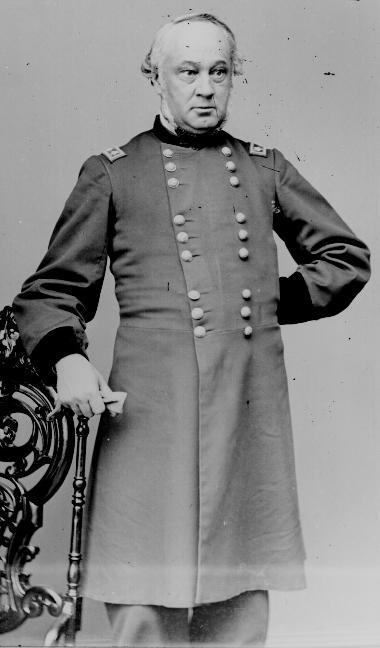
July 11, 1862 - After four months as his own general-in-chief, President Lincoln hands over
the task to Gen. Henry
W. (Old Brains) Halleck .
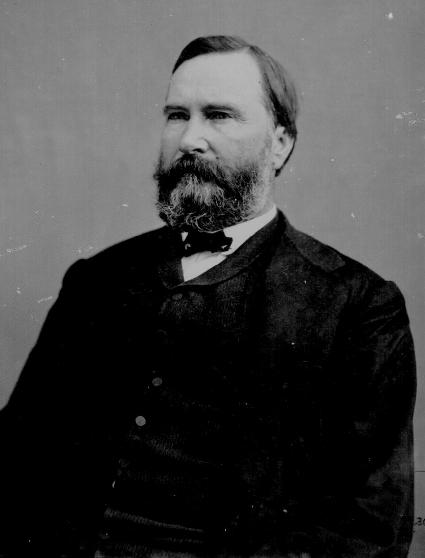
Aug 29/30, 1862 - 75,000 Federals under Gen. John
Pope are defeated by 55,000 Confederates under Gen. Stonewall Jackson
and Gen. James
Longstreet at the second battle of Bull
Run in northern Virginia. Once again the Union Army retreats to
Washington. The president then relieves Pope.
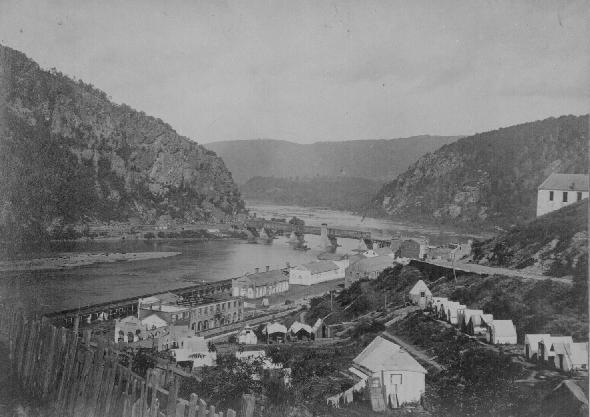
Sept 4-9, 1862 - Lee invades the North with 50,000 Confederates and heads for Harpers
Ferry , located 50 miles northwest of Washington. The Union Army, 90,000
strong, under the command of McClellan, pursues Lee.
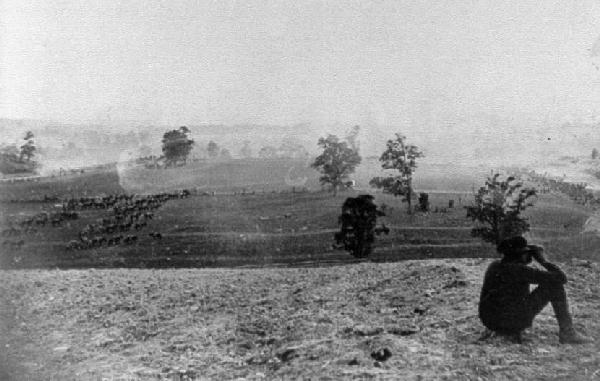
Sept 17, 1862 - The bloodiest day in U.S. military history as Gen. Robert E. Lee and the
Confederate Armies are stopped at Antietam in Maryland by McClellan and numerically superior Union forces. By nightfall
26,000 men are dead, wounded, or missing. Lee then withdraws to Virginia.
Emancipation
Proclamation; September 22, 1862
1862,
Lorena [a popular ballad of the times]
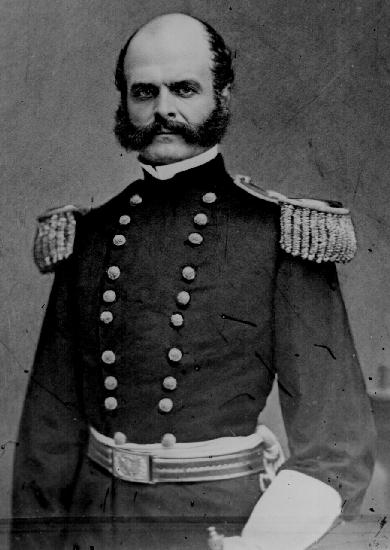
Nov 7, 1862 - The president replaces
McClellan with Gen. Ambrose
E. Burnside as the new Commander of the Army of the Potomac. Lincoln had
grown impatient with McClellan's slowness to follow up on the success at
Antietam, even telling him, "If you don't want to use the army, I should
like to borrow it for a while."
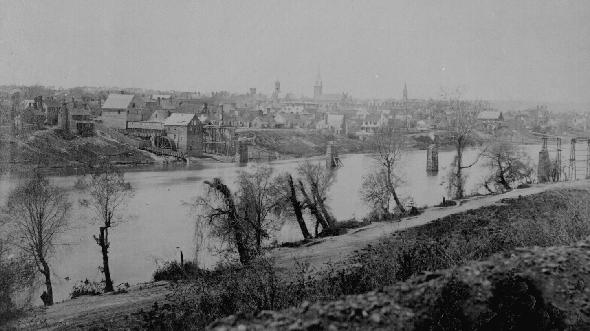
Dec 13, 1862 - Army of the Potomac under
Gen. Burnside suffers a costly defeat at Fredericksburg in Virginia with a loss of 12,653 men after 14 frontal assaults on well
entrenched Rebels on Marye's Heights. "We might as well have tried to take
hell," a Union soldier remarks. Confederate losses are 5,309. "It is
well that war is so terrible - we should grow too fond of it," states Lee
during the fighting.
1863: Roller Skates
James
Plimpton of Medford, Massachusetts, gives the world the first practical
four-wheeled roller skate. This sets off a roller craze that quickly spreads
across the U.S. and Europe.
Jan 1, 1863 - President Lincoln issues the
final Emancipation Proclamation freeing all slaves in territories held by
Confederates and emphasizes the enlisting of black soldiers in the Union Army.
The war to preserve the Union now becomes a revolutionary struggle
for the abolition of slavery.
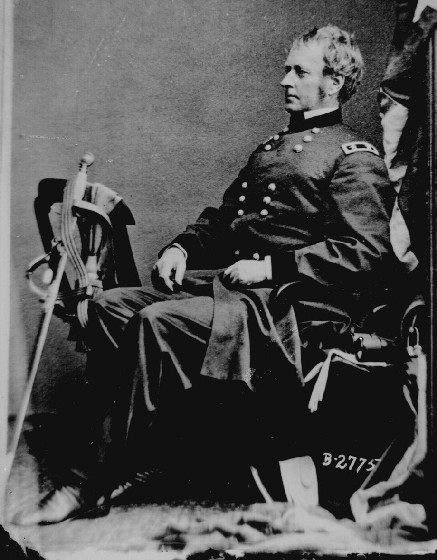
Jan 25, 1863 - The president appoints Gen. Joseph
(Fighting Joe) Hooker as Commander of the Army of the Potomac, replacing
Burnside.
Jan 29, 1863 - Gen. Grant is placed in command of the Army of the West, with orders to
capture Vicksburg.
Additional
Article to the Treaty for the Suppression of the African Slave Trade
February 17, 1863
March 3, 1863 - The U.S. Congress enacts a draft, affecting male citizens aged 20 to 45, but
also exempts those who pay $300 or provide a substitute. "The blood of a
poor man is as precious as that of the wealthy," poor Northerners complain.
Marching
Song of the First Arkansas
The
Battle Hymn of the Republic and music
Albert
Underwood's Civil War Diary
May 1-4, 1863 - The Union Army under Gen.
Hooker is decisively defeated by Lee's much smaller forces at the Battle of
Chancellorsville in Virginia as a result of Lee's brilliant and daring
tactics. Confederate Gen. Stonewall Jackson is mortally wounded by his own
soldiers. Hooker retreats. Union losses are 17,000 killed, wounded and missing
out of 130,000. The Confederates, 13, 000 out of 60,000. "I just lost
confidence in Joe Hooker," said Hooker later about his own lack of nerve
during the battle.
May 10, 1863 - The South suffers a huge
blow as Stonewall Jackson dies from his wounds, his last words, "Let
us cross over the river and rest under the shade of the trees." "I
have lost my right arm," Lee laments.
June 3, 1863 - Gen. Lee with 75,000 Confederates launches his second invasion of the North,
heading into Pennsylvania in a campaign that will soon lead to Gettysburg.
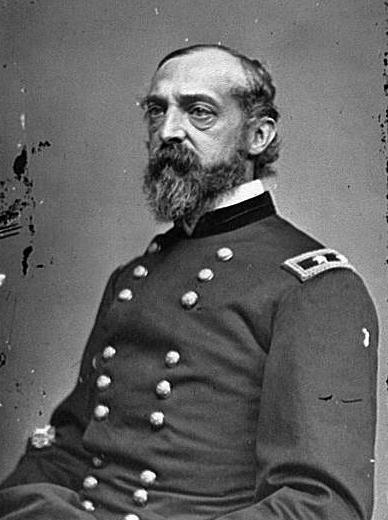
June 28, 1863 - President Lincoln appoints Gen. George
G. Meade as commander of the Army of the Potomac, replacing Hooker. Meade is the 5th man to command the Army in less than a year.
July 1-3, 1863 - The tide of war turns
against the South as the Confederates are defeated at the Battle of
Gettysburg in Pennsylvania. Read
about the Battle of Gettysburg - Battlefield
Photos
July 4, 1863 - Vicksburg ,
the last Confederate stronghold on the Mississippi River, surrenders to Gen.
Grant and the Army of the West after a six week siege. With the Union now in
control of the Mississippi, the Confederacy is effectively split in two, cut off
from its western allies.
July 13-16, 1863 - Antidraft riots in New York City include arson and the murder of
blacks by poor immigrant whites. At least 120 persons, including children, are
killed and $2 million in damage caused, until Union soldiers returning from
Gettysburg restore order.
July 18, 1863 - 'Negro troops' of the 54th Massachusetts Infantry Regiment under Col. Robert
G. Shaw assault fortified Rebels at Fort Wagner, South Carolina. Col. Shaw and
half of the 600 men in the regiment are killed.
Aug 10, 1863 - The president meets with abolitionist Frederick
Douglass who pushes for full equality for Union 'Negro troops.'
Aug 21, 1863 - At Lawrence, Kansas, pro-Confederate William C. Quantrill and 450 proslavery
followers raid the town and butcher 182 boys and men.
1863
- Cordley, Richard: The Lawrence Massacre
Sept 19/20, 1863 - A decisive Confederate
victory by Gen. Braxton Bragg's Army of Tennessee at Chickamauga leaves Gen. William
S. Rosecrans ' Union Army of the Cumberland trapped in Chattanooga,
Tennessee under Confederate siege.
Oct 16, 1863 - The president appoints Gen. Grant to command all operations in the western
theater.
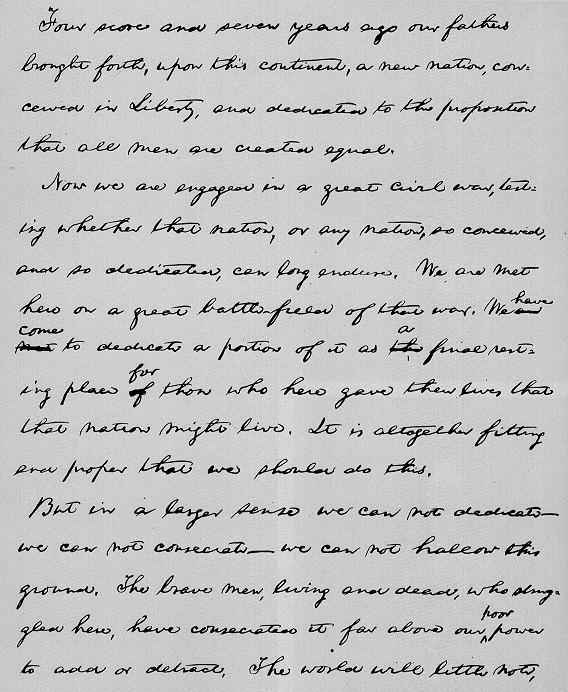
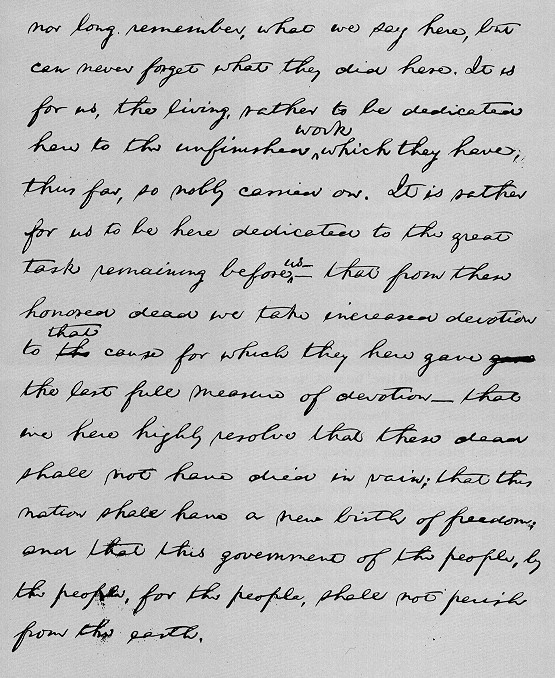
Nov 19, 1863 - President Lincoln delivers
a two minute Gettysburg Address at a ceremony dedicating the Battlefield as a
National Cemetery.
Page one of Gettysburg Address in Lincoln's handwriting
Page
two of Gettysburg Address in Lincoln's handwriting
1863
- Abraham Lincoln, Gettysburg Address, November 19
All
Quiet Along the Potomac, Words and
Music
Nov 23-25, 1863 - The Rebel siege of
Chattanooga ends as Union forces under Grant defeat the siege army of Gen.
Braxton Bragg. During the battle, one of the most dramatic moments of the war
occurs. Yelling "Chickamauga! Chickamauga!" Union troops avenge their
previous defeat at Chickamauga by storming up the face of Missionary Ridge without orders and sweep the Rebels from what had been though to be an
impregnable position. "My God, come and see 'em run!" a Union soldier
cries.
Proclamation
Of Amnesty, December 8
1864: Oil Pipeline
Built
in the oil fields at Pithole, Pennsylvania, Samuel van Syckel's five-mile,
pump-operated pipeline made oil transport infinitely easier. No one appreciated
this less than the Teamsters, who saw the pipeline as a threat to their business
and destroyed it. The determined van Syckel hired a crew of "pipeline
protectors" and rebuilt the pipeline.
March 9, 1864 - President Lincoln appoints
Gen. Grant to command all of the armies of the United States. Gen. William
T. Sherman succeeds Grant as commander in the west.
May 4, 1864 - The beginning of a massive, coordinated campaign involving all the Union
Armies. In Virginia, Grant with an Army of 120,000 begins advancing toward
Richmond to engage Lee's Army of Northern Virginia, now numbering 64,000,
beginning a war of attrition that will include major battles at the Wilderness
(May 5-6), Spotsylvania (May 8-12), and Cold Harbor (June 1-3). In the west,
Sherman, with 100,000 men begins an advance toward Atlanta to engage Joseph E.
Johnston's 60,000 strong Army of Tennessee.
June 3, 1864 - A costly mistake by Grant results in 7,000 Union casualties in twenty minutes during an offensive against
fortified Rebels at Cold
Harbor in Virginia. Many of the Union soldiers in the failed assault had
predicted the outcome, including a dead soldier from Massachusetts whose last
entry in his diary was, "June 3, 1864, Cold Harbor, Virginia. I was
killed."
June 15, 1864 - Union forces miss an opportunity to capture Petersburg and cut off the
Confederate rail lines. As a result, a nine month siege of Petersburg begins
with Grant's forces surrounding Lee.
1864
- Abraham Lincoln, Proclamation on the Wade-Davis Bill, July 8, 1864
July 20, 1864 - At Atlanta, Sherman's
forces battle the Rebels now under the command of Gen. John
B. Hood , who replaced Johnston.
The
Wade-Davis Manifesto, August 5, 1864
1864
- The Wade-Davis Manifesto, August 5, 1864
Aug 29, 1864 - Democrats nominate George
B. McClellan for president to run against Republican incumbent Abraham Lincoln.
Sept 2, 1864 - Atlanta is captured by Sherman 's
Army. "Atlanta is ours, and fairly won," Sherman telegraphs Lincoln.
The victory greatly helps President Lincoln's bid for re-election.
1864
- Abraham Lincoln - The Emacipation Proclamation, September 22
Oct 19, 1864 - A decisive Union victory by
Cavalry Gen. Philip
H. Sheridan in the Shenandoah Valley over Jubal Early's troops.
1864 - Simonoseki Indemnities : October 22
[regarding a rebellious local lord in Japan]
Nov 8, 1864 - Abraham Lincoln is
re-elected president, defeating Democrat George B. McClellan. Lincoln carries
all but three states with 55 percent of the popular vote and 212 of 233
electoral votes. "I earnestly believe that the consequences of this day's
work will be to the lasting advantage, if not the very salvation, of the
country," Lincoln tells supporters.
Nov 15, 1864 - After destroying Atlanta's
warehouses and railroad facilities, Sherman, with 62,000 men begins a March to the Sea. President
Lincoln on advice from Grant approved the idea. "I can make Georgia
howl!" Sherman boasts.
Dec 15/16, 1864 - Hood's Rebel Army of 23,000 is crushed at Nashville by 55,000 Federals including Negro troops under Gen. George
H. Thomas . The Confederate Army of Tennessee ceases as an effective
fighting force.
Dec 21, 1864 - Sherman reaches Savannah in Georgia leaving behind a 300 mile long path of
destruction 60 miles wide all the way from Atlanta. Sherman then telegraphs
Lincoln, offering him Savannah as a Christmas present.
1864-1865
- Documents on the Sand Creek Massacre
1865: Web Offset Printing William
Bullock introduced a printing press that could feed paper on a continuous roll
and print both sides of the paper at once. Used first by the Philadelphia
Ledger, the machine would become an American standard. It would also kill its
maker, who died when he accidentally fell into one of his presses.
Jan 31, 1865 - The U.S. Congress approves
the Thirteenth Amendment to the United States Constitution, to abolish slavery.
The amendment is then submitted to the states for ratification.
United
States Constitution - Thirteenth Amendment January
31, 1865
Feb 3, 1865 - A peace conference occurs as President Lincoln meets with Confederate
Vice President Alexander
Stephens at Hampton Roads in Virginia, but the meeting ends in failure -
the war will continue. Only Lee's Army at Petersburg and Johnston's forces in
North Carolina remain to fight for the South against Northern forces now
numbering 280,000 men.
March 4, 1865 - Inauguration ceremonies for President Lincoln in Washington. "With malice
toward none; with charity for all...let us strive on to finish the work we are
in...to do all which may achieve and cherish a just, and a lasting peace, among
ourselves, and with all nations," Lincoln says.
March 25, 1865 - The last offensive for Lee's Army of Northern Virginia begins with an attack
on the center of Grant's forces at Petersburg. Four hours later the attack is
broken.
April 2, 1865 - Grant's forces begin a
general advance and break through Lee's lines at Petersburg. Confederate Gen. Ambrose
P. Hill is killed. Lee evacuates Petersburg. The Confederate Capital, Richmond ,
is evacuated. Fires and looting break out. The next day, Union troops enter and
raise the Stars and Stripes.
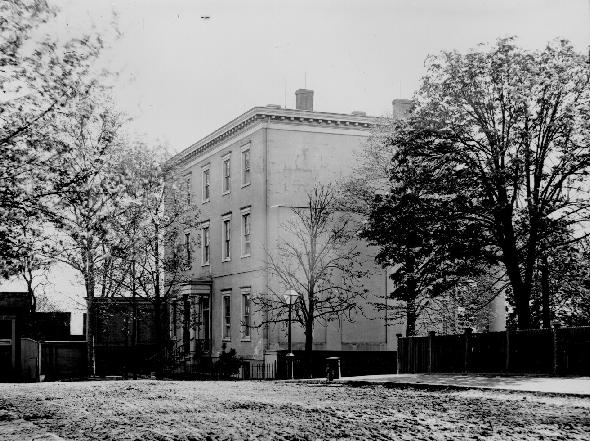
April 4, 1865 - President Lincoln tours Richmond where he enters the Confederate
White House . With "a serious, dreamy expression," he sits at
the desk of Jefferson Davis for a few moments.
1865
- The Civil Rights Act- April 9
April 9, 1865 - Gen. Robert E. Lee
surrenders his Confederate Army to Gen. Ulysses S. Grant at the village of Appomattox Court House in Virginia. Grant allows Rebel
officers to keep their sidearms and permits soldiers to keep horses and mules.
"After four years of arduous service marked by unsurpassed courage and
fortitude the Army of Northern Virginia has been compelled to yield to
overwhelming numbers and resources," Lee tells his troops.
April 10, 1865 - Celebrations break out in
Washington.
April 14, 1865 - The Stars and Stripes is
ceremoniously raised over Fort Sumter. That night, Lincoln and his wife Mary see
the play "Our American Cousin" at Ford's Theater. At 10:13 p.m.,
during the third act of the play, John Wilkes Booth shoots the president in the
head. Doctors attend to the president in the theater then move him to a house
across the street. He never regains consciousness.
April 15, 1865 - President Abraham Lincoln dies at 7:22 in the morning. Vice President Andrew
Johnson assumes the presidency.
April 18, 1865 - Confederate Gen. Joseph E. Johnston surrenders to Sherman near Durham in North
Carolina.
April 26, 1865 - John Wilkes Booth is shot
and killed in a tobacco barn in Virginia.
May 4, 1865 - Abraham Lincoln is laid to rest in Oak Ridge Cemetery, outside Springfield,
Illinois.
In May -
Remaining Confederate forces surrender. The Nation is reunited as the Civil War
ends. Over 620,000 Americans died in the war, with disease killing twice as many
as those lost in battle. 50,000 survivors return home as amputees.
Address
of a convention of Negroes held in Alexandria, Virginia, August 1865
Dec 6, 1865 - The Thirteenth Amendment to
the United States Constitution, passed by Congress on January 31, 1865, is
finally ratified. Slavery is abolished.
Thaddeus
Stevens speech of December 18, 1865
1865 -
Paul
Jennings' Reminiscences of James Madison
1865
- An Act To establish A Bureau For The Relief Of Freedmen And Refugees
1866
Civil Rights Act The Civil Rights Act (1866) was passed by Congress on 9th April 1866 over the veto of President Andrew Johnson. The act declared that all persons born in the United States were now citizens, without regard to race, color, or previous condition. As citizens they could make and enforce contracts, sue and be sued, give evidence in court, and inherit, purchase, lease, sell, hold, and convey real and personal property. Persons who denied these rights to former slaves were guilty of a misdemeanor and upon conviction faced a fine not exceeding $1,000, or imprisonment not exceeding one year, or both. The activities of organizations such as the Ku Klux Klan undermined the workings of this act and it failed to guarantee the civil rights of African Americans.
1866
Immigration Act In an attempt to encourage immigrants to migrate from the eastern seaboard to western areas of the United States members of Congress passed the Homestead Act. The legislation stated that the head of a family could acquire a section of land consisting of 160 acres, settle it, and cultivate it for five years. At the end of the five year period, if the head of the family had become a citizen or declared his intention to become a citizen, he would gain ownership of the land. At the first session of the 37th Congress on 8th December, 1863, President Abraham Lincoln strongly recommended national legislation to encourage immigration to the United States. A committee was established to look into this proposal and in July, 1864 a bill was passed by Congress that provided for the appointment of a Commissioner of Immigration. This bill wasamended in 1866 to increase the number of commissioners and to set up immigration agencies in Britain, Germany, Sweden and Norway.
1866-1868 When the US government tried to
force the Sioux back to Fort Laramie, the Indians responded with attacks that
culminated in Red Cloud’s War of this period. Red Cloud’s War of 1866-‘68
was waged in opposition to the development by the U.S. government of a trail
through Wyoming and Montana to the Montana gold camps. The two-year war was
waged between the Lakota Sioux, led by Ogallala chief Red Cloud, and the U.S.
Army. On December 21, 1866, the Sioux won a major victory, wiping out the entire
command of 80 men under Capt. William J. Fetterman. The war ended with the
signing of the Laramie Treaty, which included the closure of the Bozeman Trail
and U.S. abandonment of three forts.
1866
In Sweden Alfred Nobel invented dynamite, a safe and manageable form of
nitroglycerin. A pacifist by nature, Nobel hoped that the destructive power of
his invention would bring an end to wars. It didn't work.
The
Little Sod Shanty On My Claim [Song about homesteading on the
plains]
1866 Colonel John O'Neill of the
Fenian Brotherhood--formerly of the U.S. cavalry--led a force of Irish-Americans
against this British-ruled Canada. A year after America's Civil War ended,
scores of Irish Americans who had once fought for the Union or the Confederacy
joined forces against a new enemy.
1866 The Calaveras skull, from a mining
shaft in Altaville near Angels Camp in Calaveras County, Ca., was one of the
most notorious archaeological hoaxes perpetrated in the nineteenth century.
1866 James Vernor, a Detroit pharmacist,
began marketing a new soft drink.
1866 Jasper Daniel (Jack Daniel) started
distilling whiskey in Lynchburg, Tenn.
1866 When the transcontinental railroad
reached Abilene, Kansas, Chicago livestock buyer J.G. McCoy saw the
possibilities of linking the unwanted herds of Texas longhorns with the
meat-packing centers of Chicago. McCoy built a series of holding pens in Abilene
and convinced south Texas ranchers to drive the cattle north along the Chisholm
Trail to the railhead.
1866 The railroad land grant corporations
in Montana, led by J.P. Morgan and James Hill, grabbed off 40 million acres.
1866 Feb 13 , Jesse James took part in his
1st bank holdup. At least a dozen former Southern guerrilla soldiers, including
Frank James and Cole Younger, held up the Clay County Savings Association in
Liberty, Missouri, of $15,000. Jesse James was recovering from wounds suffered
as a Confederate guerrilla and probably wasn’t able to help brother Frank and
Cole, but the Liberty bank job is considered the James-Younger Gang’s first
robbery. Another outlaw legend, Charles "Black Bart" Boles baffled
Wells Fargo detectives during an eight year stint of 27 stagecoach robberies.
1866 Feb 21 , Lucy B. Hobbs became the first woman to graduate from a
dental school, the Ohio College of Dental Surgery in Cincinnati.
1866 Mar 2 , Excelsior Needle Company of Wolcottville, Connecticut, began
making sewing machine needles, the 1st US company to make sewing needles.
1866 Mar 21 , The US Congress authorized national soldiers' homes.
1866 Mar 27 , President Andrew Johnson vetoed the civil rights bill,
which later became the 14th amendment.
1866 Mar 27 , Andrew Rankin patented the
urinal.
1866 Mar 31 , Fred. Law Olmsted, New York City landscape architect, wrote
a long piece on city planning for parks with special reference to San Francisco.
1866 Apr 1 , US Congress rejected presidential veto and gave all equal
rights.
1866 Apr 2 , Pres. Johnson ended war in Ala, Ark, Fla, Ga, Miss, La, NC,
SC, Ten and Va.
1866 Apr 6 , G.A.R. was formed (Grand Army of the Republic). It was
composed of men who served in the US Army and Navy during the Civil War. The
last member died in 1956.
1866 Apr 9 , A Civil Rights Bill passed over Pres Andrew Johnson's veto to
secure for former slaves all the rights of citizenship intended by the 13th
Amendment. The president was empowered to use the Army to enforce the law. This
formed the basis for the 14th Amendment to the U.S. Constitution.
1866 Apr 10 , The American Society for the Prevention of Cruelty to
Animals was incorporated.
Alexander
Stephens on Reconstruction, April 11, 1866
1866 May 5 , Villagers in Waterloo, NY,
held their 1st Memorial Day service. In 1966 Pres. Johnson gave Waterloo, NY,
the distinction of holding the 1st Memorial Day. On Apr 13, 1862, volunteers led
by Sarah J. Evans had paid homage to the graves of Civil War soldiers in the
Washington area.
1866 May 11 , Confederate President Jefferson Davis became a free man
after spending two years in prison for his role in the American Civil War.
1866 May 16 , US Congress authorized minting of the nickel.
1866 May 16 , Charles Elmer Hires invented
root beer.
1866 May 24 , Founders of UC Berkeley named their town after Bishop George
Berkeley due to a line Berkeley’s poem: On the Prospect of Planting Arts and
Learning in America: "Westward the course of empire takes its way."
1866 May 29 , US Gen'l. Winfield Scott (79) died at West Point, New York.
Union General Winfield Scott was the originator of the military strategy known
as the "Anaconda Plan." Scott's plan for defeating the Confederacy
featured a naval blockade of the South designed to slowly "strangle"
the fledgling country. The Union did impose such a blockade, but by 1861 Scott
was considered too old to lead the federal armies and he retired that November.
Although a Virginian born on June 13, 1786, Scott-popularly called "Old
Fuss and Feathers"-remained loyal to the Union and its army he commanded
when war broke out.
June 14, 1866 . | 14 Stats., 785.
| Ratified July 19, 1866. | Proclaimed Aug. 11, 1866.:
TREATY
WITH THE CREEKS
June 28, 1866 , (ratified) and
proclaimed July 10, 1866.
Treaty of 1866 - Choctaw & Chickasaw Nation
Report
of the Joint Committee on Reconstruction, June 20, 1866 see also: 1866
- Report of the Joint Committee on Reconstruction, June 20
1866 Jul 4 , Firecracker thrown in wood
started a fire that destroyed Portland, Me.
1866 Jul 10 , The Indelible pencil was patented by Edson P. Clark of
Northampton, Mass.
1866 Jul 13 , Great Eastern began a two week voyage to complete a 12-year
effort to lay telegraph cable across the Atlantic between Britain and the United
States. Massachusetts merchant and financier Cyrus West Field first proposed
laying a 2,000-mile copper cable along the ocean bottom from Newfoundland to
Ireland in 1854, but the first three attempts ended in broken cables and
failure. Field’s persistence finally paid off in July 1866, when Great
Eastern, the largest ship then afloat, successfully laid the cable along the
level, sandy bottom of the North Atlantic. As messages traveled between Europe
and America in hours rather than weeks, Cyrus Field was showered with honors.
Among the honors was this commemorative print referring to the cable as the
Eighth Wonder of the World.
July 19, 1866. Ratified July 27, 1866.
Proclaimed Aug. 11, 1866
Treaty
with Cherokee Nation
July 23 Cincinnati Baseball club (Red Stockings) forms
1866 Jul 24 , Tennessee became the first state to be readmitted to the
Union after the Civil War.
1866 Jul 25 , Ulysses S. Grant was named General of the Army, the first
officer to hold the rank.
July 25 25th Postmaster General: Alexander W Randall of Wis takes office
July 25 David Faragut appointed as 1st Admiral of U.S. Navy
1866 Jul 28 , Metric system became a legal measurement system in US. It
defined the meter as exactly 39.37 inches and was later superceded.
July 30 Race riot in New Orleans
1866 Jul , The Sioux war on the Powder river commenced. When it commenced
General St. George Cook, in command at Omaha, forbade within the limits of his
command the sale of arms and ammunition to Indians.
1866 Aug 11 , The world's 1st roller rink opened at Newport, RI.
1866 Aug 20 , President Andrew Johnson formally declared the Civil War
over, even though the fighting had stopped months earlier. After the Civil War
Congress voted to give freed slaves 40 acres and a mule but Pres. Johnson killed
the plan with a veto.
1866 Sep 1 , Manuelito, the last Navaho chief, turned himself in at Fort
Wingate, New Mexico.
Andrew
Johnson, Cleveland speech, September 3, 1866
1866 Sep 6 , Frederick Douglass became the
1st US black delegate to a national convention.
1866 Sep 12, The first burlesque show opened in New York City (NYC). The
show was a four act performance called "The Black Crow", running for
475 performances and made a reported $1.3 million for its producers.
1866 Sep 25 , (Leonard W) Jerome Park opened in Bronx for horse racing.
1866 Oct 2 , U.S. inventor J. Osterhoudt develops a metal can that can be
opened with a key that rolls up the top of the container (familiar to many as a
method commonly used for canning various fish products).
1866 Oct 6 , The Reno brothers—Frank, John, Simeon and
William—committed the country’s first train robbery near Seymore, In.,
netting $10,000.
1866 Oct 30 , Jesse James gang robbed a bank in Lexington, Missouri, of
$2000.
1866 Nov 1 , Belle Starr [née Myra Maybelle Shirley], “Bandit Queen”
and wild woman of the west, married James C. Reed (d.1874) in Collins County,
Texas.
1866 Nov 1, 1st Civil Rights Bill passed.
1866 Nov 30 , Work in Chicago began on 1st US underwater highway
tunnel.
1866 Dec 6 , Chicago water supply tunnel into Lake Michigan was completed.
In the late 1800s the city reversed the water flow of the Chicago River so that
it flow in from Lake Michigan and carry pollution out to drain into the
Mississippi.
1866 Dec 20-21 , The Lakota Sioux Indians called this night "The moon
when the Deer shed their horns." A bright full moon occurred due to a
confluence of 3 celestial events. The moon reached perigee with Earth on the
solstice with the sun at its closest point. The event occurred again on Dec 22,
1999.
1866 Dec 21 , Indians led by Red Cloud and Crazy Horse killed Captain
William J. Fetterman and 79 other men who had ventured out from Fort Phil Kearny
to cut wood. U.S. Army Captain William J. Fetterman once boasted, "Give me
80 men and I'll march through the whole Sioux nation!" When Lakota warriors
under the overall leadership of Chief Red Cloud gathered around Fort Phil Kearny
(in what is now Wyoming), Fetterman got command of his 80 men. Disobeying the
orders of his commander, Colonel Henry B Carrington, not to proceed beyond the
Lodge Trail Ridge, Fetterman pursued a band of retreating Indians--and rode
right into a waiting trap, allegedly laid by the Ogallala warrior Crazy Horse.
Fetterman, his executive officer and 78 troopers were wiped out.
1866 The Boston Yacht Club was founded.
1866 The New York Yacht Club hosted the 1st-ever transatlantic race.
1866 The veteran organization Grand Army of the Republic (GAR) was formed
in Springfield, Illinois, in 1866. The patriotic organization of U.S. Civil War
veterans who served in Federal forces was formed to protect the interests of the
veterans. The GAR had a peak membership of more than 400,000 in 1890 and was a
powerful political influence. The organization was dissolved in 1956.
1866 The Ku Klux Klan is generally acknowledged to have started in
Pulaski, Tenn., in this year. [see Dec 24, 1865]
1866 Pres. Andrew Johnson signed an executive order that removed the
Shoalwater Bay Indians in Washington state from their villages and onto a 1-sq.
mile reservation. By 2000 erosion took away over half the tribal land and
miscarriages stood at 4 times the expected rate.
1866 The US coined some silver dollars without the inscription "In
God We Trust." Only 2 coins were known to exist in 2004. In Oct 1867, one
was stolen along with some 7,000 other rare coins from the Florida collection of
Willis H. du Pont. It turned up in 2004.
1866 In Mississippi a fifth of the state’s revenues were spent on
artificial arms and legs for Confederate veterans.
1866 Western Union introduced the ticker system to supply New York Stock
Exchange prices to brokers around the country.
1866 The Hopland, Ca., hops industry began. The damp soils of the Russian
River floodplains were suitable for the cultivation of hops, whose flowers
determine the bitterness and aromatic properties of beer.
1866 American dentist and pioneer in
radiotelegraphy Mahlon Loomis [b. Oppenheim, New York, July 21, 1826, d. Terra
Alta, West Virginia, October 13, 1886] sends telegraph messages over radio waves
between two mountains in West Virginia, using aerials held in the air by kites.
Because this experiment is conducted before radio waves are recognized, Loomis's
method of communication is ignored by science.
1867: Barbed Wire Lucien B. Smith of Kent,
Ohio, invents the product that will close down the open cattle ranges by closing
in cattle onto individual plots of privately owned land. I.L. Ellwood and
Company's Glidden Steel Barb Wire will dominate the market; by 1890 the open
range will be only a memory.
Andrew
Johnson, Veto of the first Reconstruction Act, March 2, 1867
1867
- Frederick Douglass, Appeal to Congress for Impartial Suffrage, January
1867
- Russian Treaty; March 30 ["Seward's Folly" - the purchase of
Alaska]
1867 Jan 8, Legislation gave suffrage to DC blacks, despite Pres. Johnson's veto.
1867 Mar 1, Most of Nebraska became the 37th state. It was expanded later.
1867 Mar 1, Howard University, Washington DC, was chartered.
1867 Mar 2, The first Reconstruction Act was passed by Congress.
1867 Mar 2, Congress abolished peonage in New Mexico.
1867 Mar 2, US Congress created the Department of Education.
1867 Mar 2, Jesse James-gang robbed a bank in Savannah MO, 1 dead.
1867 Mar 23, Congress passed a 2nd Reconstruction Act over President Johnson's veto.
1867 Mar 29, The United States purchased Alaska from Russia for $7.2 million dollars. [see Mar 30]
1867 Mar 29, Congress approved the Lincoln Memorial.
1867 Mar 30, U.S. Secretary of State William H. Seward reached agreement with Russia’s Baron Stoeckl to purchase the territory of Alaska for $7.2 million, two cents an acre, a deal roundly ridiculed as "Seward's Folly," "Seward's icebox," and President Andrew Johnson's "polar bear garden." The treaty was signed the next day.
1867 Apr 1, Blacks voted in the municipal election in Tuscumbia, Alabama.
1867 Apr 9, The treaty authorizing the purchase was ratified. Alaska became a state in 1959. The per-acre purchase price for Alaska paid by the U.S. to Russia in 1867 was two cents. Through the negotiations of Secretary of State William H. Seward the purchase of the 591,000 square miles (more than 375 million acres) of Russian America territory cost $7.2 million.
1867 Apr 24, Black demonstrators staged ride-ins on Richmond, Va., streetcars.
1867 Apr, George N. Jaquith was killed during an expedition against the Bannock Indians in the Steen Mountains of Oregon.
1867 May 1, Reconstruction in the South began with black voter registration.
1867 May 23, Jesse James gang robbed a bank in Richmond, Missouri, with 2 killed and $4,000 taken.
1867 Jun 19, The first running of the Belmont Stakes horserace in the US. It later became part of the Triple Crown. Oldest of the three U.S. horse races that constitute the Triple Crown. The Belmont is named after August Belmont. The stakes is held in early June at Belmont Park, near Garden City, Long Island; the course is 1.5 mi (2,400 m).
1867 Jun 20, Pres. Andrew Johnson announced the purchase of Alaska.
1867 Jun 25, The 1st barbed wire was patented by Lucien B. Smith of Ohio. [see Illinois, Oct 27, 1873]
1867 Jun 27, The Bank of California opened its doors.
1867 Jun, 2,000 Chinese workers on the western railroad struck because they had not been paid in weeks. They also demanded that whippings stop and that hours spent in hot tunnels be limited to 8 hours per day. Central Pacific Railroad co-founder, Charles Crocker, who was in charge of construction, cut off the striker’s food supply and threatened to fire the workers. The strike collapsed after a week.
1867 Jul 2, The 1st US elevated railroad began service in NYC.
1867 Jul 16, D.R. Averill patented a ready-mixed paint and Joseph Monier patented reinforced concrete.
1867 Jul 19, The US enacted reconstruction.
1867 Jul 25, President Andrew Johnson signed an act creating the territory of Wyoming. [see Jul 25, 1868]
1867 Aug 12, President Andrew Johnson sparked a move to impeach him as he defied Congress by suspending Secretary of War Edwin M. Stanton.
1867 Aug 28, The US occupied the Midway Islands in Pacific.
1867 Sep 5, The first shipment of cattle left Abilene, Kansas, on a Union Pacific train headed to Chicago.
1867 Sep 7, President Andrew Johnson extended amnesty to all but a few of the leaders of the Confederacy.
1867 Sep 13, Gen. E.R.S. Canby ordered South Carolina courts to impanel blacks as jurors.
1867 Sep 25, Congress created the 1st all black university, Howard Univ. in Wash DC.
1867 Oct 9, The Russians formally transferred Alaska to the US. The U.S. had bought Alaska for $7.2 million in gold.
1867 Oct 18, The rules for American football were formulated at meeting in New York among delegates from Columbia, Rutgers, Princeton and Yale universities.
1867 Oct 18, The United States took formal possession of Alaska from Russia.
1867 Oct 21, Many leaders of the Kiowa, Comanche and Kiowa-Apache signed a peace treaty at Medicine Lodge, Kan. Comanche Chief Quanah Parker refused to accept the treaty terms.
1867 Nov 12, Mount Vesuvius erupted.
1867 Nov 25, US Congress commission looked into impeachment of President Andrew Johnson.
1867 Nov 26, A refrigerated railroad car was patented by JB Sutherland of Detroit. [see Jan 16, 1868]
1867 Dec 4, The Order of Patrons of Husbandry, more commonly known as the National Grange, was founded by Oliver Kelley, a traveling clerk with the U.S. Department of Agriculture. The original purpose of the Grange was to provide enrichment opportunities for isolated farm families, but its purpose quickly became economic and political. Farmers, particularly in the Midwest and South, were frequently victimized by railroad monopolies that charged exorbitant rates and storage fees. By 1872, 14 states had Grange chapters and membership had risen to about 800,000. Grangers took the lead in organizing farmers' cooperatives to successfully distribute their own produce and in just a few years, Grangers had won enough political support to influence national legislation regulating railroads. The Grange was succeeded by the Farmers' Alliances and in 1891, farmers and labor organizers formed the influential People's Party, or the Populist Party.
1867 Dec 9, The capital of Colorado Territory was moved from Golden to Denver.
1867 The household guidebook "Six Hundred Dollars a Year" was published. It allotted $10 for a white granite dinner set and $5 for a French China tea set.
1867 The Tabernacle, home of the Mormon Tabernacle Choir, was completed in Salt Lake City, Utah.
1867 The Reformed Protestant Dutch Church, established by settlers in New York, became the Reformed Church of America.
c1867 In NYC restaurateur and entrepreneur Charles Feltman, who owned a pie wagon at Coney, was looking for something simple he could prepare and serve in a confined space. He hit on the idea of putting a hot sausage in a hard roll. Another version puts Feltman in his German restaurant, Feldman's Ocean Pavilion, when at some point a sausage ended up between two slices of bread. Feltman called it a frankfurter, and cartoonists labeled it a "hot dog."
1867 William Arthur Cummings (Candy Cummings) was credited to be the first baseball pitcher to throw a curve ball.
1867 US Secret Service responsibilities were broadened to include "detecting persons perpetrating frauds against the government." This appropriation resulted in investigations into the Ku Klux Klan, non-conforming distillers, smugglers, mail robbers, land frauds, and a number of other infractions against the federal laws.
1867 Anton Burlingame resigned his diplomatic post as US ambassador to China and was named High Minister Plenipotentiary and Envoy Extraordinary from the Court of Peking.
1867 There was anti-Chinese violence in SF and Chinese laborers were driven from work and their homes were destroyed by whites angry over the economic conditions.
1867 The Cigar Makers Int'l. became the first union in the US to admit women.
1867 Trans-Pacific trade was pioneered when the Pacific Mail Steamship Co. dispatched the 300-foot steamship Colorado from SF to Yokohama and Hong Kong.
1867 The US Playing Card Co. began business. In 2003 its brands included Bee, Hoyle, Aviator and Bicycle (b.1885).
1867 The ticker tape was introduced for stock transactions.
1867 Adelia Waldron patented the washing machine.
1867 J.G. McCoy shipped 35,000 cattle to Chicago to end up on American dinner tables.
1867 Christopher Latham Sholes, Carlos Glidden and Samuel Soule invented the typewriter in the 1860s. Charles E. Weller coined the phrase "Now is the time for all good men to come to the aid of the party" to check out the first typewriter built in Milwaukee.
1867 There was a yellow-fever epidemic in the US.
1867 Dr. Joseph Lister (Listerine) published the results of his antiseptic system in the Lancet medical journal.
1867 There were 10,000 recorded divorces in the US.
1867 The sailing ship Hellespont, a Welsh coal ship with passengers, wrecked near Pescadero, Ca.
1868
- Fort Laramie Treaty, April 29 [Treaty with
"Sioux Nation"]
1868-1874
The Buffalo Harvest
Charles
Sumner, Opinion on the trial of Andrew Johnson, 1868
Excerpt
from: James W. Grimes, Opinion on the Trial of Andrew Johnson, 1868
Navajo
Treaty of 1868
1868 Jan 16, The refrigerated railroad car was
patented by William Davis, a fish dealer in Detroit. [see Nov 26, 1867]
1868 Feb 16, The Benevolent and Protective Order of Elks (B.P.O.E.) was
organized in New York City by members of the theatrical profession. Later, men
in other professions were permitted to join the social organization. The letters
E.L.K. are repeated in the titles of some of its officers, such as Esteemed
Leading Knight and Esteemed Loyal Knight..
1868 Feb 21, Pres. Johnson told Gen. Lorenzo Thomas (63) to go the War Dept.
with orders to remove Edwin Stanton from office and to assume the
responsibilities of Sec. of War.
1868 Feb 23, William Edward Burghardt Du Bois (DuBois, d.1963) was born in Great
Barrington, Massachusetts. W.E.B. Du Bois was the first African American to earn
a doctorate from Harvard University. As a sociologist, he focused on the problem
of race for blacks in the United States. He became an influential leader of
black Americans, presenting an alternative to Booker T. Washington, whose
policies Du Bois considered too conservative and too accommodating to whites. Du
Bois, believing that blacks could achieve progress only through protest,
encouraged black nationalism and supported Pan-Africanism. He founded the
National Negro Committee which eventually became the National Association for
the Advancement of Colored People. Du Bois also founded the Niagara Movement,
served as the NAACP's director of research and editor of its magazine Crisis,
and taught and published his philosophy at Atlanta University. W.E.B. Du Bois
died at the age of 95 in 1963.
1868 Feb 24, Impeachment proceedings against President Andrew Johnson began. The
House of Representatives voted vote 126 to 47 to impeach President Andrew
Johnson following his attempt to dismiss Secretary of War Edwin M. Stanton; the
Senate later acquitted Johnson. Sen. Edmund G. Ross of Kansas cast the last
deciding vote against impeachment. Democrats defended Johnson. 7 Republicans
cast "no" votes.
1868 Feb 24, The 1st US parade with floats was at
the Mardi Gras in Mobile, Alabama.
1868 Mar 2, University of Illinois opened.
1868 Mar 5, The Senate was organized into a court of impeachment to decide
charges against President Andrew Johnson.
1868 Mar 13, The impeachment trial of President Andrew Johnson began in the U.S.
Senate.
1868 Mar 17, Postage stamp canceling machine patent was issued.
1868 Mar 20, The Jesse James Gang robbed a bank in Russellville, Kentucky, of
$14,000.
1868 Mar 23, Gov. Henry Haight signed an act that created the Univ. of
California and wed the insolvent College of California to the state with the
promised backing of 150,000 acres of federal land. The line "Westward the
course of empire takes its way" from a 1752 poem by Irish Bishop Berkeley
had earlier inspired the founders of Berkeley, Ca., to name their city and
university after Berkeley.
1868 Mar 23, University of California was founded
in Oakland, CA. Legislator John W. Dwinelle helped establish the Univ. of
California and Dwinelle Hall was named for him. The first chancellor was Clark
Kerr, for whom the Clark Kerr campus was named. Its first president was Henry
Durant for whom Durant Hall was named. Its 8th president was Benjamin Ide
Wheeler and the 17th president was Robert Gordon Sproul, for whom Sproul Plaza
was named. Later the Haas family of SF contributed $23.75 million on behalf of
Walter A. Haas Sr., who ran Levi Strauss & Co. for several decades. The
Doreen B. Townsend Center for the Humanities was started with a $5 million
pledge from Ms. Townsend, a UC alumna.
1868 Mar 30, The trial of President Johnson began with opening statements.
Supreme Court Chief Justice Salmon P. Chase was the presiding judge in the
impeachment trial of President Andrew Johnson. Chief Justice Chase insisted on
the observance of legal procedure, attempting to maintain some semblance of
non-partisanship.
1868 Apr, The US government and the Sioux Indians signed another treaty that
ended Red Cloud’s War, but did not last long.
1868 May 16, The U.S. Senate failed by one vote, cast by Edmund G. Ross, to
convict President Andrew Johnson as it took its first ballot on one of 11
articles of impeachment against him. Johnson, who came to office on Abraham
Lincoln's assassination in April 1865, was an honest but tactless man who made
many enemies in the Radical Republican Congress. In response to Johnson's
recurrent interference with Radical Reconstruction, the U.S. House of
Representatives drew up 11 articles of impeachment against the chief executive
in March 1868. Although the charges against him were weak, Johnson was tried by
the Senate as the Constitution provides.
1868 May 20, The Republican National Convention met in Chicago and nominated
Grant.
1868 May 22, The Great Train Robbery took place near Marshfield, Ind., as seven
members of the Reno gang made off with $96,000 ($98k) in cash, gold and bonds.
1868 May 26, The Senate impeachment trial of President Andrew Johnson ended with
his acquittal as the Senate fell one vote short of the two-thirds majority
required for conviction. Edward Ross of Kansas cast the deciding vote.
1868 May 30, Memorial Day began when two women placed flowers on both
Confederate and Union graves. Memorial Day, which began in 1868 as Decoration
Day, was set aside to remember those who have died in the service of their
country. Celebrated on May 30 for the first 100 years, Memorial Day was
officially changed to the last Monday in May in 1968.
1868 May 31, The 1st Memorial Day parade was held
in Ironton, Ohio.
1868 Jun 1, The Texas constitutional convention met in Austin.
1868 Jun 1, James Buchanan (b. Apr 23, 1791), the
15th president of the United States, died near Lancaster, Pa. He was the only US
president to have never married. In 1961 Philip Shreiver Klein authored
"President James Buchanan: A Biography."
1868 Jun 22, Arkansas was re-admitted to the Union.
1868 Jun 23, Christopher Latham Sholes received a patent for an invention he
called a "Type-Writer."
1868 Jun 25, Florida, Alabama, Louisiana, Georgia, North Carolina and South
Carolina were re-admitted to the Union.
1868 Jun 25, Congress enacted legislation granting an eight-hour day to workers
employed by the Federal government.
1868 Jul 14, Alvin J. Fellows patented a tape measure.
1868 Jul 15, William Thomas Morton (b.1819), dentist, died in NYC. He was
responsible for the first successful public demonstration of ether as an
inhalation anesthetic. Morton's accomplishment was the key factor to the medical
and scientific pursuit that we now refer to as anesthesiology.
1868 Jul 20, The 1st use of tax stamps on cigarettes.
1868 Jul 23, The 14th Amendment was ratified, granting citizenship to African
Americans. It gave freed slaves full citizenship and equal protection under the
laws, however it did not spell out the extent of integration with white America.
1868 Jul 25, Congress passed an act creating the Wyoming Territory. [see Jul 25,
1867]
1868 Jul 28, The 14th Amendment to the Constitution, which guarantees
citizenship to all those born or naturalized in the United States, was adopted.
The amendment was aimed primarily at assuring citizenship to blacks freed from
slavery by the Civil War.
1868 Jul 28, Pres. Johnson signed the Burlingame
Treaty. It was negotiated by Anson Burlingame, who represented the interests of
China, and committed the US to a policy of noninterference in Chinese affairs.
It also established commercial ties and provided unrestricted immigration of
Chinese to the US.
1868 Sep 8, The NY Athletic Club formed.
1868 Sep 17, The Battle of Beecher’s Island began, in which Major George
"Sandy" Forsyth and 50 volunteers held off 500 Sioux and Cheyenne in
eastern Colorado.
1868 Sep 22, Race riots took place in New Orleans, La.
1868 Sep 23, Grito de Lares proclaimed Puerto Rico's independence. It was
crushed by Spain.
1868 Sep 28, In the Opelousas Massacre at St. Landry Parish, Louisiana, 200
blacks were killed.
1868 Oct 7, Cornell University was inaugurated in Ithaca, N.Y.
1868 Oct 10, Cuba revolted for independence against Spain.
1868 Oct 11, Thomas Edison patented his 1st invention, an electric voice
machine.
1868 Oct 26, Whites killed several blacks in St. Bernard Parish, La.
1868 Nov 3, Republican Ulysses S. Grant was elected 18th president. He won the
election over Democrat Horatio Seymour by 27,000 votes. He used the 1867
typewriter phrase "Now is the time for all good men to come to the aid of
the party" for his campaign.
1868 Nov 9, The Colorado, a Pacific Mail side-wheeler steamer, was snagged off
the West coast at Montara, Ca. The shoal was later named Colorado Reef.
1868 Nov 27, Lieutenant Colonel George A. Custer’s 7th Cavalry killed Chief
Blackkettle and about 100 Cheyenne (mostly women and children) on the Washita
River.
1868 Nov 28, Mt. Etna in Sicily erupted violently.
1868 Dec 1, John D. Rockefeller began anti oil war.
1868 Dec 5, 1st American bicycle college opened in NY.
1868 Dec 7, Jesse James gang robbed a bank in Gallatin, Missouri, and killed 1
person.
1868 Dec 12, In Indiana 56 hooded men entered New Albany jail. Frank Reno was
the first to be dragged from his cell to be lynched. He was followed by his two
brothers, William and Simeon. Another gang member, Charlie Anderson, was also
hanged in the prison. [see May 22]
1868 Dec 25, President Andrew Johnson granted an unconditional pardon to all
persons involved in the Southern rebellion that resulted in the Civil War.
1868 Susan B. Anthony, the suffrage leader, put out the first issue of "The
Revolution" in New York City.
1868 Frederick Law Olmsted began laying out the planned Riverside community
outside Chicago over 1,600 acres of Illinois prairie.
1868 The Virginia and Truckee railroad line was built to serve Virginia City, Nv.,
site of the richest silver strike in history. Ted Wurm (d.2004) later
co-authored with Harre W. Demoro "Silver Short Line," a history of the
line.
1868 Alpheus Hardy, a Boston merchant enriched by his clipper ships, built the
first cottage at Birch Point, Bar Harbor, Maine.
1868 In California Fort Bidwell in Modoc Ct. was established as a cavalry
outpost to protect settlers from Indians.
1868 Balboa Park in San Diego was established as a 1,200-acre recreational area.
1868 In Syracuse NY the Everson Museum of Art was founded.
1868 Elizabeth Cady Stanton (1815-1902), a social reformer and militant
feminist, said, "The male element is a destructive force" in an
address to the Women’s Suffrage Convention in Washington, D.C.
1868 The first "chocolate box" was introduced by Richard Cadbury. It
depicted his daughter holding a kitten.
1868 The US established Memorial Day to honor Union soldiers killed in the Civil
War. It was first called Decoration Day. It was later expanded to honor all the
2.8 million soldiers killed in the service of the country.
1868 Riggs National Bank supplied the $7.2 million in gold bullion for the
purchase of Alaska.
1868 The "Ohio Idea," promulgated by Ohio
congressman George Pendleton, called for payment of the national debt with
greenbacks. This position was adopted by the Democrats at their 1868 convention.
The "Ohio Idea" was in opposition to the "hard money"
proponents who called for payments in gold. The 1869 Public Credit Act
officially repudiated the "Ohio Idea" with its provision for the
payment of government obligations in gold.
1868 A treaty between the government and Native Americans was signed that was
later interpreted by some Native Americans as an entitlement to surplus federal
lands. [perhaps the April treaty with the Sioux]
1868 Some 7,100 survivors of the Long Walk were released onto a New Mexico
reservation of 5,500 acres. The Navajo migrated and some returned to Hopi land
where 3.5 million acres , 1/6th of their former homeland, was returned.
1868 Charlotte "Charley" Parkhurst was the first woman to vote for US
president in California. The Santa Cruz female stagecoach driver impersonated a
man. In 1998 Pam Munoz Ryan wrote her biography: "Riding Freedom."
1868 In Nevada the Central Pacific Railroad came through Reno. The town had been
founded on the banks of the Truckee River by Myron Lake and was named after a
Civil War general. Lake's land was bought up by Charles Crocker, who had
surveyors lay out streets and a town for which he sold lots. The Crocker land
eventually came under the control of the Pacific Improvement Co., controlled by
Crocker, Huntington, Hopkins and Stanford.
1868 The SF-San Jose railroad line joined the
Southern Pacific Railroad and became a part of the statewide system.
1868 Gustav and Albert Goelitz, German emigrants, started the Goelitz candy
business in Illinois. The company later moved to California and invented the all
natural Jelly Belly jelly bean in 1976.
1868 Greenwood China was organized and by 1886 impressed its mark on ironstone
or white granite. Its mark used the New Jersey coat of arms and the company
produced dishes. It and Greenwood Pottery advertised together but went out of
business in 1933.
1868 Edwards Sands Frost of Biddeford Maine made his first designs for hooked
rugs. He devised a method of stenciling the designs on burlap and was credited
as the first person to mass produce hooked rugs.
1868 Over 100,000 Texas longhorn cattle came up the Chisholm Trail to the
Abilene, Ka., stockyards.
1868 Emily and Elizabeth Blackwell opened the world’s 1st medical school for
women, the Women’s Medical College of the New York Infirmary.”
1868 The cottony-cushion scale was accidentally introduced from Australia to
California and began wreaking havoc on the citrus crops. The pest was not
controlled until it was found that the lady bug beetle, Rodolia cardinalis, fed
on the scale in the 1880s.
1868 Another earthquake hit San Francisco.
1868 Kit Carson (b.1809), American scout and frontiersman, died. In 1999 David
Roberts authored "A Newer World: Kit Carson, John C. Freemont and the
Claiming of the American West."
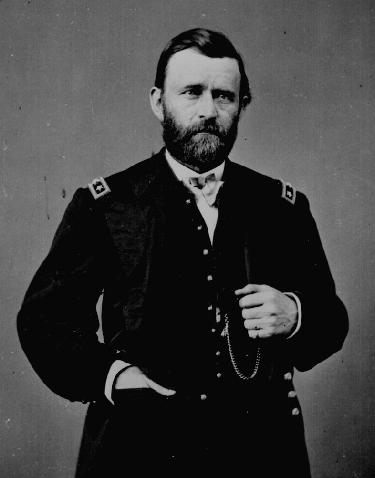
Ulysses S. Grant
Driving
the Last Spike (May 10, 1869) Follow the
builders of the U.S. railroad as they meet in Utah for the driving of the Golden
Spike.
John
Wesley Powell, Exploration of the Colorado River of the West and Its
Tributaries Explored in 1869, 1870, 1871, and 1872
1869 Jan-May, Chinese laborers on the Central
Pacific set a one-day record when they laid ten miles of track in one day across
the Utah desert. This beat the 4 mile record accomplished by Irish workers on
the Union Pacific line.
1869 Feb 2, James Oliver invented the removable tempered steel plow blade.
1869 Feb 6, Harper's Weekly published the 1st picture of Uncle Sam with chin
whiskers.
1869 Feb 15, Charges of treason against Jefferson Davis were dropped. Jefferson
Davis’ Mexican War exploits had led him directly to the Confederate White
House.
1869 Feb 20, Tenn. Gov. W.C. Brownlow declared martial law in Ku Klux Klan
crisis.
1869 Feb 26, 15th Amendment, guaranteeing right to vote, was sent to states.
1869 Mar 1, Postage stamps showing scenes were issued for 1st time.
1869 Mar 3, University of South Carolina opened to all races.
1869 Mar 4, Ulysses S. Grant was sworn in as the 18th president of the US.
1869 Mar 13, Arkansas legislature passed anti-Klan law.
1869 Mar 15, Cincinnati Red Stockings became the 1st pro baseball team.
1869 Apr 6, John and Isaiah Hyatt applied for a new patent using collodion to
manufacture billiard balls. They later named their product celluloid. It was
similar to that made by English inventor Alexander Parkes, who patented the
process in England in 1855. The new plastic could be molded and mass produced,
but was very flammable and exploded when struck with excessive force. [see Jun
15]
1869 Apr 8, American Museum of Natural History
opened in NYC.
1869 Apr 10, The US Congress increased the number of Supreme Court judges from 7
to 9.
1869 Apr 12, North Carolina legislature passed an anti-Klan Law.
1869 Apr 13, Steam power brake was patented by George Westinghouse.
1869 May 6, A special Southern Pacific train left Sacramento bound for Utah to
drive the final spike connecting the SP to the Union Pacific on May 8. The UP
train did not arrive until May 10.
1869 May 10, In the desert near Promontory, Utah, railway official Leland
Stanford, drove down a golden spike to unite the tracks from the east and the
west. The first transcontinental railroad was completed when the Union Pacific
Railroad--building west from Omaha, Nebraska--and the Central Pacific--building
east from Sacramento, California--met at Promontory Point, Utah. Recognizing
that transportation was essential to the economic development of the nation, the
U.S. Congress passed legislation in 1862 that provided for the construction of a
railroad linking the east and west coasts. A depression followed the completion
of the railroad and the Chinese became a target of ill-will as unemployment
soared. Engine 350 was the first one down the Union Pacific line and
commemorative platters were made for the occasion. In 1999 David Howard Bain
published "Empire Express: Building the First Transcontinental
Railroad." In 2000 Stephen E. Ambrose authored "Nothing Like It in the
World, The Men Who Built the Transcontinental Railroad 1863-1869."
1869 May 24, John Wesley Powell departed Green River City, Wyoming, with 9 men
on an expedition to explore the canyons of the Green and Colorado River. Over 3
years he led two expeditions to explore the Grand Canyon. Three members of the
first expedition were killed, reportedly by Indians. His written account was
suspected to be inflated if not fictitious. A 1997 novel by Oakley Hall,
"Separations," depicted the events.
1869 Jun 1, The Electric Voting Machine was patented by Thomas A. Edison.
1869 Jun 8, Ives W. McGaffey of Chicago patented
the 1st vacuum cleaner.
1869 Jun 9, Charles Elmer Hires sold his 1st root beer in Phila.
1869 Jun 15, Celluloid was patented in the USA. [see Apr 6]
1869 Jun 24, Mary Ellen "Mammy" Pleasant officially became the Voodoo
Queen in San Francisco, California.
1869 Jul, John Augustus Roebling, inventor of the steel wire cable and designer
of the Brooklyn Bridge, was killed in a construction accident at the outset of
construction of the Brooklyn Bridge. Roebling died of a tetanus infection from a
foot injury. He had earlier completed the first suspension bridge over the
Niagara gorge linking the US and Canada. His son and partner, Washington A.
Roebling, supervised the Brooklyn Bridge to its completion in spite of a
debilitating illness.
1869 Aug 10, O.B. Brown patented a moving picture projector.
1869 Aug 24, Cornelius Swarthout of Troy, New York, patented the waffle iron.
1869 Sep 6, 110 miners, a number of them young boys, were killed in coal mine
disaster which occurred early in the morning in Avondale, Pennsylvania, when a
fire broke out in a mineshaft, cutting off the miners' escape route and their
only source of air.
1869 Sep 13, Jay Gould and James Fisk attempted to control the US gold market.
1869 Sep 22, The Cincinnati Red Stockings, the first professional baseball team,
arrived in San Francisco after a rollicking, barnstorming tour of the West.
1869 Sep 24, Black Friday. Thousands of businessmen were ruined in a Wall Street
panic after financiers Jay Gould and James Fisk attempted to corner the gold
market.
1869 Sep 27, Wild Bill Hickok, sheriff of Hays City, Kan., shot down Samuel
Strawhim, a drunken teamster causing trouble.
1869 Oct 8, Franklin Pierce (64), the 14th president (1853-1857) of the United
States, died in Concord, N.H.
1869 Oct 16, A hotel in Boston became the 1st to have indoor plumbing.
1869 Oct 21, The 1st shipment of fresh oysters came West overland from
Baltimore.
1869 Nov 2, Sheriff Wild Bill Hickok lost his reelection bid in Ellis County,
Kan.
1869 Nov 8, The transcontinental railway arrived in Oakland, Ca., with a stop at
Suisun City. The Mariposa pulled 6 coaches into Oakland at 7th and Broadway.
1869 Nov 17, The Suez Canal was opened in Egypt, linking the Mediterranean and
the Red seas. The 100 mile canal eliminated a 4000-mile trip around Africa.
Empress Eugenie, the wife of Napoleon III, together with Ferdinand de Lesseps,
chief architect of the canal, led the first file of ships from on board the
French imperial yacht Aigle. It was financed by the
Rothschild banking empire. In 2003 Zacharay Karabell authored
"Parting the Desert: The Creation of the Suez Canal."
1869 Dec 10, Governor John Campbell signed a bill that granted women in the
Wyoming Territory the right to vote as well as hold public office. Esther Morris
had pressed state senator William Bright to sponsor the suffrage bill. Wyoming
became the 1st US state to enfranchise women.
1869 Dec 28, William Finley Semple of Mount Vernon, Ohio, patented chewing gum.
1869 The US federal government took 7,500 acres within the Cheyenne-Arapaho
reservation of Oklahoma for a military fort, Fort Reno. In 1997 the closed fort
was under control of the Agriculture Dept. and used for a small research
project.
1869 Daniel E. Sickles was appointed minister to Spain. A newspaper summed up
his career: "mail robber, spy, murderer, confidence man, general, satrap,
politician." In 2002 Thomas Keneally authored "American
Scoundrel," a biography of Sickles.
1869 Gambling in Nevada was legalized.
1869 John Brown - of the banking firm of Brown Brothers & Co. - put all of
his bank’s capital on the line to block a cornering of the gold market by Jay
Gould and Jim Fisk.
c1869 Edmund McIlhenny, banker, traveled to New Orleans and acquired some pepper
seeds from a man on the street, which he grew and used to develop a hot sauce
that he called Tabasco.
1869 100,000 young evergreens were sold at Christmas in New York City.
1869 In NYC Hart Island became the city’s graveyard. The island had also been
used as a Union training camp, a Confederate prison, a yellow-fever quarantine,
a lunatic asylum, a workhouse for aged inmates, a prison for WW II German
soldiers, an antiaircraft missile base, a rehab center for the homeless and drug
addicts, and a driving school for chronic traffic offenders.
1869 In Connecticut the Meriden Silver Plate Co. was founded.
1869 Alexander Turney Stewart (d.1860), Irish-born entrepreneur, founded Garden
City, NJ.
1869 Henry J. Heinz partnered with L.C. Noble to form Heinz & Noble in
Sharpsburg, Pa., selling fruit and vegetable preserves. They produced tomato and
walnut ketchup for 24 cents per gallon and sold them from whiskey barrels.
1869 Marcus Goldman, son of a German peasant, began to broker credit to diamond
and leather merchants near Wall Street. He later offered a partnership to his
son-in-law Sam Sachs. In 1999 Lisa Endlich published "Goldman Sachs: The
Culture of Success."
1869 Wells Fargo allowed Leland Stanford, Charles Crocker, Henry Huntington and
mark Hopkins (the Big Four) to gain controlling interest in exchange for the
exclusive rights to carry express over the Transcontinental Railroad.
1869 The Pacific Lumber Company was founded. It was headquartered in San
Francisco.
1869 Pillsbury was founded as a US flour milling company.
1869 Western Union formed Western Electric to make apparatus for the telegraph.
It was later subsumed into AT&A and then spun off as Lucent.
1869 George Westinghouse (1846-1914) introduced the railroad airbrake. The
device enabled the engineer to brake a train from the locomotive. Westinghouse
secured a patent for the first air brake, an invention that had a revolutionary
impact on railroad transportation, making high-speed travel safe. Westinghouse
already held patents for a rotary steam engine and other railroad equipment when
he incorporated the Westinghouse Air Brake Co. in 1869. He later invented an
automatic air brake for long freight trains. Westinghouse, who eventually held
more than 400 patents, turned his interest to electricity in 1885 and later
formed the Westinghouse Electric.
1869 The transcontinental railway arrived in Oakland.
1869 Frederick Marriott flew his unmanned Aviator Hermes Jr. over a field near
Millbrae and Burlingame in California. The machine was a gasbag filled with
hydrogen, and a steam engine turning rotors with attached delta wings guided by
men on the ground with ropes.
1869 John Boyle O’Reilly, Irish nationalist, spy, convict, and poet, escaped
by sea from an Australian prison camp and settled in Boston.
1869 The first Univ. of Mich. University Hospital opened in Ann Arbor. It was
the only university owned teaching hospital in the US.
1869 The petrified man hoax known as the "Cardiff Giant" was promoted
in New York, Boston, Albany and Syracuse. A 10 foot 4 ½ inch limestone statue
of a man was claimed to have been dug up in Cardiff, N.Y.
1869 Etienne Leopold Trouvelot (1827-1895), French artist, amateur entomologist
and immigrant to the US, imported gypsy-moth eggs to set up a silk production
project in the backyard of his Medford, Mass., home. The moth became a national
pest.
1869 A fire at Yellow Jacket Mine near Virginia
City, Nevada, killed 45 people.
1869 Henry J. Raymond, founder of the
New-York Daily Times, died of a heart attack in the apartment of his lover,
actress Rose Eytinge.
1870: Pneumatic Subway Working in secret
to hide his operation from Boss Tweed, who opposes it, Scientific American
publisher Alfred Ely Beach builds a pneumatic subway under Broadway in New York.
Beach's single subway car, which features upholstered chairs and chandeliers is
driven along the 300 foot tunnel by a 100 horsepower blower.
1870 Jan 2, Construction of Brooklyn Bridge
began. [see July, 1869]
1870 Jan 10, John D. Rockefeller (1839-1937) and his brother William
incorporated the Standard Oil Company of Ohio. The original Standard Oil
Company, founded by John D. Rockefeller and three partners in 1870, was
incorporated in the state of Ohio.
1870 Jan 15, The Democratic party was represented
as a donkey in a cartoon by Thomas Nast in Harper’s Weekly.
1870 Jan 19, Nathaniel Langford, agent of the Northern Pacific Railroad Co.,
presented a lecture in Wash. DC on the challenges of building a RR through the
northern Rockies and reported that Yellowstone Valley contained dozens of
geysers. This prodded Ferdinand Hayden to seek Congressional support for a
scientific expedition to the valley.
1870 Jan 23, American army forces, looking for Mountain Chief's band of hostile
Blackfoot Indians, fell instead upon Heavy Runner's peaceable Piegan band in
Montana and killed 173, many of them women and children.
1870 Jan 26, Virginia rejoined the Union.
1870 Feb 2, The "Cardiff Giant," supposedly the petrified remains of a
human discovered in Cardiff, N.Y., was revealed to be nothing more than carved
gypsum.
1870 Feb 3, 15th Amendment on Black suffrage was passed. [see Mar 30]
1870 Feb 5, The 1st motion picture was shown to a theater audience in
Philadelphia.
1870 Feb 9, The U.S. Army established the US National Weather Service.
1870 Feb 12, Women in the Utah Territory gained the right to vote.
1870 Feb 12, An official proclamation set April
15 as last day of grace for US silver coins to circulate in Canada.
1870 Feb 14, Esther Morris became the world’s first female justice of the
peace.
1870 Feb 15, Ground was broken for Northern Pacific Railway near Duluth, Minn.
1870 Feb 17, Mississippi became the 9th state readmitted to US after Civil War.
[see Feb 23]
1870 Feb 17, Nebraska, the last state needed to
secure ratification, approved the 15th Amendment to the US Constitution,
guaranteeing the right to vote regardless of race.
1870 Feb 23, Mississippi was readmitted to the Union. [see Feb 17]
1870 Feb 23, Anton Burlingame, former Mass.,
legislator, former US ambassador to China and current Chinese diplomat, died in
Russia. He was returned to Boston for burial.
1870 Feb 25, Hiram Revels (Sen-R-MS) was sworn in as the 1st black member of
Congress.
1870 Feb 26, New York City’s first pneumatic-powered subway line was opened to
the public.
1870 Feb 26, Wyatt Outlaw, black leader of Union
League in North Carolina, was lynched.
1870 Mar 17, the Massachusetts Legislature authorized the incorporation of
Wellesley Female Seminary. It later became Wellesley College.
1870 Mar 18, The 1st US National Wildlife Preserve was Lake Meritt in Oakland,
Calif. Lake Merritt, actually a tidal lagoon, was named after Samuel Merritt, a
physician and one of the 1st mayors of Oakland.
1870 Mar 30, The 15th Amendment to the US Constitution, guaranteeing the right
to vote regardless of race, passed.
1870 Mar 30, Texas was the last Confederate state
readmitted to the Union.
1870 Apr 2, Victoria Claflin Woodhull (1838-1927) became the first woman to run
for president of the United States when she announced her candidacy for the 1872
election, but she spent Election Day in jail for sending obscene literature
through the mail. Woodhull challenged convention in Victorian-era America.
Victoria and her sister, Tennessee Claflin, got their start as spiritual
advisors to financier Cornelius Vanderbilt. With his backing, the sisters became
the first women to open their own successful brokerage firm.
1870 Apr 9, The American Anti-Slavery Society dissolved.
1870 Apr 13, The Metropolitan Museum of Art was
founded in New York City.
1870 Jun 9, Washington: Pres Grant met with Sioux chief Red Cloud.
1870 Jun 22, The US Congress created the Department of Justice.
1870 Jun 26, The first section of the famous boardwalk in Atlantic City, N.J.,
was opened to the public.
1870 Jun 30, Ada H. Kepley of Effingham, Ill., became America’s first female
law school graduate.
1870 Jul 15, Georgia became the last of the Confederate states to be admitted to
the Union.
1870 Jul 18, Pontifical infallibility was proclaimed at the Vatican Council. It
proclaimed as dogma that the Pope when speaking ex cathedra can make no mistake
in solemn declarations of what must be believed in matters of faith and morals.
The 20th ecumenical council, soon adjourned due to the outbreak of the
Franco-Prussian War.
1870 Jul 24, The 1st trans-US rail service began.
1870 Aug 6, White conservatives suppressed the black vote and captured Tenn.
Legislature.
1870 Aug 17, The 1st ascent of Mt. Rainier in
Washington state.
1870 Aug 17, Esther Morris was named a justice of
the peace in South Pass City, the first woman to hold public office in the US.
1870 Sep 20, Mayor William Tweed was accused of robbing the NY treasury.
1870 Oct 12, Gen. Robert E. Lee died in
Lexington, Va., at 63. In 1998 David J. Eicher published "Robert E. Lee: A
Life Portrait." In 2001 Michael Fellman authored "The Making of Robert
E. Lee."
1870 Oct 19, The 1st blacks (4) were elected to House of Reps.
1870 Oct 25, Postcards were 1st used in US.
1870 Nov 1, The U.S. Weather Bureau made its first meteorological observations,
using reports gathered by telegraph from 24 locations.
1870 Dec 12, Joseph H. Rainey became the first black lawmaker sworn into the
U.S. House of Representatives. Rainey, a Republican from South Carolina, filled
the seat made vacant by the expulsion of Representative Benjamin F. Whittemore.
Rainey served for 10 years.
1870 On the Oregon coast the Blanco Lighthouse was constructed at Cape Blanco.
1870 Harold Robinson, an ex-slave from Missouri, founded the Hotel Robinson in
Julian, Ca., a former gold-mining town near Anza Borrego Desert State Park. It
was later renamed the Julian Hotel.
1870 US Secret Service headquarters relocated to New York City.
1870 Alta, Utah, couched in a glacial-cut schism in the Wasatch Range, boomed
with silver mining and counted 5,000 inhabitants, 26 saloons, five breweries,
and one murder a night.
1870 George Grant (d.1910) became the 1st black graduate from Harvard Dental
School. He got the 1st patent for a golf tee in 1899.
1870 By this time San Francisco was the 10th largest US city.
1870 The US census categorized the population as "White, Black, Mulatto,
Chinese and Indian." The census counted employed women for the first time
with four-fifths tallied as working on farms or in domestic service.
1870 Federal census data of the southern end of Mulberry St. in New York City
showed 39 Italian men employed as organ grinders.
1870 George Dickel (d.1894), purchased a site in Cascade Hollow, Tenn., and soon
began producing Cascade Tennessee Whisky.
1870 E.H. Harriman (22) bought a seat on the new York Stock Exchange.
1870 Frederick August Otto Schwartz (FAO Schwartz) opened up his 1st NYC store
on Broadway called Schwartz Toy Bazaar.
1870 Two-thirds of all teachers in public and private schools were women.
1870 Charles Adams of New York began manufacturing his chewing gum "Charles
Adams Gum No 1" in a Manhattan warehouse.
1870 William Lyman of the US invented the home can opener, with a cutting wheel
that rolls around the rim.
1870 Woodsmen marched west to Michigan clearing forests of white pine, yellow
birch, hemlock, maple, and oak.
1870 The Chinese population in California grew to 50,000.
1870 There was an earthquake in Lone Pine, Ca., and some people died.
1870s The California Point Reyes Lighthouse was built on the foggiest point of
the entire Pacific coast.
1870s Anthony Comstock (1844-1915), self-appointed anti-vice crusader, devoted a
lifetime to battling wickedness, to purify America and protect its youth from
sin. Armed with exhibits showing young lives wrecked by pornography, Comstock
shepherded through the U.S. Congress with little opposition a stringent
anti-obscenity law known as the "Comstock Law." Pornography was
outlawed, but so was anything that could be described as "lewd, obscene,
lascivious, or filthy"--terms even modern courts find difficult to define.
Over the years, targets of Comstock's rigid definition of obscene have been
abortionists, sellers of contraceptive devices and even those merely
disseminating information about contraception, including medical doctors. After
his appointment as special postal agent in 1873, Comstock boasted that he had
seized thousands of pounds of obscene materials. By the time of his death in
1915, Victorian ideals of propriety were changing and Comstock had become a
parody of himself, but the Comstock Law and its impact on American culture
outlived him.
1870s The CP railroad advertised for farmers to come west to the Central Valley
of California. They promised land for $2.50 to $5 per acre, and not more than
$10. Furthermore settlers would not have to pay until the railroad conveyed
title.
1870s A depression hit the US following the Civil War.
1870s George Hearst (d.1891) built the Charcoal Kilns in Death Valley.
1870s Some 400 Hutterites, a sect of Anabaptists,
migrated from Europe to the US. They settled on three communal farms in South
Dakota.
1871
1871 Jan 3, Henry W. Bradley patented
oleomargarine in Binghamton, NY.
1871 Jan 17, The 1st cable car patented by Andrew S. Hallidie. It began service
in 1873.
1871 Jan 26, A US income tax, established during the Civil War, was
repealed.
1871 Feb 28, The 2nd Enforcement Act set federal control of congressional
elections.
1871 Mar 1, J. Milton Turner was named US minister to Liberia.
1871 Mar 3, Congress passed the Indian Appropriation Act,
which revoked the sovereignty of Indian nations and made Native Americans wards
of the American government. The act eliminated the necessity of treaty
negotiating and established the policy that tribal affairs could be managed by
the U.S. government without tribal consent.
1871 Mar 3, Congress established the civil
service system.
1871 Mar 22, William Holden of NC became the 1st US governor removed by
impeachment.
1871 Apr 15, 'Wild Bill' Hickok became the marshal of Abilene, Kansas.
1871 Apr 20, The US 3rd Enforcement Act allowed the
President to suspend writ of habeas corpus. [see Oct 17]
1871 Apr 30, Anglo and Mexican vigilantes killed 118 Apaches at Camp Grant,
Arizona, and kidnapped 28 children.
1871 May 12, Segregated street cars were integrated in Louisville, Ky.
1871 May 17, Gen. Sherman, Indian fighter, escaped in ambulance from the
Comanches.
1871 Jun 3, Jesse James and his gang robbed Obocock Bank in Corydon, Iowa, of
$15,000.
1871 Jun 10, A landing force of 110 U.S. Marines came ashore on Korea's Kangwha
Island, a fortress island guarding the approaches to Seoul. The Korean Punitive
Expedition was launched from an American fleet, which anchored in the Han River
after the isolationist Korean government rejected U.S. diplomatic demands for an
explanation of the fate of an American ship and her crew believed killed by the
Koreans. In two days of fighting, the Marines and sailors captured the defensive
forts on the Island, leaving 243 Koreans dead. Nevertheless, the expedition
failed to open Korea to foreign trade.
1871 Jun, The California Historical Society was founded with 25 members. Many of
its records were destroyed in the 1906 SF earthquake and fire.
1871 Jul 3, Jesse James robbed a bank in Corydon, Iowa, of $45,000.
1871 Jul 25, A carrousel was patented by Wilhelm Schneider in Davenport, Iowa.
1871 Jul 26, Ferdinand Hayden (1830-1887) and his government sponsored team
arrived at the Yellowstone Lake and the geyser fields.
1871 Aug 26, The Boston Revere Railroad Depot collision left 32 people dead on a
single track railroad with no telegraph communications.
1871 Aug, Joseph became chief of Nez Perce Indians in the Wallowa Valley,
Oregon.
1871 Sep, John Wesley Powell began a 2nd expedition to survey the Grand Canyon,
this time with a congressional grant of $10,000.
1871 Oct 2, Mormon leader Brigham Young, 70, was arrested for polygamy. He was
later convicted, but the U.S. Supreme Court overturned the conviction.
1871 Oct 8, Around 9 p.m. on Sunday a fire broke out in or near Patrick and
Catherine O'Leary's barn in the crowded southwestern section of Chicago. Fanned
by high winds, the fire burned out of control in the tinder-dry city for more
than 24 hours, until rain on Tuesday morning finally extinguished the flames.
Three and a half square miles were leveled wiping out one-third of the city. The
business district, the courthouse and the central water pumping station, burned
to the ground. Thousands of Chicagoans fled the flames over the Randolph Street
Bridge. Approximately 250 people were killed in the fire; 98,500 people were
left homeless; 17,450 buildings were destroyed. The original Emancipation
Proclamation was destroyed. Yet in spite of the devastation, the city was so
quickly rebuilt that by 1875, few traces of the fire remained. Many people still
believe that Mrs. O'Leary's cow kicked over a lantern which started the fire.
The Chicago City Council once passed a resolution exonerating the cow and
apologizing to the O'Leary family. Pegleg O'Sullivan kicked over a lantern after
breaking into the O'Leary dairy barn to steal milk for a whiskey punch party.
1871 Oct 8, The 1938 film "In Old
Chicago," with Tyrone Power and Alice Faye, was a musical that built up to
the Chicago fire.
1871 Oct 8-14, In Peshtigo, Wisc., some 1,500 people were killed in the
nation’s worst forest fire, which burned across six counties and into
Michigan.
1871 Oct 11, The Great Chicago Fire was finally extinguished after 3 days. Over
300 were killed. [see Oct 8]
1871 Oct 12, President Grant condemned the Ku Klux Klan.
1871 Oct 17, President Grant suspended writ of habeas corpus.
1871 Oct 24, Anti Chinese rioting took place in Los Angeles. A mob in Los
Angeles hanged 18 Chinese.
1871 Oct 27, Boss Tweed (William Macy Tweed), Democratic leader of Tammany Hall,
was indicted on charges of fraud and grand larceny after NY Times exposed his
corruption. The conviction were overturned but civil charges sent him to prison.
1871 Nov 21, Moses F. Gale patented a cigar lighter in NYC.
1871 Nov 24, The National Rifle Association was incorporated in NYC, and its
first president named: Maj. Gen. Ambrose E. Burnside.
1871 Nov 28, Ku Klux Klan trials began in Federal District Court in SC.
1871 Dec 19, Albert L. Jones patented corrugated paper in NYC.
1871 The Salt Lake Tribune was founded by dissident Mormons.
1871 The California Historical Society was founded. It is now located in SF at
678 Mission near Third. 415-357-1848. Open Tuesday-Saturday 11-5.
1871 The San Francisco Art Association was founded.
1871 PT Barnum (Phineas Taylor Barnum,1810-1891), US showman, founded "The
Greatest Show On Earth." He presented General Tom Thumb and Jenny Lind
(1820-1870), "The Swedish Nightingale," to the public. He also
introduced 3 rings to the circus.
1871 Steel plants and coal mines began to open up in Birmingham, Alabama.
1871 The College of California was acquired by the state and became the Univ. of
California.
1871 In San Francisco William Hammond Hall, Superintendent of Golden Gate Park
stated: "Destroy a public building and it can be rebuilt in a year; destroy
a city woodland park and all the people living at the time will have passed away
before its restoration can be effected."
1871 Catharine Beecher traveled around the US and found "a terrible decay
of female health all over the land."
1871 Baseball's National Association was formed and marks the beginning of the
US major leagues.
1871 The US federal government created the Life-Saving Service (LSS). It later
became the US Coast Guard.
1871 In NYC the Black Laborer's Union and the Fenian O'Donovan Rossa paraded up
Baxter St. to fight for the 8-hour day.
1871 The Knights of Labor organization was started as a secret order at a
meeting of tailors called by Uriah Stephens in Philadelphia. The Knights of
Labor was organized on a national basis in 1878. It was an industrial union open
to all gainfully employed skilled or unskilled workers and headed by a General
Assembly. By 1886 there were 5,892 local assemblies and more than 700,000
members. Among other reforms, the Knights supported an 8-hour day, graduated
income tax, boycotts, arbitration, and consumer and producer cooperatives. The
organization began to decline after 1886. [other sources give 1869 as the
founding year.]
1871 Haeger Potteries of Dundee, Ill., dates to this time.
1871 Phil D. Beckwith founded the Round Oak Stove Co. in Dowagiac, Mich.
1871 J. Pierpont Morgan joined with a friend to form the banking firm Drexel,
Morgan.
1871 Luther Burbank developed the Russet Burbank potato, later identified with
Idaho.
1871 The number of cattle shipped to Chicago grew to 600,000. Abilene may have
been the first cow town, but disease and rowdy cowboys shifted the cow capital
first to Wichita, then to Dodge City, Kansas. The profits to be made were
immense, with a $5 steer in Texas bringing up to $45 in Kansas. In fact, the
profitability of the cattle kingdom was one of the factors contributing to its
demise in 1886. Greedy ranchers dangerously overstocked the grasslands with
cattle by the mid-1880s.
1871 In Alaska a whaling fleet of 32 ships was abandoned off Icy Cape in the
Chukchi Sea. Seven other vessels escaped with all the crew members saved. In
1998 an attempt was made to locate the shipwreck site.
1871 The Great Chicago Fire killed hundreds and left some 100,000 people
homeless. Debris from the fire was dumped into a lagoon between downtown and the
shore of lake Michigan and the landfill became Grant Park.
1871 Tad Lincoln (18), son of Abraham Lincoln, died. Pneumonia was suspected.
1871 The government of Costa Rica hired Minor C. Keith (23), an engineer from
Brooklyn, to build a rail line. Keith grew bananas on the right of way to help
finance the project. His enterprise grew to become the United Fruit Company,
later Chiquita.
1871 The Rothschild banking empire bankrolled France's
reparations to Germany.
1872
1872 Jan 12, Russian Grand Duke Alexis began a
gala buffalo hunting expedition with Gen. Phil Sheridan and Lt. Col. George
Armstrong Custer.
1872 Feb 20, Metropolitan Museum of Art opened in NYC.
1872 Feb 20, A hydraulic electric elevator was
patented by Cyrus Baldwin.
1872 Feb 20, Luther Crowell patented a machine
for manufacturing paper bags.
1872 Feb 20, Silas Noble and JP Cooley patented a
toothpick manufacturing machine.
1872 Mar 1, An act of Congress created Yellowstone National Park based on a
report from an expedition led by Ferdinand Hayden. The 2.2 million-acre preserve
was the first step in a national park system. Nathaniel Pitt Langford (39) was
appointed the 1st Superintendent.
1872 Mar 1, Doc Holliday received his Doctor of
Dental Surgery.
1872 Mar 5, George Westinghouse Jr. patented triple air brake for trains.
1872 Mar 22, Illinois became 1st state to require sexual equality in employment.
1872 Mar 26, Thomas J. Martin patented a fire extinguisher.
1872 Mar 26, A 7.8 earthquake shook the Owens
Valley, California.
1872 Mar, Joshua Norton, aka Emperor Norton, ordered SF and Oakland citizens to
build a suspension bridge across the bay. His similar Aug 19, 1869, proclamation
was later considered a forgery.
1872 Apr 2, George B. Brayton patented a gasoline powered engine.
1872 Apr 2, Samuel F.B. Morse (80), developer of
the electric telegraph, died in New York. In 2003 Kenneth Silverman authored
"Lightning Man: The Accursed Life of Samuel F.B. Morse."
1872 Apr 9, Samuel R. Percy patented dried milk.
1872 Apr 12, Jesse James gang robbed bank in Columbia, Kentucky, of $1,500 with
1 person killed.
1872 Apr 24, Mt. Vesuvius erupted.
1872 May 10, Victoria Woodhull became the first woman nominated for U.S.
president. Thomas Nast depicted her as "Mrs. Satan." Woodhull adhered
to a diet prescribed by Sylvester Graham, known for his ginger-colored crackers.
Sylvester preached against demon rum and died at age 57 after administering
himself a medicinal treatment with considerable liquor.
1872 May 12, J.C. Watson discovered asteroid #121, Hermione.
1872 May 22, The Amnesty Act restored civil rights to Southerners.
1872 Jun 5, The Republican National Convention, the first major political party
convention to include blacks, commenced.
1872 Jun 6, Susan B. Anthony was fined for trying to vote. [see Nov 5, 1872]
1872 Jun 18, A Woman's Suffrage Convention was held at Mercantile Liberty Hall.
1872 Jun 17, Canadian George Hoover hauled in a wagon load of whiskey and set up
a tent shop called Hoover’s Bar five miles west of Fort Dodge, Kansas. It was
the founding business of Dodge City. The town up to this time had been dry.
1872 Jul 2, Jacob W. Davis of Reno, Nevada, sent Levi Strauss & Co. in San
Francisco a sample of his work pants and a business proposal for Strauss to
apply for a patent in exchange for a half share in the patent. Davis soon sold
his half share to Strauss and moved to San Francisco to supervise the
manufacture of the work pants.
1872 Jul 20, Mahlon Loomis patented a wireless radio.
1872 Aug 1, The first long-distance gas pipeline in the U.S. was completed.
Designed for natural gas, the two-inch pipe ran five miles from Newton Wells to
Titusville, Pennsylvania.
1872 Aug 14, Chief Joseph met in council with some 40 settlers in the Wallowa
Valley and ordered them to leave the Nez Perce Indian land.
1872 Aug 23, The 1st Japanese commercial ship visited SF carrying tea.
1872 Aug, Pres. Grant signed the bill authorizing Yellowstone as a national
park. It thus became the fist national park in the world.
1872 Sep 14, Britain paid US $15 million for damages during Civil War. The
British government paid £3 million in damages to the United States in
compensation for building the Confederate commerce-raider Alabama. The
confederate navy‘s Alabama was built at the Birkenhead shipyards. Despite its
official neutrality during the American Civil War, Britain allowed the warship
to leave port, and it subsequently played havoc with Federal shipping. The U.S.
claimed compensation, and a Court of Arbitration at Geneva agreed, setting the
amount at £3 million.
1872 Sep 17, Phillip W. Pratt patented his sprinkler system for extinguishing
fires.
1872 Sep 21, John Henry Conyers of SC became the 1st black student at Annapolis.
1872 Oct 3, Bloomingdale's department store opened in NYC.
1872 Oct 9, Aaron Montgomery started his mail-order business. Montgomery Wards,
a pioneer of mail-order catalogs, was founded. The catalog of Aaron Montgomery
Ward was the first to be called a "Wish Book." The 1871 Chicago fire
destroyed his initial inventory.
1872 Oct 12, Apache (Chiricahua) leader Cochise signed a peace treaty with
General O.O. Howard in Arizona Territory.
1872 Oct 21, The U.S. Naval Academy admitted John H. Conyers, the first African
American to be accepted.
1872 Oct 29, J.S. Risdon patented a metal windmill.
1872 Nov 5, Ulysses S. Grant was re-elected US president.
1872 Nov 5, Suffragist Susan B. Anthony was fined
$100 for attempting to vote in a presidential election. (She never paid the
fine.) Susan B. Anthony was arrested for trying to vote. [see Jun 18, 1873]
1872 Nov 7, US cargo ship Mary Celeste set sail from NY on a journey which ended
when it was found mysteriously abandoned the following month.
1872 Nov 9, Fire destroyed nearly a thousand buildings in Boston.
1872 Nov 15, In California the 115 foot Pigeon Point Light Station near
Pescadero started operation. It was built due to a series of shipwrecks in the
area. Service ended in the 1980s and in 2004 it was transferred to the Peninsula
Open Space Trust and the Calif. Dept. of Parks. On May 25, 2005 ownership was
transferred from the US Coast Guard to the California State Parks. A 5-year, $5
million restoration campaign was begun.
1872 Nov 28, The Modoc War of 1872-73 began in Siskiyou County, northern
California when fighting broke out between Modoc Chief Captain Jack and a
cavalry detail led by Captain James Jackson. At Lava Beds National Monument in
northern California 52 [60] Modoc warriors held off over 1,000 US Army troops
for five months. The 4 year conflict was described in the 1997 book "Hell
with the Fire Out" by Arthur Quinn, a re-creation of the war from
eye-witness accounts.
1872 Nov 29, Horace Greeley, founder of the New York Tribune, died. The daily
paper reflected much of the morality of his New England upbringing and he
partnered a high standard of news gathering with printed arguments and urges
against drinking, gambling, capital punishment and—increasingly in the
1850s—slavery. The slavery issue and his lifelong desire for high political
office led him away from his political party, the Whigs, and to the newly
emerging Republican Party. He usually sided with the radical wing of the
Republicans, advocating early emancipation of slaves. Still unsuccessful in
state and national bids, he eventually joined a group of Republican dissenters
who formed the Liberal Republican Party to oppose Grant. While he received
almost 44% of the popular vote, he received only 18% of the electoral vote,
which were cast for other candidates due to his death.
1872 Nov, Horace Greeley, newspaper editor, ran
as a Democrat against Ulysses S. Grant. Greeley's political aspirations were
realized when he was named by the Liberal Republican Party to run for, but he
lost the election, even though he polled almost as many popular votes as the
hero of Vicksburg. His running mate, Missouri Governor Benjamin Gratz Brown, was
a drunk. Greeley was in favor of graham crackers and opposed to women's corsets.
He had also proposed to change the name of the country to Columbia.
1872 Nov, Horace Greeley, the New York editor who
helped found the Republican Party, was badly defeated when he ran with Benjamin
Gratz Brown against Ulysses S. Grant. He died two weeks later.
1872 Dec 4, The U.S. brigantine Marie Celeste was found adrift and deserted with
its cargo intact, in the Atlantic Ocean between the Azores and Portugal.
1872 Dec 9, P.B.S. Pinchback became the first African American Governor of
Louisiana. [see Dec 11]
1872 Dec 11, America's first black governor took office as Pinckney Benton
Stewart Pinchback became acting governor of Louisiana. [see Dec 9]
1872 Dec 26, The 4th largest snowfall in NYC history reached 18 inches.
1872 Dec 28, A U.S. Army force defeated a group of Apache warriors at Salt River
Canyon, Arizona Territory, with 57 Indians killed but only one soldier.
1872 Dec, "Texas Jack" Omohundro, a genuine frontier scout, joined the
more famous Western scout William "Buffalo Bill" Cody on a Chicago
stage as the stars of Ned Buntline's melodrama The Scouts of the Prairie. John
Burwell "Texas Jack" Omohundro was a Virginian who served with the
Confederate Army and later fought a few Indians in Texas before helping to drive
Longhorn cattle to North Platte, Neb. He met Buffalo Bill Cody there in 1870,
and Cody persuaded Texas Jack to become a scout at nearby Fort McPherson. The
two scouts resigned in the fall of 1872 and headed for the bright lights of the
stage. The Scouts of the Prairie was a success, and they took the action-packed
act on the road. In 1873, Buffalo Bill and Texas Jack began starring in a
similar melodrama called The Scouts of the Plains. They were joined for a short
time by another frontier legend, Wild Bill Hickok, who had a lesser role because
he was said to have "a voice like a girl."
1872 The Butter and Cheese Exchange opened in NYC. It later became known as the
New York Mercantile Exchange (Nymex).
1872 The New Market Theater in Portland, Oregon, was built at a cost of
$100,000. A huge produce market occupied its ground floor.
1872 The German Evangelical Synod of North America was established.
1872 In Cambridge, Mass., the Metaphysical Club was founded as a discussion
group and included Oliver Wendall Holmes, Charles Sanders Pierce, William James
and Chauncy Wright. In 2001 Louis Menand authored "The Metaphysical Club: A
Story of ideas in America," which traced the American development of
pragmatism.
1872 Peter French (23) rode from Ca. to Oregon with 1,200 head of shorthorn
cattle for Dr. Hugh Glenn and settled in what is now called Frenchglen.
1872 The federal government of the United States became more involved with
education by granting public land to the states for the purpose of establishing
agricultural and mechanical arts colleges. The initiative resulted in 68 of such
land-grant colleges.
1872 A US Mining Act law was passed that let anyone claim public land for
hardrock mining for as little as $2.50 per acre with no royalties to the federal
government. The law was used by a Danish mining firm in 1995 for 110 acres of
public land in Idaho that may contain a billion dollars worth of minerals.
1872 A US law was passed to prevent bar owners from luring sailors offshore with
booze and prostitutes. In 2002 it was used against Greenpeace activists.
1872 The US had 61,000 miles of railroads and about 15,000 acres of prime
woodland were cut for rail ties in this year alone.
1872 The high chief of the tribes of the eastern Samoan islands gave America
permission to establish a naval base in exchange for military protection.
1872 Jesse Hiatt on his farm in Winterset, Iowa, discovered a wild apple tree
that he named the Hawkeye. It was later bought by the Stark brothers nursery in
Louisiana, Missouri, and renamed the Delicious Apple.
1872 The Ransom and Randolph Co. was founded in Ohio for the manufacture of
supplies to dentists, doctors and barbers.
1872 Andrew Carnegie built a steel plant and revolutionized the American steel
industry. A few years after being hired by the Pennsylvania Railroad in 1852, he
began to invest in railroads, receiving huge dividends. When a new steel-making
process made cheap steel possible, Carnegie built his own plant.
1872 Jane Wells of Chicago invented the baby jumper, a hanging canvas saddle for
tots to bounce in place.
1872 The San Francisco Bohemian Club was founded by 5
newspapermen, a Shakespearean actor, a vintner and a local merchant. The
Bohemian grove, a 2,700 acre redwood grove on the Russian River, became their
summer encampment. In 1974 John van der Zee authored “The Greatest Men’s
Party on Earth.”
1872 Rev. Ellsworth Jerome Hill of Kankakee crossed the river to Langham Island,
40 miles southwest of Chicago and found a number of rare native plants and a new
plant that was not named until 1906 by botanist Edward Lee Greene as Iliamna
remota, or the Kankakee mallow. A related plant, found 800 miles to the east in
1927, was named the Peters Mountain mallow.
1872 At a Memphis warehouse, a cask of molasses burst open on a loading dock and
a wall of goo eight feet tall slowly surged downhill toward the Mississippi
River. It caught a dozen slow-moving pedestrians unawares.
1872 In Nevada Francis Marion "Borax" Smith (d.1931) found borax in
Peel's Marsh. He developed the Pacific Coast Borax Company to transport the
borax on a 1-day, 169-mile trip from Death Valley to a railhead at Mohave with
the famed 20-mule team. He later consolidated the SF Bay Area trolley lines into
the Key System.
1872-1874 More than 4 million buffalo were killed by white hunters.
Resolutions
of a meeting of the Illinois State Farmers' Association, April 1873
The
Slaughter-House cases 1873
1873: Typewriter Inspired by a Scientific
American article featuring a British attempt at a typing machine, Christopher
Latham Sholes invents his own. In 1873 he sells an improved prototype to
Remington and Sons, gunsmiths, of Ilion, New York, who begin to mass produce the
machines. Among the first works to be produced on a typewriter is Mark Twain's
"Adventures of Tom Sawyer."
1873
- Ulysses S. Grant, Second Inaugural Address
1873 Feb 12, The US Congress
abolished bimetallism and authorized $1 & $3 gold coins.
1873 Mar 3, US Congress authorized federal
departmental postage stamps AND raised their own salary,
retroactively.
1873 Mar 4, New York Daily Graphic, 1st illustrated daily newspaper in US, was
published.
1873 Apr 1, The British White Star steamship Atlantic, enroute to NYC from
Liverpool with 811 passengers under Capt. James Agnew Williams (33), sank off
Nova Scotia killing 565 people, mostly women and children. A court of inquiry
suspended Williams for 2 years.
1873 Apr 13, In the Colfax Massacre in Grant Parish, Louisiana, 60 blacks were
killed.
1873 May 7, US marines attacked Panama.
1873 May 8, Melvil Dewey (d.1931) presented the 1st draft of his decimal
classification system to the Amherst College Library Committee. [see 1876]
1873 May 12, The penny postal card, issued by the Post Office Department, was
first put on sale in Springfield, Mass., and in other cities a day later.
1873 May 20, Levi Strauss of San Francisco and Jacob Davis of Reno, Nevada,
received a patent for miners’ work pants that included rivets to reinforce the
pockets.
1873 May 27, The first Preakness [horserace] was held at Pimlico, Md. It later
became part of the Triple Crown. Edward R. Bradley's Kalitan was the 1st winner.
1873 Jun 2, Ground was broken on Clay St. in SF for the world's 1st cable
railroad.
1873 Jun 16, Pres. Grant signed an executive order that permitted Chief Joseph
and the Nez Perce to live in the Wallowa Valley, Oregon, to perpetuity.
1873 Jun 18, Suffragist Susan B. Anthony was fined $100 for attempting to vote
in the 1872 presidential election (however, the fine was never paid). [see Nov
5, 1872]
1873 Jul 21, At Adair, Iowa, more than seven years after the Liberty holdup, the
James-Younger gang made their first train robbery. See 1866 for the 1st US train
robbery.
1873 Aug 1, Inventor Andrew S. Hallidie, wire rope manufacturer, successfully
tested a cable car he had designed for the city of San Francisco. It traveled
down Clay St. from Knob Hill to Kearney.
1873 Aug 2, In San Francisco Andrew Smith Hallidie made the first cable car trip
aboard his Nob Hill Line at 4 a.m.
1873 Aug, The allegedly cannibalized remains of 5 men were found on the banks of
the Gunnison River, Colorado. Alfred Packer (d.1907), one of a 6-man prospecting
party, had emerged from the area 3 months earlier. Packer was arrested but
escaped for 9 years. He then spent 18 years in jail and was paroled in 1901.
[see Apr 13, 1883]
1873 Sep 18, Jay Cooke & Co. announced that it was suspending trading due to
bankruptcy. The firm had pioneered the sale of war bonds.
1873 Fall, Leaders of the Northern California 1872 Modoc War were executed and
survivors were exiled to Oklahoma.
1873 Sep 20, A financial panic hit the NY Stock Exchange when the high-flying
bond dealer, Jay Cooke, granted too many loans to the railroads. Panic spread to
Europe as London and Paris markets crashed and the New York Stock Exchange
closed for the first time for 10 days. The economy went into a 6 year
depression. Philadelphia banker and newspaperman Anthony Drexel teamed up with
J.P. Morgan to depose a rival bank run by Jay Cooke. They published allegations
to undermine confidence and cause a run that led to a panic.
1873 Oct 3, Captain Jack and three other Modoc Indians were hanged in Oregon for
the murder of General Edward Canby.
1873 Oct 19, Yale, Princeton, Columbia and Rutgers universities drafted the
first code of football rules.
1873 Oct 20, The P.T. Barnum Hippodrome featuring the "Greatest Show on
Earth," opened in NYC.
1873 Oct 27, Farmer Joseph F. Glidden applied for a patent on barbed wire.
Glidden eventually received five patents and is generally considered the
inventor of barbed wire. [see Nov 24, 1874] Joseph Glidden and Isaac Ellwood
formed a company in De Kalb, Illinois to manufacture barbed wire, an essential
product of old West. Patents on barbed wire were granted as early as 1867, but
Glidden was the first to devise a commercially viable way of producing it after
seeing a sample of barbed wire at a fair in 1873. Glidden and Ellwood’s
product greatly increased the use of barbed wire to protect crops and livestock
from roaming cattle. Open ranges dramatically dwindled in the face of new
fencing over the next two decades.
1873 Oct 30, P T Barnum's circus, "Greatest
Show on Earth," debuted in NYC.
1873 Nov 4, Dentist John Beers of SF patented the gold crown.
1873 Nov 19, James Reed and two accomplices robbed the Watt Grayson family of
$30,000 in the Choctaw Nation.
1873 The Hamilton-Turner House on Lafayette Square in Savannah, Georgia was
built. It now sports a horse from a carousel on its roof, placed there by its
current owner Ms. Nancy Hillis, author of the Savannah Map of Good and Evil.
1873 Hope, Arkansas, was founded to accommodate the newly emerging Cairo &
Fulton Railroad. It was named after Hope Loughborough, the daughter of one of
the executives. Later Pres. Bill Clinton spent 4 childhood years at 117 South
Hervey St. with his grandparents Eldridge and Edith Cassidy.
1873 Modern lawn tennis made its debut. It was a variation of a game played for
centuries by royals. Major Walter Clopton Wingfield, a British army officer,
devised the game for the entertainment of guests at his country estate.
1873 Baseball was banned in Cuba under
Spanish rule, but was never completely quelled and came back strong after the
Spanish-American War.
(SFC, 5/29/99, p.B5)
1873 The "franking privilege" of sending mail free of charge,
initiated in 1776 and extended to war veterans, was abolished because it had
become too widespread and abused. In 1874 Congress began
to gradually reinstate to federal agencies and representatives.
1873 The US Comstock Act was passed. It declared the public dissemination of
information about contraception illegal. Until this time newspapers and
magazines were filled with ads for birth-control devices and services. Anthony
Comstock, morals crusader, successfully lobbied for a strict federal law on
obscenity and established the New York Society for the suppression of Vice.
1873 Booksellers Barnes & Noble began business.
1873 In Marblehead, Mass., Lydia Pynkham, a Quaker and women's rights advocate,
developed and began to produce and sell the Lydia Pynkham Vegetable Compound for
problems that ailed women.
1873 In Chicago bonds were issued for the Saginaw & Canada Railroad Co. The
operation built 40 miles of track and went broke in 1876. The worthless bonds
were later found and given to the Public Museum of Grand Rapids in 1992, where
they were sold in the gift shop for $22.95. Scam artists acquired a large
quantity in bulk and sold them as real bonds to investors for a total scam of
some $12 million.
1873 The firm of Drexel, Morgan moved to 23 Wall Street. The firm grew by
shifting its business from government finance in the 1870s to railroads in the
1880s.
1873 Adolph Coors selected the waters of Clear Creek, Colorado, for his dream of
producing a high quality beer.
1873 In Wisconsin the Racine Silver Plate Co. was founded.
1873 The Univ. at Berkeley became part of the Univ. of California and was
required by law to admit women. The first roofed halls opened at Berkeley and
Daniel Coit Gilman from Yale served as the first president of the new state
university until 1875, when he accepted an offer at Johns Hopkins.
1873 Asa T. Soule of Rochester, NY, concocted the alcohol laced Hop Bitters
patent medicine and made a fortune. The Univ. of Rochester later declined a
$100,000 offer to change its name to Hops Bitters Univ.
1873 James D. Dana, American geologist, rejected Hall's theory of subsidence by
loading of the crust. He offered a new interpretation, namely that the
down-warping of the crust was a cause not a result of the thick column of
sediment. A long, deep depression in the crust offered a site for the
accumulation of sands, silts and other sediments over a long period. This phase
of down-warping and sedimentation gave way to one of uplift and compression. The
trough was referred to by Dana as a geosyncline and the association of
geosynclines with mountain building has now been demonstrated in many parts of
the world.
1873 Belgian priest Joseph de Veuster, aka Father Demien, arrived on Molokai,
Hawaii, to tend the spiritual needs of the lepers. The Catholic priest spent his
life ministering to the lepers and built homes, churches and moved the whole
colony to a more sheltered area. Damien was beatified in 1995. The settlement
peaked at about 1200. A film about him was shot in 1998 with Peter O'Toole and
Kris Kristofferson.
1873 The Peshtigo inferno burned huge stretches of forest along the border of
northern Wisconsin and Minnesota.
1873 The "Big Bonanza," a huge silver deposit, was found by miners
working for the Comstock Kings in Virginia City. The 1999 book "The Roar
and the Silence" by Ronald James described the silver boom in Virginia
City.
1873 The ship Ironsides, a 219-foot long steamship, sank in 110 feet of water
about four miles from her destination at Grand Haven, Michigan.
1874: Structural Steel Bridge
Captain
James Buchanan Eads finishes the bridge across the Mississippi at St. Louis.
Using steel supplied by Andrew Carnegie, Eads incorporates a triple arch design,
with spans measuring 502, 520, and 502 feet. The construction amazes the
engineering world; Eads will be the first American engineer to be awarded the
Albert Medal of the Royal Society of Arts in London.
1874
- General Postal Union; October 9
1874 Jan 1, New York City annexed the Bronx.
1874 Jan 13, Battle between jobless and police in NYC left 100s injured.
1874 Jan 31, Jesse James gang robbed a train at Gads Hill, Missouri.
1874 Feb 12, King David Kalakaua of Sandwich Islands (Hawaii), became the 1st
king to visit US. King Lunalilo had died without an heir and the legislature
elected lawyer David Kalakaua as king.
1874 Mar 2, Baseball batter's box was officially adopted.
1874 Mar 8, Millard Fillmore (b.1800), the 13th president of the United States
(1850-1853), died of a stroke in Buffalo, N.Y.
1874 Mar 18, Hawaii signed a treaty giving exclusive trading rights with the
islands to the United States.
1874 Mar 22, Young Men's Hebrew Association was organized in NYC.
1874 Apr 24-26, The 2-story mansion leased by Thomas Clarke on the southwest
corner of 16th and Castro in Oakland, Ca., was reported to be haunted. Dr.
Joseph LeConte Sr., co-founder of the Univ. of California and the Sierra Club,
was called in to evaluate the situation. A 360 page report was compiled but not
released. In 1877 Clarke published a 23-page pamphlet called "The Oakland
Ghost," in which he argued that the house was haunted.
1874 May 12, The US Assay office in Helena, Montana, was authorized.
1874 May 20, Levi Strauss began marketing blue jeans with copper rivets at
$13.50 per doz. [see 1872]
1874 May, John Wesley Hardin gunned down Charlie Webb in Comanche, TX.
1874 Jun 8, Cochise (b.~1810), Chiricahua Apache war chief (his name meant
“his nose”) and leader of the Chokonen band, died on a reservation in the
Dragoon Mountains in southeastern Arizona.
1874 Jun 22, Dr. Andrew T. Sill of Macon, Missouri, founded osteopathy.
1874 Jun 28, The Freedmen's Bank, created to assist former slaves in the United
States, closed. African American depositors lost some $3 million.
1874 Jun, In the Summer Willie Kennard, black Civil War veteran, was appointed
the new Marshall at Yankee Hill, Colorado, after arresting Barney Casewit,
rapist and murderer, and killing his 2 companions. Casewit was hung the next day
after being tried and convicted under councilman Bert Corgan.
1874 Jul 1, The 1st US zoo opened in Philadelphia.
1874 Jul 4, Social Democratic Workmen's Party of North America was formed.
1874 Aug 11, Harry S. Parmelee patented a sprinkler head.
1874 Sep 2, Reese Durham, local manager of the Butterfield Stage Station in
Yankee Hill, Colorado, decided to try to run the new black Marshall, Willie
Kennard, out of town. He failed and died.
1874 Sep 18, The Nebraska Relief and Aid Society was formed to help farmers
whose crops were destroyed by grasshoppers swarming throughout the American
West. [see 1875]
1874 Sep 28, Colonel Ranald Mackenzie (d.1889) raided a war camp of Comanche and
Kiowa at the Battle of Palo Duro Canyon, Texas, slaughtering 2,000 of their
horses.
1874 Oct 4, Kiowa leader Santanta, known as "the Orator of the
Plains," surrenders in Darlington, Texas. He was later sent to the state
penitentiary, where he committed suicide October 11, 1878.
1874 Oct 15, A US child labor law took 12 year olds out of work force.
1874 Oct, Alexander Graham Bell stated his basic idea for the telephone. The
1997 book "Alexander Graham Bell, The Life and Times of the Man Who
Invented the Telephone," was written by Edwin Grosvenor and Morgan Wesson.
Antonio Meucci, an Italian-American candlemaker, was also later credited for
inventing the telephone, 5 years before Bell.
1874 Nov 7, The elephant first appeared as a political icon in a Thomas Nast
cartoon in Harper's Weekly. The Republican Party was symbolized as an elephant
in a cartoon drawn by Thomas Nast in Harper's Weekly magazine.
1874 Nov 19, William Marcy "Boss" Tweed of Tammany Hall (NYC) was
convicted of defrauding city of $6M and sentenced to 12 years' imprisonment.
1874 Nov 24, Farmer Joseph Glidden's patent for barbed wire was granted. Glidden
designed a simple wire barb that attached to a double-strand wire, as well as a
machine to mass-produce the wire. The invention was a welcome alternative to
other types of fencing for farming on the arid Great Plains--wood fences and
stone walls were difficult to construct because of the lack of sufficient rocks
and trees, and the existing wire fences were easily broken when cattle leaned
against them. The use of barbed-wire fences changed ranching and farming life.
Farmers could keep roaming cattle and sheep off their land, but open-range
cowboys and Native American farmers were restricted to the land and resources
not claimed and marked by the new fences. As more settlers moved onto the
plains, the amount of public, shared land decreased and open-range farming
became obsolete.
1874 Dec 8, The Jesse James gang took a train at Muncie, Kansas.
1874 The Old Franklin Publishing House printed an illustrated account of the
Benders in Kansas, where three women committed murder on a succession of guests.
The story was told again in John James more sedate version of 1913, The Benders
in Kansas.
1874 The end of day bugle call "Taps" was given its name. It had
become the official Army call after the Civil War.
1874 Trinity Church in Nevada City was established.
1874 The Lincoln County Courthouse in New Mexico was built. It served as the
Murphy-Dolan store and monopolized the local business until 1877 when Alexander
McSween and John Tunstall opened a rival mercantile.
1874 Construction on California's Folsom Prison began.
1874 The first national convention of the Women's Christian Temperance Union was
held. The Woman's Christian Temperance Union (WCTU) was established to promote
the movement for prohibition in the U.S. It shut down saloons all over the
country because they believed that male drinking was the cause of prostitution,
child abuse and poverty. Under the leadership of its second president, Frances
Willard, the WCTU grew to a nationwide movement with 200,000 members, the
largest and most socially acceptable women's organization of the time. Although
prohibition was the WCTU's primary mission, they also campaigned for woman
suffrage, reasoning that if women could vote, they would reform American society
for the betterment of all. The WCTU spurred the founding in 1893 of the
Anti-Saloon League. On December 18, 1917, the U.S. Congress adopted and
submitted to the states an amendment to the Constitution prohibiting the
manufacture, sale, or transportation of alcoholic liquors. The 18th Amendment
was declared ratified on January 29, 1919 and went into effect on January 16,
1920. It was repealed by the 21st Amendment in 1933.
1874 In California the Pinnacles rock spires were first seen by non-natives.
1874 The Chautauqua Institution began as a Methodist community 60 miles south of
Buffalo and established a reputation as a purveyor of summer "learning
vacations." [see 1878] The Chautauqua Institution was founded to further
adult education. In 1970 Alfreda L. Irwin authored a study of the community:
"Three Taps of the Gavel."
1874 The first Kentucky Oaks Race for 3-year-old fillies and the Kentucky Derby
was held. [see 1875]
1874 Secret Service headquarters returned to Washington, D.C. after 4 years in
NYC.
1874 The San Francisco Federal Mint building opened at 5th and Mission. It was
designed by Alfred Mullett, the Treasury's supervising architect.
1874 The California state Supreme Court in Ward vs. Flood upheld a law
authorizing racial segregation in public schools.
1874 The Nevada state legislature overrode the Governor’s veto and approved a
railroad from Austin to Battle Mountain. Construction only began 4 ½
years later.
1874 Sandy Hook, New Jersey, became operational as a proving ground for American
military weapons. It was later turned into a National Recreation Area.
1874 Gold was discovered in the Black Hills of northeastern Wyoming and western
South Dakota. The land belonged to the Sioux but was invaded by prospectors.
Sioux leaders Crazy Horse and Sitting Bull retaliated.
1874 Ice cream sodas appeared when soda fountain operator Robert Green ran out
of his customary flavoring and substituted vanilla ice cream instead. Overnight
his sales soared from $6 to $600 a day. The soda jerk got named because of the
sharp tug exercised on the fountain levers.
1874 Cleveland set up the first ordinary electric street trolley.
1874 Former slave James Webster Smith was expelled from West Point for failing
an exam. He was commissioned by the Army in 1997 and his certificate was
presented to South Carolina State Univ.
1874 The first practical commercial typewriter was manufactured and placed on
the market by Philo Remington. The early model had only capital letters.
1874 The Warner Brothers Co., later Warnaco, was set up by physicians Lucien
Warner and I. DeVer Warner to manufacture a "sanitary corset." They
were concerned over the strains corsets placed on the female body.
1874 The clipper ship Western Shore was built at Coos Bay for the Simpson
Brothers Lumber Co. of San Francisco. In 1878 it ran aground on Duxbury Reef
near Bolinas, Ca.
1874 In Oregon Elijah Davidson discovered a
marble cavern in the Siskiyou Mountains that later became a national monument.
1874 Cattleman Charles Goodnight rounded up 5 orphaned buffalo calves and set
them loose on 10,000 acres in the Palo Duro Canyon of the Texas Panhandle. The
herd grew to 250 animals and a number were sent to start herds elsewhere. In
1997 the herd was put under the guardianship of the state. By 2001 it was
realized that inbreeding put the herd at risk of extinction. In 2005 Ted Turner
agreed to provide 3 bulls from his herd in New Mexico to help the Texas herd.
1874 In Hawaii David Kalakaua was elected King.
1874-1875 The Gatling gun was first used against the Comanche Indians at the
Battle of Red River in the Texas Panhandle.
1874-1875 The Silverado silver mine in Napa County, Ca. is the largest silver
producer in Napa, Ca.
1874-1879 Benjamin "Pap" Singleton, a former runaway
slave from Tennessee, led some 1,100 Tennessee ex-slaves to Kansas and founded
the Baxter Springs Colony in Cherokee County and Dunlap colony in Morris County.
1875: Electric Dental Drill George F.
Green of Kalamazoo, Michigan, replaces the agony of tooth decay with the anxiety
of the dental drill when he invents an electric powered device to drill teeth.
1875: Mimeograph
While
using paraffin in an attempt to invent and improve telegraphy tape, Thomas Alva
Edison discovers a way to make duplicate copies of documents instead.
1875
- Brigham Young, deposition on the Mountain Meadows Massacre for the second
trial of John D. Lee
1875 Jan 26, Electric dental drill was patented
by George F. Green.
1875 Jan 26, Pinkerton agents, hunting Jesse
James, firebombed his mother’s house, killed his 13-year-old half-brother and
seriously injured his mother.
1875 Jan, Doc Holliday killed a man for the first time (in a fight).
1875 Feb, Alexander Graham Bell traveled to Washington and filed patent
applications for the multiple telegraph and the autograph telegraph.
1875 Mar 1, Congress passed the Civil Rights Act, which was invalidated by the
Supreme Court in 1883.
1875 Mar 3, Congress authorized a 20¢ coin. It lasted only 3 years.
1875 Mar 15, John McCloskey, Roman Catholic archbishop of New York, was named
the first American cardinal by Pope Pius IX.
1875 Spring, Billy McGeorge led a gang of outlaws that preyed on freight wagons
and passenger stages around Yankee Hill, Colorado.
1875 May 1, 238 members of "Whiskey Ring" were accused of anti-US
activities.
1875 May 17, The first Kentucky Derby was run at Louisville; the winner was
Aristides. It later became part of the Triple Crown with the Belmont
Stakes and the Preakness.
1875 May, Alexander Graham Bell announced the addition of variable resistance to
his initial telephone conception.
1875 Jun 2, Alexander Graham Bell made his 1st complex sound transmission.
1875 Jun 28, The Billy McGeorge gang rode into Yankee Hill, Colorado, to redress
the insult of a $50 wanted poster put up by Marshall Willie Kennard. Kennard met
the gang and killed 2 of them before the rest surrendered. Billy McGeorge was
convicted of murder under acting judge Bert Corgan and hung from the same pine
tree as Barney Casewit.
1875 Jun, Nez Perce Chief Joseph learned that Washington had rescinded the
executive order of 1873 and reopened the Wallowa Valley to white settlement.
1875 Jul 7, Jesse James robbed a train in Otterville, Missouri.
1875 Jul 26, Black Bart, aka Charles E. Boles, began robbing stage coaches. He
robbed at least 28 of Wells Fargo coaches before he was caught by a Wells Fargo
agent in SF in 1883.
1875 Jul 31, The 17th president of the United States, Andrew Johnson, died in
Carter Station, Tenn., at age 66. He succeeded Abraham Lincoln and was the only
president to face impeachment proceedings.
1875 Sep 8, An explosion destroyed the Newark, NJ, factory of the Celluloid
Manufacturing Co. The Hyatt brothers rebuilt the factory and it turned
profitable in 1877.
1875 Sep 11, 1st newspaper cartoon strip, "Professor Tigwissel’s Burglar
Alarm" appeared in the New York "Daily Graphics" newspaper.
1875 Oct 4, In New Hampshire Josie Langmaid (17) disappeared while walking to
Pembroke Academy, the local Pembroke high school. Her body was found that night
and her head was found the next day. Joseph LaPage, an itinerant woodcutter, was
eventually convicted of the crime and executed.
1875 Oct 22, Sons of American Revolution was organized.
1875 Oct, George G. Anderson, A Scottish carpenter and trail builder, engineered
his way to the top of Half Dome in Yosemite. He used wooden pins and iron
eyebolts drilled into the granite to pull himself up.
1875 Nov 4, "Pacific" collided with "Orpheus" off Cape
Flattery, Wash., and 236 people died.
1875 Nov 16, William Bonwill patented dental mallet to impact gold into
cavities.
1875 Dec 4, William Marcy Tweed (d.1878), the "Boss" of New York
City's Tammany Hall political organization, escaped from jail and fled the
country. He went to Cuba and then Spain were he was identified from cartoons by
Thomas Nast and returned to prison.
1875 Seth Lewelling of Milwaukie, Oregon, grew
the 1st Bing cherry from the seed of a Republican cherry. He named it Bing after
a Chinese worker on his farm.
1875 The Riverside, Ca., Mission Inn began as the home of the Miller family.
Under Frank Miller (d.1935) it was expanded with financing by Henry Huntington
to a pretend mission of Vatican proportions.
1875 In California the town of Pacific Grove on the Monterey peninsula was
established as a retreat for Methodists.
1875 James A. Dacey (d.1925) ground up a batch of horseradish root and began to
sell it in general stores. He became known as "The Horseradish King."
1875 The US Supreme Court decision in Totten vs. the US denied the estate of a
Union spy back pay for his Civil War espionage: "Both employer and agent
must have understood that the lips of the other were to be forever sealed."
1875 The first commission book and a new badge were issued to operatives of the
US Secret Service.
1875 Romualdo Pacheco became governor of California after Gov. Newton Booth won
a US Senate seat. Pacheco served for 9 months and was later elected to Congress.
1875 In the US Pocahontas was depicted on the back of $20 bills.
1875 Mackinac Island, Michigan, became the 2nd US national park.
1875 William Sharon of SF was elected to a 6-year term as Senator from Nevada.
It is believed that he spent some $1 million to get elected.
1875 John Durant Larkin established a soap company in Buffalo, N.Y. The Larkin
Co. attracted customers by offering premium gifts. In 1901 the company founded
Buffalo Pottery to manufacture dishes given as premiums. The company closed in
1962.
1875 Lydia Estes Pinkham (1819-1883) was in her mid-fifties when economic
hardship forced her and her family to begin selling bottles of a homemade health
remedy. Mrs. Pinkham’s tonic, formulated from herbs and 20% alcohol as a
"solvent and preservative," was first sold as a cure for "female
complaints." Business grew as the family aggressively marketed their
product with trade cards which linked Pinkham’s Compound with the patriotism
and progress represented by the Brooklyn Bridge. Lydia Pinkham was probably the
best-known woman in America at the time. Her medicines remained tremendously
popular until the 1930s, when medical science and public awareness of the
compound’s unfounded claims reduced sales to a trickle.
1875 A rich vein of gold was struck in the Bunker Hill mine near Bodie, Calif.
1875 A Nebraskan estimated a grasshopper swarm to be 1,800 miles long and 110
miles wide. In 2004 Jeffrey A. Lockwood authored “Locust: The Devastating Rise
and Mysterious Disappearance of the Insect that Shaped the American Frontier.”
1876: Telephone
Alexander
Graham Bell patents his telephone, built with the assistance of young
self-trained engineer Thomas A. Watson. Elisha Gray, who developed a similar
device at about the same time, will unsuccessfully challenge Bell's patent.
Blanche
K. Bruce, Speech in the Senate, March 31, 1876
1876
- Chief Red Horse, Minniconjou Lakota, an eyewitness account of the Battle of
the Little Bighorn
1876 Jan 24, Bat Masterson had a legendary
gunfight in Sweetwater, Texas. A cavalry soldier named King and a woman named
Mollie Brennan were killed, Masterson was seriously wounded in the hip in a
saloon.
1876 Feb 2, The National League of Professional Base Ball Clubs with eight teams
(Boston, Chicago, Cincinnati, Hartford, Louisville, New York, Philadelphia, St
Louis) was formed in New York.
1876 Feb 7, Pres Grant's private secretary, Gen. Orville E. Babcock, was
acquitted of involvement in the Whiskey Ring. The "Whiskey Ring" was a
conspiracy among distillers, revenue collectors, and high federal officials to
avoid taxation through fraudulent reports on whiskey production. 230 indictments
were secured, but no convictions were made. Grant helped Babcock secure an
acquittal for his part in the ring. This affair contributed to the reputation
for corruption that Grant's administrations acquired.
1876 Feb 12, Al Spalding opened a sporting good shop.
1876 Feb 14, Rival inventors Elisha Gray and Alexander Graham Bell both applied
for patents for the telephone.
1876 Feb 15, A historic Elm at Boston was blown down.
1876 Feb 17, Sardines were 1st canned by Julius Wolff in Eastport, Maine.
1876 Feb 19, Gardiner Hubbard submitted Alexander Graham Bell's patent
application for a telephone.
1876 Mar 1, Guernsey Cattle Club formed in Farmington, CT.
1876 Mar 4, US Congress decided to impeach Secretary of War (under Ulysses S.
Grant) William Worth Belknap (1829-1890) of malfeasance in office for accepting
over $24,000 in bribes from a post trader seeking immunity from removal. It is
not clear whether he was aware of the arrangement or whether his wife had made
the bargain and accepted the payoffs. Nevertheless, he was impeached by a
unanimous vote of the United States Senate, though at his formal trial the
Senate fell short of the number of votes required to convict. By then he had
resigned, which doubtless accounted for his acquittal. He died in Washington,
D.C. on October 13,1890 and was buried in Section 1 of Arlington National
Cemetery.
1876 Mar 7, Patent #174,465 was issued to Alexander Graham Bell for his
telephone.
1876 Mar 10, Alexander Graham Bell made what was, in effect, the first telephone
call. He found a way of converting words into electrical current and back again
and sent his first message using his new variable-liquid resistance transmitter.
Bell’s telephone caused the current to vary smoothly in proportion to the
pressure created on a microphone by human speech and got a patent. His
assistant, in an adjoining room in Boston, heard Bell say over the experimental
device:" Mr. Watson, come here, I want to see you."
1876 Mar 17, Gen. Crook destroyed Cheyenne and Ogallala-Sioux Indian camps.
1876 Apr 1, The first official NL baseball game took place. Boston
beat Philadelphia 6-5.
1876 Apr 25, The Chicago Cubs beat Louisville 4-0 (1st NL shutout) in the 1st NL
game.
1876 May 10, Centennial Fair opened in Philadelphia. Centennial Hall was built
in Philadelphia, Pa., to commemorate the country’s 100th birthday. The US
Centennial Exhibition was a world’s fair celebrating the founding of the US
and drew over 9.9 million people. The US population at this time was 46 million.
1876 May 17, The 7th US Cavalry under Custer left Ft. Lincoln.
1876 Jun 5, Bananas became popular in US following the Centennial Exposition in
Phila.
1876 Jun 17, General George Crook’s command was attacked and bested on the
Rosebud River by 1,500 Sioux and Cheyenne under the leadership of Crazy Horse.
1876 Jun 22, Annie Oakley, sharpshooter, married Frank Butler, marksman.
1876 Jun 22, General Alfred Terry sent Lieutenant
Colonel George A. Custer to the Rosebud and Little Bighorn rivers to search of
Indian villages.
1876 Jun 25, Alexander Graham Bell demonstrated his telephone at the Centennial
Exposition in Philadelphia.
1876 Jun 25, In the Battle of the Little Bighorn
in Montana, Gen. George A. Custer and some 250 men in his 7th Cavalry were
massacred by the Sioux and Cheyenne Indians. To crush the Plains Indians and
drive them onto reservations, Lt. Col. George Armstrong Custer and more than 600
7th Cavalrymen and Indian scouts advanced on an Indian encampment in the Little
Bighorn Valley of Montana. Custer's main concern was to keep the Indians from
escaping, but on this day, he faced the biggest alliance of hostile Plains
Indians--mostly Sioux and Cheyenne--ever gathered in one place. Custer and his
entire personal command, about 210 soldiers, were wiped out. The site is near a
region where paleontologist Prof. Edward Drinker Cope dug for dinosaur fossils
just a few days after the massacre. Custer and his cavalrymen had attacked an
encampment of 2,000 to 4,000 Lakota, Cheyenne and other Indians.
1876 Jun 26, Myles Keough's wounded horse, Commanche, was found after the battle
of the Little Big Horn and led to the steamer The Far West some ten miles away
and transported to Fort Lincoln where he became the celebrated "only
survivor." The horse lived to be twenty-nine and upon his death the Seventh
wanted to preserve his body, so they sent it to the University of Kansas to be
stuffed.
1876 Jul 4, 1st public exhibition of electric light in SF.
1876 Jul 8, White terrorists attacked Black Republicans in Hamburg, SC, and
killed 5.
1876 Jul 31, US Coast Guard officers' training school was established at New
Bedford, MA.
1876 Jul, Leland and Jane Stanford purchased the old Mayfield Grange home of
George Gordon in Menlo Park, Ca. The estate came to be named Palo Alto. Stanford
began his horse breeding farm this year on an initial 650 acres. It eventually
extended to 8,800 acres.
1876 Aug 1, Colorado was admitted as the 38th state.
1876 Aug 2, Frontiersman Wild Bill Hickok, holding aces over eights, was shot
and killed from behind by “Crooked Nose” Jack McCall, while playing poker at
a saloon in Deadwood, S.D.
1876 Aug 13, Reciprocity Treaty between US and Hawaii was ratified.
1876 Aug 15, US law removed Indians from Black Hills after gold find. Sioux
leaders Crazy Horse and Sitting Bull led their warriors to protect their lands
from invasion by prospectors following the discovery of gold. This led to the
Great Sioux Campaign staged from Fort Laramie. Gold was discovered in Deadwood
in the Dakota territory by Quebec brothers Fred and Moses Manuel. The mine was
incorporated in California on Nov 5, 1877, as the Homestake Mining Company.
1876 Aug 8, Thomas A. Edison received a patent for his mimeograph.
1876 Sep 6, A race riot took place in Charleston, SC.
1876 Sep 7, The James and Younger gang botched an attempt to rob the First
National Bank of Northfield, Minn. Joseph Heywood, the bank teller, was shot and
killed when he refused to open the safe. The 3 Younger brothers, Cole, Bob and
Jim, were captured 2 weeks later in a swamp near Madelia. 3 others were killed.
Photos of all 6 were taken at the time and identified by Cole Younger, who wrote
the names on the pictures. The pictures sold at auction in 1999 for $39,100. The
raid was reenacted in 1948 and became a regular event in 1970.
1876 Sep 19, The 1st carpet sweeper was patented by Melville Bissell of Grand
Rapids, Mich.
1876 Sep, Sitting Bull, a legendary Hunkpapa Sioux chief and medicine man, led
an escape to Canada in the vengeful aftermath of the Battle of the Little
Bighorn. Even though he had not fought in the June 25 massacre, the medicine man
was considered a threat by white authorities because his visions of victory had
encouraged the uprising. In 1881 famine forced Sitting Bull’s band back to a
reservation in the United States. Throughout the mid-1880s, Sitting Bull won
international fame as the prototype of the American Indian when he joined
Buffalo Bill Cody’s Wild West Show on tour. Sitting Bull returned to the
reservation at Wounded Knee, South Dakota, where he was killed in 1890 during a
struggle with Indian police.
1876 Oct 3, John L. Routt, the Colorado Territory governor, was elected the
first state governor of Colorado in the Centennial year of the U.S.
1876 Oct 17, Rydal Hull, a 3-masted, iron-hulled, square-rigged ship carrying
coal from Cardiff, Wales, hit Frenchman’s Reef north of Princeton, Ca. 9 of
the 30-man crew drowned.
1876 Oct 26, President Grant sent federal troops to SC.
1876 Nov 7, The presidential vote between Republican Rutherford B. Hayes and
Democrat Samuel Tilden was very close and the Florida result looked like it
would determine the national outcome. In 1974 Prof. Jerrell Shofner authored
"Nor Is It Over," a study of the 1876 election. In 2003 Roy Morris Jr.
authored "Fraud of the Century." Louisiana was stolen for Hayes.
13,000 Tilden votes were discounted in Louisiana by a bribe-taking election
board.
1876 Nov 7, Rutherford B. Hayes was elected 19th
president of the US. Because of the closeness of the race he became president
only by a deal with Southern conservatives to end Federal occupation of the
South, i.e. the Hayes-Tildon Compromise. Samuel J. Tilden (D) won the popular
vote. Hayes carried the electoral college by one vote. Lemonade Lucy, wife of
Pres. Hayes, later received the 1st Siamese cat in the US.
1876 Nov 7, Edward Bouchet became the 1st black
to receive a PhD in US college at Yale.
1876 Nov 25, Colonel Ronald MacKenzie destroyed Cheyenne Chief Dull Knife’s
village, in the Bighorn Mountains near the Red Fork of the Powder River, during
the so-called Great Sioux War.
1876 Dec 5, Daniel Stillson (Mass) patented the 1st practical pipe wrench.
1876 Dec 5, In NYC a fire in the Brooklyn Theater
killed over 300 people. The fire left 295 people trampled or burned to death.
1876 Dec 6, US Electoral College picked Republican Hayes as president, although
Tilden won the popular election. A questionable vote count in Florida ended and
Hayes was ahead by 924 votes. The Democratic attorney general validated the
Tilden electors.
1876 Dec 6, The 1st US crematorium began
operation in Washington, Penn.
1876 Dec 6, Jack McCall was convicted for the
murder of Wild Bill Hickok and sentenced to hang.
1876 Dec 20, Hannah Omish (12), a native American, was the youngest person ever
hanged (for murder) in US.
1876 Dec 29, In the Ashtabula train disaster a Pacific Express, carrying some
159 passengers and crew, was traveling over a bridge near Ashtabula, Ohio. Only
the first engine of the train made it to the other side at 7:28 p.m. as the
bridge began to collapse. The rest of the train broke away and plummeted to the
bottom of the ravine below. Approximately 92 men, women and children were
killed. The bridge was owned by the Lake Shore and Michigan railroad, and was
the joint creation of Charles Collins, Engineer, and Amasa Stone, Chief
Architect and Designer. After testifying before an investigative jury, Charles
Collins quietly went home and shot himself in the head. He was also buried in
the Chestnut Grove Cemetery, several feet from the mass grave. Amasa Stone
(1818-1883) committed suicide approximately 7 years later. Stone was held
partly responsible for the disaster by the same investigative jury before which
Collins had testified, and was publicly scorned for many years.
1876 Descendants of Betsy Ross reportedly began to spread the myth that she made
the first US flag to create a tourist attraction in Philadelphia.
1876 I. Magnin, the San Francisco department store opened. It lasted until Jan.
1995.
1876 The California Maritime Academy was founded. The Board of Supervisors and
the Chamber of Commerce proposed to train young criminals onboard the ship
Jamestown for work in the merchant naval service. Its history is told by Capt.
Walter W. Jaffee in "The Track of the Golden Bear, The California Maritime
Academy Schoolships."
1876 Melvil Louis Dewey (b.1851), Amherst College librarian, published the 1st
edition of the “Dewey Decimal System.” He had created "A Classification
and Subject Index for Cataloguing and arranging the Books and Pamphlets of a
Library" using his Dewey Decimal System. [see May 8, 1873]
1876 Lazard Freres ceased operations in San Francisco as a fabrics and hardware
import-export company and established itself as the bank: Lazard Freres &
Co.
1876 Two brothers from Italy named Simi founded the Simi Winery just north of
Healdsburg, Ca. It is currently owned by Moet-Hennessy / Louis Vuitton.
1876 E.H. Harriman founded the Tompkins Square Boys club in New York's Lower
East Side.
1876 Barbed wire that fenced the west at this time was later put on display at
Oracle Junction, Arizona, and included Watkins ‘lazyplate’ and Glidden
‘Oval Twist.’
1876 The medieval game of court tennis arrived in the US. It was the fore-runner
of lawn tennis, which was already being played in the US.
1876 President Ulysses S. Grant authorized the funds to complete the
construction of the Washington Monument, but without the ornate building and
classical statue.
1876 James G. Blaine, Republican candidate for the presidency, saw his chances
collapse under criticism for accepting a $100,000 fee while lobbying for
railroads. The problem came up again in 1884.
1876 The Georgia state capital was moved from Milledgeville, originally designed
to be the state capital, to Atlanta.
1876 Wyatt Earp moved to Dodge City, Kansas.
1876 Dr. John Harvey Kellogg was 24 years old when he became staff physician at
the Battle Creek Sanitarium in Michigan--a position he held for 62 years. Dr.
Kellogg, a respected abdominal surgeon, ran "the San" as a health
institute where the wealthy could rejuvenate themselves with Kellogg's offbeat
cures. Illness was caused, Kellogg believed, by poor eating habits that left
poisons in the intestinal tract. Among Kellogg's solutions to the dietary
dilemma were "fletcherizing," or chewing food hundreds of times before
swallowing, and a vegetarian diet high in bran. It was the bowels, however, that
received Kellogg's undivided attention. Patients at the San were subjected to
regimens of "cleansing enemas" that cured "ulcers, diabetes,
schizophrenia, acne...and premature old age."
1876 The A.J. Whitcomb Indestructible Pocket Kite was patented. It was made of
cotton fabric.
1876 Pressed-glass plates for the 100 year memorial of the Battle of Bunker Hill
were manufactured for sale.
1876 The Moxie Nerve Food Co. introduced a medicine to be taken with a spoon.
The medicine was later changed to a carbonated drink, produced in Salem, Mass.
Moxie produced a lot of items for advertising that became valuable as
collectibles.
1876 Adolphus Busch, a German immigrant beer-maker, licensed the name of
Budweiser in America. The name came from the town of Budweis in Bohemia. The
town was later renamed Ceske Budejovice but a local brewery used the Budweiser
name for its beer.
1876 Edwin Lankester, an evolutionary biologist and later director of the
British Museum, exposed the American medium Henry Slade, as a fake and took him
to court on charges of criminal fraud.
1876 Thomas Edison established his laboratory in Menlo Park, New Jersey.
1876 Johns Hopkins University was founded. It handed out the first US graduate
Pd.D.’s in 1878.
1876 It was demonstrated that small electric generators could light a lamp.
1876 William M. "Bill" Doolin was killed by an "Oklahoma"
posse. Photos of the dead man were sold for 25 cents.
1876 Construction of the Statue of Liberty (Liberty Enlightening the World), a
gift to the US, began in France. The interior iron framework was designed by
Alexandre Gustave Eiffel. The design by Frederic Auguste Bartholdi included 7
rays on her crown to represent the seven seas and continents. Her tablet was
engraved with the date July 4, 1776 in Roman numerals. Broken shackles at her
feet represented tyranny.
1877: Phonograph
Working
with a team of engineers at his Menlo Park, New Jersey, laboratories, Thomas
Alva Edison perfects a system of sound recording and transmission. The first
recording replayed is a voice saying "Mary had a little lamb its fleece was
white as snow."
Rutherford
B. Hayes'
Inaugural
address, 1877 see also: 1877
- Rutherford B. Hayes, Inaugural Address
Supreme
Court Case: Munn v. Illinois, 1877
1877-1879
- Chief Joseph, selected statements and speeches by the Nez Percé leader
Nez
Perce War: The Battle of the Big Hole : (1877) Historical facts and
information. The Big Hole Battlefield, perhaps more than any other, is a
tribute to the moral strength and character of Native Americans
everywhere--especially, the Non-Treaty Nez Perce. The significance of the Nez
Perce place in Native American and Western history has been preserved for us at
places like Big Hole Battlefield and with the creation by Congress of the Nez
Perce National Historic Trail which follows the Trail of the Non-Treaty Nez
Perce taken during and after the Nez Perce War of 1877.
1877 Jan 1, The Florida state Supreme Court
rejected a canvassing board vote count that showed Hayes in the lead by 208
votes. The Democratic legislature ordered a recount and named Mr. Tilden’s
electors as rightful. The matter went to the US Congress after the state Supreme
Court declined to take up the case until June.
1877 Jan 4, Cornelius Vanderbilt (b.1794), US financier, railroad and shipping
magnate, robber baron, died. His estate was worth more than all the money in the
US Treasury. His value in 1999 dollars totaled $96 billion.
1877 Jan 25, Congress determined the presidential election between Hayes and
Tilden. Tilden won the popular votes, while Hays won the electoral votes. [see
Jan 29]
1877 Jan 29, A highly partisan Electoral Commission, made up of eight
Republicans and seven Democrats, was established by Congress to settle the issue
of Democrat Samuel Tilden for president against Republican Rutherford B. Hayes.
Under the terms of the Tilden-Hayes Election Compromise, Hayes became president
and the Republicans agreed to remove the last Federal troops from Southern
territory, ending Reconstruction. On election night, 1876, it was clear that
Tilden had won the popular vote, but it was also clear that votes in Florida,
Louisiana, South Carolina and Oregon were fraudulent because of voter
intimidation. Republicans knew that if the electoral votes from these four
states were thrown out, Hayes would win. The country hovered near civil war as
both Democrats and Republicans claimed victory. Illustrator Thomas Nast drew his
cartoon, "Tilden or Blood," showing the Democrats threatening
violence.
1877 Feb 12, The 1st news dispatch by telephone was made between Boston and
Salem, Mass.
1877 Feb 12, US railroad builders struck against
a wage reduction.
1877 Feb 20, The 1st cantilever bridge in US was completed at Harrodsburg,
Kentucky.
1877 Mar 2, Republican Rutherford B. Hayes was declared winner of the 1876
presidential election over Democrat Samuel J. Tilden, even though Tilden had won
the popular vote 50.1 to 47.95%. A special US congressional panel had awarded
Florida’s electors to Rutherford B. Hayes.
1877 Mar 3, Rutherford B. Hayes took the oath of office as the 19th president of
the United States in a private ceremony. A public swearing-in took place two
days later.
1877 Mar 5, Rutherford B. Hayes was inaugurated as 19th US president.
1877 Mar 12, In Philadelphia the first department store, The Grand Depot,
opened. John Wanamaker turned an abandoned railway depot into one of the
world’s 1st department stores.
1877 Apr 2, The 1st Easter egg roll was held on White House lawn. President
Rutherford B. Hayes and his wife Lucy made it an official event the following
year. The egg roll has been held every year since except during the war years of
WWI and WWII until 1953 when Ike made the egg roll tradition again.
1877 Apr 10, Federal troops were withdrawn from Columbia, SC.
1877 Apr 12, The catcher’s mask was first used in a baseball game.
1877 Apr 18, In Topeka the Nicodemus Town Company was established by William H.
Smith and W.R. Hill. They sold home sites to African Americans who founded the
town of Nicodemus in Graham County. The name referred to a legendary slave who
arrived in America aboard the 2nd slave ship from Africa and later purchased his
freedom.
1877 Apr 22, The first National League baseball game was played.
1877 Apr 24, Federal troops were ordered out of New Orleans, ending the North's
post-Civil War rule in the South.
1877 Apr 27, President Hayes removed Federal
troops from LA. Reconstruction ended. [see Apr 24]
1877 May 1, President Hayes withdrew all Federal troops from the South, ending
Reconstruction.
1877 May 6, Chief Crazy Horse surrendered to U.S. troops in Nebraska. Crazy
Horse brought General Custer to his end.
1877 Jun 1, U.S. troops were authorized to pursue bandits into Mexico.
1877 Jun 14, Two Nez Perce Indians killed 3 white men.
1877 Jun 15, The US Army under Gen’l. Oliver Otis Howard began to pursue some
800 Nez Perce. The Nez Perce had been ordered to leave the Valley of the Winding
Waters (Wallowa Valley) in Oregon after another "treaty" was broken.
1877 Jun 15, Henry O. Flipper (d.1931 at 84) became the first African American
to be graduated from the U.S. Military Academy at West Point. He was given a
dishonorable discharge from the army in 1882 on charges that appeared to be
racially motivated. In 1999 Pres. Clinton granted him a posthumous pardon.
1877 Jun 16, The Nez Perce War began in the northwestern US. The First Squadron
of the First Regiment, the oldest cavalry unit in the US, fought the Apaches and
the Nez Perces.
1877 Jul 17, Riots and violence erupted in several major American cities
stemming from strikes against railroads in protest of wage cuts. Strikes started
against the Baltimore & Ohio, and quickly spread west, with riots erupting
in Baltimore, Pittsburgh, Chicago and St. Louis. Nine were killed when Federal
troops were sent into Martinsburg, West Virginia.
1877 Jul 18, Inventor Thomas Edison recorded the human voice for the first time.
[Nov 21, Dec 6, 1877]
1877 Jul 21, In West Virginia 26 railroad strikers were killed and the Union
Depot and machine shops were burned down.
1877 Jul 21-27, The US army broke a railroad
strike.
1877 Aug 10, Col. John Gibbon slaughtered Nez-Perce Indians at Big Hole River.
1877 Aug 12, Thomas Edison invented the Edisonphone, a sound recording device.
1877 Aug 17, Asaph Hall discovered the Mars moon Phobos. Hall of the US Naval
Observatory discovered the moons around Mars and named them Deimos (anxiety) and
Phobos (fear), Homer’s names for the attendant’s of the god of war.
1877 Aug 22, Nez Perce fled into Yellowstone National Park.
1877 Aug 29, The second president of the Mormon Church, Brigham Young, died in
Salt Lake City, Utah.
1877 Aug, In the midst of a recession and the turmoil of anti-Chinese riots, San
Franciscans decided to build a public library.
1877 Sep 5, The great Sioux warrior Crazy Horse, a cousin of Kicking Bear, was
fatally bayoneted at age 36 by a soldier at Fort Robinson, Nebraska. In 1975
Stephen Ambrose authored "Crazy Horse and Custer." In 2002 Ambrose was
accused of plagiarizing from the 1955 book "Custer" by Jay Monaghan
(d.1980). In 1999 Larry McMurtry authored the biography "Crazy Horse"
for the Penguin Lives series. In 2004 Joseph M. Marshall III authored “The
Journey of Crazy Horse: A Lakota History.”
1877 Oct 5, Nez Perce Chief Joseph and 418 survivors were captured in the Bear
Paw mountains and forced into reservations in Kansas. They surrendered in
Montana Territory, after a 1,700-mile trek to reach Canada fell 40 miles short.
Nez Perce Chief Joseph surrendered to General O.O. Howard and Colonel Nelson
Miles at the Bear Paw ravine in Montana Territory, saying, "Hear me, my
chiefs, my heart is sick and sad. From where the sun now stands, I will fight no
more, forever." The retreat had lasted three months and left 120 Nez Perces
dead. Miles had found and surrounded the Nez Perce camp with the help of Sioux
and Cheyenne scouts. Many whites, including Howard, admired the Nez Perces’
fighting ability and Chief Joseph himself, who was considered humane and
eloquent. He died in 1904.
1877 Oct 10, Lt. Col. George Armstrong Custer was buried at West Point in New
York.
1877 Oct 11, Outlaw Wild Bill Longley, who killed at least a dozen men, was
hanged, but it took two tries; on the first try, the rope slipped and his knees
drug the ground.
1877 Oct 17, Brigadier General Alfred Terry met with Sitting Bull in Canada to
discuss the Indians' return to the United States.
1877 Nov 21, Inventor Thomas A. Edison announced the invention of his
phonograph. [see July 18, Nov 29, Dec 6]
1877 Nov 29, Thomas Edison demonstrated a hand-cranked phonograph. [see Jul 18,
Nov 21, Dec 6]
1877 Dec 6, Washington Post published its 1st edition.
1877 Dec 6, Thomas A. Edison made the first
sound-recording when he recited "Mary had a Little Lamb" into his
phonograph machine. [see July 18, Nov 21, Nov 29]
1877 Dec 7, Thomas A. Edison demonstrated the gramophone. [see Dec 6]
1877 Dec 28, John Stevens applied for a patent for his flour rolling mill.
1877 The building of the American Museum of Natural History, designed by Calvert
Vaux, was erected.
1877 Swan boats began to grace the lagoon in Boston’s Public Garden.
1877 The USS Constitution (aka Old Ironsides) was rebuilt.
1877 Pres. Rutherford B. Hayes appointed John Marshall Harlan (1833-1911) to the
Supreme Court Justice.
1877 The U.S. seized the South Dakota Black Hills of the Sioux Indians. [see Jun
13, 1979]
1877 Congress passed an Act prohibiting the counterfeiting of any coin, gold or
silver bar.
1877 Almost one-fourth of the California labor force was unemployed.
Anti-Chinese feelings in SF resulted in several killings.
1877 James Whistler filed a libel suit against the art critic, John Ruskin. He
won the suit but went bankrupt due to court costs.
1877 In Chicago 17 businessmen founded their Commercial Club.
1877 Erastus Bigelow introduced a machine-made broadloom carpet in the US.
1877 The CP railroad decided to take title to lands in the Central Valley of
California and sell it to the farmers who had settled there based on previous
advertisements. The railroad broke its earlier promises and announced sale of
lands to the highest bidder at prices from $25 -40 per acre. Angry settlers sued
but lost in several court cases. The story is told by Oscar Lewis in his book
"The Big Four."
1877 The Bell Telephone Co. was formed.
1877 The Texas and Southwestern Cattle Raisers Association was formed to
represent ranchers in Texas and Oklahoma in their fight against cattle theft on
the open range.
1877 Thomas Watson invented the ringer for the telephone.
c1877-1880 The CP railroad hired 2 men, Hart and Crow, to oust
farmers in Tulare, Ca., in exchange for free farms. They arrived in a buggy
loaded with shotguns and ammo at the gate of a farmer named Brewer and were met
by a dozen farmers, led by James Harris. Crow shot Harris in the face and gunned
down 5 other farmers. Hart was killed and Crow was also killed after he fled
into a wheat field. The railroad shut down its telegraph line and announced that
an "armed insurrection" of farmers was taking place.
1877-1880 Arthur Lakes, geologist, filled field journals with
eyewitness reports on the early days of vertebrate paleontology in Wyoming. In
1997 Michael F. Kohl and John S. McIntosh edited his work in the book:
"Discovering Dinosaurs in the Old West."
1877-1881 Rutherford B. Hayes served as the 16th President of
the US.
1877-1887 In San Elizario, Texas, the San Elizario Presidio
Chapel was constructed. Though small it featured four bells.
1878
- Brand-Allison Act– Feb. 28 [Authorization of Limited Coinage of
Silver]
1878
- Silver Purchase Act [repeal of Brand-Allison Act]
1878 Jan 14, US Supreme court ruled that race
separation on trains was unconstitutional.
1878 Jan 28, The Yale Daily News, the first daily college newspaper, began
publishing in New Haven, Conn.
1878 Jan 28, The 1st telephone exchange was
established at New Haven, Conn.
1878 Feb 16, The silver dollar became US legal tender.
1878 Feb 18, The bitter and bloody Lincoln County War began with the murder of
Billy the Kid's mentor, Englishman rancher John Tunstall. Hired killers of James
J. Dolan gunned down John Tunstall in Lincoln, N.M. Tunstall’s partner
Alexander McSween formed a posse known as the Regulators to get even. Billy the
Kid was part of the posse.
1878 Feb 19, Thomas Edison received a patent for his phonograph. [see Jul 18,
Nov 21, Dec 6]
1878 Feb 21, The first telephone directory was issued, by the District Telephone
Company of New Haven (New Harbor), Conn. It contained the names of its 50
subscribers.
1878 Mar 20, Thomas Fisher, an alleged member of the Molly McGuires, was hung at
the Carbon County Prison of Mauch Chunk, Pa. He had been convicted of the murder
of Morgan Powell, a supervisor for the Lehigh Coal and Navigation Company.
Fisher insisted up to his death on his innocence.
1878 Mar 26, Hastings College of Law was founded in SF. It was named after
Serranus Clinton Hastings, the 1st chief justice of the California Supreme
Court.
1878 Apr 1, The city of Berkeley, home to UC Berkeley, was incorporated.
1878 Apr 1, In Lincoln, N.M., the Regulators,
including Billy the Kid, ambushed and killed Sheriff William Brady, a James
Dolan partisan, along with a deputy.
1878 Apr 10, The California St. Cable Car RR Co. started service.
1878 Apr 12, William M "Boss" Tweed, NYC politician, died in prison.
1878 Apr 21, Ship Azor left Charleston with 206 blacks for Liberia.
1878 May 14, Vaseline first sold with the registered trademark for petroleum
jelly.
1878 May 24, The first American bicycle race was held in Boston.
1878 May 30, Michigan’s all-University football team played its 1st game. It
defeated Racine College 7-2.
1878 Jun 19, Immigrant English photographer Edward Muybridge settled a bet for
Leland Stanford, governor of California and horse racing enthusiast. Stanford
bet a friend that a galloping horse kept at least one hoof on the ground at all
times. At the governor’s training course in Palo Alto, Muybridge set up 12
cameras at trackside with shutters activated by tripwires. The resulting
"motion" pictures, seen here in postcard form, proved that the horse
did indeed raise all four hooves off the ground during its gallop. Muybridge’s
photographic methods were expanded by Thomas Edison to develop "an
instrument which does for the eye what the phonograph does for the ear, which is
the recording and reproduction of things in motion...."
1878 Jul 2, The Chattanooga Times was first published under the ownership of
Adolph Ochs. The 9-year-old paper at Eighth and Cherry Streets had plummeted
under S.A. Cunningham to a circulation of 250. Ochs acquired the New York Times
18 years later. The Chattanooga Times merged with the Chattanooga Free Press in
1998.
1878 Jul 3, John Wise flew the first dirigible in Lancaster, Pennsylvania.
1878 Jul 9, An improved corncob pipe was patented by Henry Tibbe in Washington,
Mo.
1878 Jul 12, A Yellow Fever epidemic began in New Orleans. It killed 4,500.
1878 Jul, In Lincoln, N.M., soldiers from Fort Stanton and 40 men of James Dolan
surrounded the McSween home for 5 days. McSween and 4 supporters were killed but
Billy the Kid and several Regulators managed to escape.
1878 Aug 3, Ambrose Bierce in the SF Argonaut stated: There is no recorded
instance of punishment for shooting a newspaperman. The restrictions of the game
law do not apply to this class of game."
1878 Aug 10, In Chautauqua, New York, John H. Vincent (46), clergyman,
introduced his idea for the Chautauqua Literary and Scientific Circle. His
vision was to spread education around the globe with organized reading programs.
The 1878 class read "Old Tales Retold from Grecian Mythology" by
Augusta Larned and "Studies of the Stars" by Henry w. Warren.
1878 Aug 21, The American Bar Association was founded in Saratoga, N.Y.
1878 Sep 1, Emma M. Nutt became the first female telephone operator in the
United States, for the Telephone Despatch Co. of Boston.
1878 Sep 5, Bat Masterson, Wyatt Earp, Bill Tilghman and Clay Allison, four of
the West’s most famous gunmen, met in Dodge City, Kansas.
1878 Sep, Herbert Hayden, a prominent Connecticut minister, used arsenic to
murder Mary Stannard, a young servant girl that he thought he had made pregnant.
The reverend, who was tried 1st for physical assault and later for murder was
acquitted. In 1880 he produced an exculpatory account of the case. In 1999
Virginia A. McConell authored “Arsenic Under the Elms: Murder in Victorian New
Haven.”
1878 Oct 1, General Lew Wallace was sworn in as governor of New Mexico
Territory. He went on to deal with the Lincoln County War, Billy the Kid and
wrote "Ben-Hur."
1878 Oct 15, Thomas A. Edison incorporated Edison Electric Light Co.
1878 Oct 18, Edison made electricity available for household usage.
1878 Nov 1, Edward Scripps and John Sweeney founded the Penny Press, (Cleveland
Press).
1878 Nov 12, US Pres. Rutherford B. Hayes was called upon to arbitrate a dispute
between Paraguay and Argentina over the Chaco grasslands, a land area about the
size of Colorado. He ruled in favor of Paraguay and became a national hero.
1878 Nov 13, New Mexico Governor Lew Wallace offered amnesty to many
participants of the Lincoln County War, but not to gunfighter Billy the Kid.
1878 Dec 9, Joseph Pulitzer bought the St Louis Dispatch for $2,500.
1878 Dec 26, The 1st US store to install electric lights was in Philadelphia.
1878 Tombstone’s Boot Hill was laid out as a burial plot and was
originally called the Tombstone Cemetery. On that rocky hill at the edge of town
lie many of the legendary characters of the "Town Too Tough To Die."
The Clantons, McLaurys and other legendary Western figures were buried in
Tombstone’s cemetery. During the wild and lawless years of the settling of the
West, some sort of graveyard could be found near almost every town or camp.
Because many of the people in those settlements died rather quickly and
unexpectedly, usually with their boots on, and were buried with their boots
still on, these cemeteries became known as "boot hills."
1878 A tunnel to drain and ventilate the silver mines at the Comstock Lode was
completed by Adolph Sutro.
1878 The Nott Memorial of Union College at Schenectady, N.Y., was completed
under the direction of architect Edward Tuckerman Potter, grandson of Eliphalet
Nott, and a leader in the Victorian Gothic style. His plans were based on the
original design by the French landscape architect Joseph Ramee.
1878 General William Booth (1829-1912), the founder and leader of the Salvation
Army, changed the name of his Christian Mission to the Salvation Army in 1878,
adopting a military structure.
1878 The first American badminton club was formed in NYC. Its charter limited
play to men and "good-looking single women."
1878 The Posse Comitatus Act was passed in response to
abuses by federal troops in the South after the Civil War. It basically
prohibited the use of the military "to execute the laws" of the US.
~1878 The US Army began to capture the horses that provided mobility to the
Comanche Indians. Quanah Parker, the last great Comanche war chief surrendered.
1878 Theodore Vail left a career position with the U.S. Post Office and was
hired to become the first general manager of the Bell Telephone Co. He was able
to move the company forward to nationwide service but disappointed the financial
backers. He left the company until called back by Morgan in 1906.
1878 John Wesley Powell published his Report on water resources in the US West.
1878 The Miner’s Union Hall was build in Bodie, Calif.
1878 The Big Four, Leland Stanford, Collis P. Huntington, Mark Hopkins and
Charles Crocker, formed the city’s second cable car company, the California
Street Cable Railroad, to go from market St. to their mansions atop Nob Hill.
1878 Steve’s Hardware in St. Helena Calif., was established.
1878 A waiter in SF concocted the dish named chop suey for Li Hung-Chang, the
first Chinese viceroy to visit SF. [see 1896]
1878 Hills Bros. Coffee was founded in SF.
1878 Pete Browning, a baseball player for the Louisville Eclipse, got frustrated
with his bat and received help from furniture maker J. Andrew "Bud"
Hillerich."
1878 In Reynolds vs. the US the Supreme Court rejected the freedom of religion
defense for polygamy.
1878 The Chattanooga Times came under the ownership of Adolph Ochs, who acquired
the New York Times 18 years later. In 1998 the Chattanooga Times merged with the
Chattanooga Free Press.
1878 George Eastman of Rochester, NY, developed his own dry-plate formula for
taking pictures, an improvement on a method by British photographer Charles
Bennett.
1878 Thomas Edison began working on the light bulb. British inventor Joseph Swan
was also later credited for inventing the light bulb.
1878 An improved version of the typewriter with a shift key that permitted a
change of case was put on the market.
1878 The corncob pipe was invented.
1878 Philip Marqua of Cincinnati invented the "swing stand horse," a
toy horse that moves back and forth on a stand as an alternative to the rocking
horse.
1878 Calamity Jane served as a devoted nurse to several ailing Deadwood, S.D.,
residents during the smallpox epidemic of 1878.
1878 A major fire hit the seaside town of Cape May, NJ.
1878 Yellow fever decimated Memphis.
1878 The clipper ship Western Shore, built in 1874 at Coos Bay for the Simpson
Brothers Lumber Co. of San Francisco, ran aground on Duxbury Reef and sank near
Bolinas, Ca.
1878-1881 George B. McClellan (d.1885), former Union army general, served as
governor of New Jersey.
1878-1884 Theodore Roosevelt maintained a diary over this period.
1878-1972 Lillian Moller Gilbreth, a mother of 12, invented
such labor saving devices as the foot-lever lid lifter and the electric food
mixer. She and her husband, Frank Gilbreth, pioneered the first time-and-motion
studies.
1879: Incandescent Light Bulb Backed by
$30,000 in research funds provided by investors including J.P. Morgan and the
Vanderbilts, Thomas Edison perfects an incandescent light bulb. The first
commercial incandescent system will be installed at the New York printing firm
of Hinds and Ketcham in January, 1881.
Excerpt
from: Henry George, Progress and Poverty 1879
1879
- United States, ex rel. Standing Bear, v. George Crook, a Brigadier-General of
the Army of the United States. [Indians entitled to personal rights]
1879 Jan 5, The shares of Homestake Mining Co.
began trading on the NY Stock Exchange.
1879 Feb 5, Joseph Swan demonstrated a light bulb using carbon glow.
1879 Feb 10, The 1st electric arc light was used in a California Theater. The
first electric arc lights were installed in Cleveland in this year. Some women
complained that the white light blanched their complexions in a most ghastly
manner.
1879 Feb 12, 1st artificial ice rink in North America was at Madison Square
Garden, NYC. [see May 31]
1879 Feb 15, President Hayes signed a bill allowing female attorneys to argue
cases before the Supreme Court.
1879 Feb 22, Frank Winfield Woolworth's 'nothing over five cents' shop opened at
Utica, New York. It was the first chain store. The "Great 5-Cent
Store" failed within weeks.
1879 Feb 25, Congress passed the 1st Timberland Protection Act.
1879 Feb 28, In the "Exodus of 1879" southern blacks fled political
and economic exploitation.
1879 Mar 1, Library of Hawaii was founded.
1879 Mar 3, US geological survey director was authorized in Department of the
Interior.
1879 Mar 3, Belva Ann Bennett Lockwood became the
first woman to be admitted to practice before the U.S. Supreme Court.
1879 Mar 13, New England Telephone and Bell Telephone merged to become the
National Bell Telephone Co.
1879 Mar 19, Jim Currie opened fire on the actors Maurice Barrymore and Ben
Porter near Marshall, Texas. His shots wounded Barrymore and killed Porter.
1879 Apr 8, Milk was sold in glass bottles for the 1st time.
1879 Apr, In Indiana a fire struck the Catholic college of Notre Dame. The
administration building and several others were destroyed.
1879 May 30, Gilmore Garden in NYC was renamed Madison Square Garden.
1879 May 31, New York’s Madison Square Garden opened its doors.
1879 Jun 21, F.W. Woolworth opened his 1st store.
It failed almost immediately. Frank Woolworth added 10-cent items to the Great
5-Cent Store in Lancaster, Pa., and created Woolworth’s five-and-ten. This was
his 2nd attempt after a failure in Utica. He took in $127 during his first day
of business.
1879 Jul 8, The first ship to use
electric lights departed from San Francisco, California, and the steamship USS
Jeannette under Lt. George W. De Long departed San Francisco on an expedition to
reach the North Pole. [see June 12, 1881]
1879 Aug 12, The 1st National Archery Association tournament was held in
Chicago.
1879 Sep 10, Pacific Coast Oil Co. was founded in San Francisco by Lloyd Tevis,
George Loomis and Charles Felton. In 1906 it became Standard Oil Co.
(California). In 1926 it became Standard Oil Co. of California (Socal). In 1984
it became Chevron Corp. In 2001 it became Chevron Texaco. In 2005 it was renamed
Chevron Corp.
1879 Sep 20, Former Pres. Ulysses S. Grant arrived in San Francisco aboard the
steamship City of Tokio. He was in a bad mood because a steward had just emptied
a glass of water with his false teeth through a porthole.
1879 Sep 23, Richard Rhodes invented a hearing aid called the Audiophone.
1879 Sep 29, John Wise (b.1808), balloonist, drowned when his
"Pathfinder" long-distance balloon fell into Lake Huron; and dissatisfied
Ute Indians killed Agent Nathan Meeker and nine others in the "Meeker
Massacre."
1879 Oct 8, Former Pres. Ulysses S. Grant was treated to a reception by Nevada
Senator William Sharon at the old Ralston mansion in Belmont, Ca. Grant had just
finished a tour around the world.
1879 Oct 19, Thomas Edison demonstrated the electric light. [see Oct 21]
1879 Oct 21, Thomas Edison perfected his carbonized cotton filament light bulb
after 14 months of testing at his laboratory in Menlo Park, N.J. It was the
first incandescent electric lamp. The bulb burned for about 13 ½ hours.
1879 Nov 10, Little Bighorn participant Major Marcus Reno was caught
window-peeping at the daughter of his commanding officer--an offense for which
he would be court-martialed.
1879 Nov 27, Virgil Earp became a Deputy U.S. Marshall.
1879 Nov 29, Wyatt Earp arrived in Tombstone, AZ.
1879 Dec 20, Thomas A. Edison privately demonstrated his incandescent light at
Menlo Park, N.J.
1879 Dec 27, Thomas Nast paired the elephant and the donkey in a political
cartoon with an Abe Lincoln-like figure standing over a sleeping elephant while
a donkey with a tail labeled Delaware drags a hatless democrat over a precipice.
1879 Dec 31, Thomas Edison first publicly demonstrated his electric incandescent
light in Menlo Park, N.J. and took out a patent.
1879 The Washington Square United Methodist Church was built in NYC. In 2004 the
congregation dropped to 60 and it was put up for sale asking $13 million.
1879 The Bishop’s House at 219-223 S.W. Stark St. in Portland, Oregon, was
built by Archbishop Blanchet.
1879 Mary Baker Eddy (1821-1910), founded the Church of Christ, Science.
1879 Independence, Colo., was founded as a mining camp. It was purchased by the
Aspen Valley Land Trust in 2001 and transferred to the US Forest Service in
2004.
1879 Chinese settlers built a temple dedicated to the river god, Bok Kai, at
Marysville, Ca., at the junction of the Yuba and Feather Rivers.
1879 The San Francisco Free Public Library was opened in Pacific Hall on Bush
St., between Kearny and Dupont (later Grant) streets.
1879 Gustave Niebaum, a Finnish sea captain, founded the Inglenook Winery in the
Napa Valley of California. It was later sold in pieces to movie director,
Francis Ford Coppola, who bought a large part in 1975 and the rest of it in
1994-95.
1879 The Bowery Mission in New York City was founded. Its broad goal was to
"save mankind" and it served to aid the homeless.
1879 Pres. Rutherford B. Hayes had the first White House telephone installed.
1879 Congress passed a law that banned ships from bringing more than 15 Chinese
passengers to the US at one time and made the US Army Corps of Engineers the
leader of a new agency, The Mississippi River Commission, charged with
controlling the Mississippi River.
1879 Texas passed legislation that made gay and lesbian activity a crime. The
law was modified in 1993 to make homosexual sex a misdemeanor with a fine up to
$500.
1879 In SF police arrested dancer Mabel Santly for indecent exposure following a
vilification of the Can-can by the SF Chronicle. She was fined $300 for failing
to keep her skirts around her ankles.
1879 P.T. Barnum (60) teamed up with James A. Bailey to create "The
Greatest Show on Earth." [see Mar 28, 1881]
1879 Adolph Sutro returned to SF after becoming a millionaire from building a
tunnel at the silver mines of the Nevada Comstock Lode.
1879 Genesee Brewing began producing beer in Rochester, NY.
1879 William Proctor and James Gamble launched Ivory soap in Cincinnati. In 2004
Davis Dyer, Frederick Dalzell and Rowena Olegario authored “Rising Tide:
Lessons from 165 years of Brand Building at Proctor & Gamble.”
1879 James Ritty (1836-1918) and his brother invented the 1st cash register. It
was to combat stealing by bartenders in his Dayton, Ohio, saloon. The first
model looked like a clock, but instead of the hands indicating hours and
minutes, they indicated dollars and cents. Behind the dial two adding discs
accumulated the total of the amounts recorded. Known as "the incorruptible
cashier," with no cash drawer, it would show anyone within sight how much
had been recorded. They received a patent Jan 30, 1883.
1879 George Eastman of Rochester, NY, perfected a ready-to-use dry plate for
photography. Eastman sought to improve the chemistry and the processes of
photography that had, for 40 years, required subjects to remain perfectly still
for exposure times of up to a minute.
1879 Radcliffe College was established as the "Harvard Annex" for
women who were denied access to Harvard. Its name was changed to Radcliffe in
1894 in honor of Ann Radcliffe.
1879 The striped bass was introduced into the San Francisco Bay. It later became
an indicator species of the Bay’s health and an archenemy of the Bay’s
native fishes.
1880: Hearing Aid
R.G.
Rhodes improves on the ear trumpet with another primitive hearing aid. The
device is a thin sheet of hard rubber or cardboard placed against teeth which
conducts vibrations to the auditory nerve.
1880
- Testimony of Benjamin Singleton before Congress regarding African-American
migration from the Southern states to Kansas, April 17
1880
- Chinese Exclusion Treaty, November 17
New
York City's Lower East Side, 1880-1920 This collection of articles,
documentary sources, and study guides was compiled to describe New York City's
Lower East Side during the period 1880-1920 .
Touring
Turn of the Century America This collection offers over 25,000
photographs of a wide variety of people, places and events taken from 1880 to
1920 , mostly in the eastern United States.
1880 Jan 1, The building of the Panama Canal
began.
1880 cJan 8, Emperor Norton died in San Francisco and had an elaborate funeral
sponsored by the Pacific Union Club at a cost of $10,000. His remains were later
moved from the Masonic Cemetery to Woodlawn Cemetery with a marble tombstone
inscribed: Norton I...Emperor of the United States and Protector of Mexico.
Joshua A. Norton 1815-1880. Dr. Robert Burns Aird (d.2000) later composed a
musical based on Norton's life. The organization E Clampus Vitius later
proceeded to hold an annual memorial services at his Colma grave site.
1880 Jan 21, 1st US sewage disposal system, separate from storm drains, was
established in Memphis.
1880 Jan 27, Thomas Edison received a patent for his electric incandescent lamp.
1880 Mar 8, President Rutherford B. Hayes declared that the United States would
have jurisdiction over any canal built across the isthmus of Panama.
1880 Mar 10, The Salvation Army arrived in the United States from England. The
organization had been founded in Britain in 1865 by William Booth, a street
preacher. It drew on revivalism and attention-getting tactics. In 1980 Edward
McKinley authored "Marching To Glory," a definitive history of the
army. In 1999 Diane Winston published "Red-Hot and Righteous," a
history of the army's efforts in New York up to 1950.
1880 Mar 23, John Stevens of Neenah, Wis., patented the grain crushing mill.
This mill allowed flour production to increase by 70 percent.
1880 Mar 31, Wabash, Ind., became the first town completely illuminated by
electrical lighting.
1880 Mar, In NYC the Metropolitan Museum opened its new building on Fifth Ave.
Its crown jewel was the Cesnola collection of antiquities of Cypriot artifacts
collected by Luigi Palma de Cesnola. Cesnola was named the first director.
1880 Apr 17, National Bell reached a settlement with Western Union and became
the American Bell Telephone Co.
1880 May 11, A US Marshal and his deputies faced a group of farmers in the San
Joaquin Valley of California over a land dispute between the farmers and the
Southern Pacific Railroad. The farmers had developed an irrigation system that
turned the land into a rich agricultural area and the Railroad then claimed the
land for itself and won a suit to that effect. Seven men were killed in what
became known as the battle of Mussel Slough.
1880 May 18, In the 6th Kentucky Derby George Lewis aboard Fonso won in 2:37½.
1880 May 28, Ada May, a schooner with 120,000
feet of lumber, hit the Colorado Reef at Montara and was destroyed by the surf.
1880 Jun 1, The first pay telephone was installed in the Yale Bank Building in
New Haven, Conn.
1880 Jun 1, The U.S. census stood at 50,155,783.
1880 Jun 5, Wild woman of the west Myra Maybelle Shirley married Sam Starr even
though records show she was already married to Bruce Younger.
1880 Jun 12, Baseball’s first
perfect game. The southpaw, left-handed Lee Richmond of the Worcester,
Massachusetts, Ruby Legs, pitched himself to perfection with a 1-0 shutout of
the Cleveland Spiders in a National League game.
(MC, 6/12/02)
1880 Jul 23, 1st commercial
hydroelectric power planet began in Grand Rapids, Mich.
1880 Jul 27, A.P. Abourne patented a
process for refining coconut oil.
1880 Oct 1, John Philip Sousa became
the new director of US Marine Corps Band. [see Oct 1, 1892]
1880 Oct 27, Theodore Roosevelt (22)
married Alice Hathaway Lee.
1880 Nov 2, James A. Garfield was
elected 20th president. During the Civil War, Garfield was a commander at the
bloody fight at Chickamauga. The election was close, with Republican James
Garfield getting 48.27% to Democrat Winfield Hancock‘s 48.25% and a difference
of less than 2,000 votes! Garfield was shot by a disgruntled office seeker four
months into his presidency.
1880 Nov 4, The first cash register
was patented by James and John Ritty of Dayton, Ohio. [see James Ritty 1879]
1880 Nov 8, Edwin Drake
(b.1819), the man who drilled the first productive oil well (1859), died
penniless.
1880 Dec 20, NY's Broadway was lit by
electricity. It later became known as "Great White Way."
1880 Dec, George Eastman received an
order for photographic dry-plates and together with Henry Strong launched the
Eastman Dry Plate Co.
1880 B. Manischewitz founded an
operation in Cincinnati to make unleavened bread based on a 5,000-year-old
recipe.
1880 California politicians integrated
the state’s public schools.
1880 In California Folsom Prison began
operations. (WSJ, 11/26/97, p.CA4)
1880 In NYC the American Exchange of
New York, later known as the New York Mercantile Exchange (Nymex), was renamed
as the Butter, Cheese and Egg Exchange of New York.
1880 Richard Etheridge was promoted to
Keeper of the North Carolina Life-Saving Station #17. He was the 1st black man
to be appointed a Station Keeper in the US Life-Saving Service.
1880 Caroline Romney hauled in
printing presses to a tent with a sawdust floor and started the Record in
Durango, Colo.
1880 William Grace, shipping magnate,
was elected mayor of New York City. His election put the Irish in control of
city politics.
1880 Maria Longworth Nichols founded
the Rookwood Pottery firm in Cincinnati. The firm operated until 1941.
Decorators for the firm included Albert Valentien, Carl Schmidt, Kataro
Shirayamadani and Matthew Daly.
1880 The industrial force exceeded the
number of people engaged in agriculture in the United States and Germany.
1880 Oilmen in southern California
formed a company that grew to become Unocal.
1880 The railroad
came to Tucson, Arizona.
1880 Juneau was born when prospectors
hit a mother lode on Gastineau Channel. Juneau was settled soon after a gold
strike nearby by Richard Harris and Joe Juneau.
1880 George Hearst purchased the SF
Daily Evening Examiner newspaper to advertise his political beliefs. Hearst won
the Examiner as payment for a gambling debt.
1880 George M. Pullman established his
own industrial community at Lake Calumet, south of Chicago. His company town
provided homes for 2,500 workers along with schools, parks churches and a hotel.
1880 Francis W. Parker (d.1902 at 64),
a pioneer in progressive elementary education, became supervisor of the Boston
school system and later established the Chicago Institute. He experimented with
methods while teaching in various places during the American Civil War in an
attempt to change the prevailing rigidity of U.S. schools. He later went to
Germany in 1872 where he studied educational methods in use there. Upon
returning, he became school superintendent for Quincy, Massachusetts, where he
introduced science, arts and crafts into the curriculum. Parker stressed
children‘s individuality and promoted self-expression, socialized activity and
a more informal atmosphere. An endowment enabled him to establish the Chicago
Institute in 1899.
1880 Pueblo Chochiti men led
anthropologist Adolph F.A. Bandolier to Frijoles Canyon in New Mexico. Bandolier
later authored the novel on Pueblo life called “The Delightmakers.” Cliff
dwelling in the area were preserved (1916) in a national park named after
Bandelier.
1880 Woodsmen march west to Wisconsin
clearing forests of white pine, yellow birch, hemlock, maple, and oak.
1880 Johnson Chestnut Whittaker, one
of the first blacks to attend West Point, was assaulted in his room by three
masked men. No one confessed and Whittaker was expelled when the school
concluded that he faked the attack. In 1995 Pres. Clinton awards a military
commission to Whittaker posthumously.
1880s Blacks fell prey to a resurgent
Southern racism that culminated in the rigid system of segregation and
exploitation that went by the name of "Jim Crow."
1880s Henry D. Cogswell, dentist, made
a fortune in SF real estate. He was a man of temperance and financed a number of
fountains that were donated to cities in America, including the one in
Washington D.C. on 7th St.
1880s The Rockland Lime and Lumber
Company burned local redwood off the Big Sur coastline to produce lime from the
naturally occurring limestone. It was then packed into barrels and shipped to
Monterey and SF where it was used to make cement. The site later became Limekiln
State Park.
1880s In great land runs of the US,
settlers jumped the gun to go to Oklahoma, which thus became nicknamed the
Sooner State. In the Choctaw language, Oklahoma means red human. [see 1889]
1880s There was a petition to Congress
by 52 Indians of Yosemite requesting $1 million to relinquish rights to the
valley. There is no record of any response.
1880s The Aunt Jemima Manufacturing
Co. was founded in St. Joseph, Mo. The firm was sold to the R.T. Davis Milling
Co. in the early 1890s.
1880-1920 Over 2 billion board feet of white pine were shipped
out of northern Minnesota to build the towns and cities of a growing America. In
2004 Jeff Forester authored “The Forest for the Trees: How Humans shaped the
North Woods.”
1880-1930 The 3rd wave of immigrants arrived in Hawaii to work
on sugar cane and then pineapple plantations owned by Europeans and Americans.
The first workers were Chinese and they were followed by Japanese, Okinawans,
Koreans, Puerto Ricans, Portuguese and Filipinos.
1880-1930 A 2nd major wave of Italians immigrated to
California. The 1st wave was in 1850-1870.
James
A. Garfield's
Inaugural
address , 1881 see also: 1881
- James Garfield, First Inaugural
1881 Jan 22, Ancient Egyptian obelisk,
"Cleopatra's Needle," was erected in Central Park.
1881 Feb 5, Phoenix, Ariz., was incorporated.
1881 Feb 19, Kansas became the first state to prohibit all alcoholic beverages.
1881 Mar 4, James A. Garfield was inaugurated as 20th President.
1881 Mar 4, California became the 1st state to
pass plant quarantine legislation.
1881 Mar 16, Barnum & Bailey Circus debuted. [see Mar 18]
1881 Apr 28, Billy the Kid was held in Lincoln County Courthouse jail, near
Carrizozo N.M. for the shooting of Sheriff William Brady, but escaped and killed
two guards. He used an 1876 single-action army revolver made by Samuel Colt. The
gun sold for $46,000 in 1998.
1881 Apr 28, Robert W. Ollinger, US warden, last
victim of Billy the Kid, died.
1881 May 17, Frederick Douglass was appointed recorder of deeds for Washington,
D.C.
1881 May 21, Clara Barton founded the American Red Cross.
1881 May 23, Kit Carson, frontiersman, died.
1881 Jun 12, The steamship USS Jeannette sank under ice during an expedition to
reach the North Pole. The crew, having abandoned the ship, prepared 3 lifeboats
in an attempt to reach Siberia. Less than half survived. Chief engineer George
W. Melville (d.1912) made it back to NYC on Sep 13, 1883, and in 1900 became
engineer in chief of the US Navy.
1881 Jul 2, Less than four months after his inauguration, James Garfield, the
20th President of the US, was assassinated by Charles J. Guiteau, who wished to
be appointed consul to France, at the Washington railroad station. Garfield
lived out the summer with a fractured spine and seemed to be gaining strength
until he caught a chill and died on September 19. Guiteau was apprehended at the
time of the shooting and, in spite of an insanity defense, was convicted of
murder. Chester Alan Arthur became the 21st President.
1881 Jul 4, In Alabama Tuskegee Institute enrolled 30 students. It was founded
by former slave Booker T. Washington as a "normal" school and
industrial institute where "colored" people with little or no formal
schooling could be trained as teachers and skilled workers.
1881 Jul 8, Edward Berner of Two
Rivers, Wisconsin, created the Sundae.
1881 Jul 14, Outlaw Billy the Kid (21), (born as Henry McCarty) aka William H.
Bonney or Kid Antrim, was shot and killed by Sheriff Pat Garrett in Fort Sumner,
New Mexico. Billy had been held in Lincoln County Courthouse jail but escaped
and killed two guards. The Kid had fled to Fort Sumner and on a tip, Garrett set
out toward Fort Sumner to find him, with lawmen John Poe and Thomas C.
"Kip" McKinney. According to some, Pete Maxwell had alerted Poe to the
Kid's whereabouts. Many details about Billy the Kid's death are controversial
but, apparently, as he was returning to Maxwell's house he came upon Poe and
McKinney outside, unsure of whether they were friends or foes. Garrett was
awaiting inside, and as the Kid entered the room, Garrett shot him above the
heart. Joel Jacobsen later authored "Such Men as Billy the Kid."
1881 Jul 20, Sioux Indian leader Sitting Bull, a fugitive since the Battle of
the Little Big Horn, surrendered to federal troops.
1881 Jul, US Army Lt. Augustus W. Greely led a scientific expedition to
Ellesmere Island in the Canadian Arctic and called the site Ft. Conger. 25
American soldiers set forth to establish a scientific base in the Arctic. There
were only 6 survivors. In 2000 Leonard Gurttridge authored "Ghosts of Cape
Sabine," which told their story.
1881 Aug 3, US Nation Lawn Tennis Association removed "Nation" from
name.
1881 Aug 13, The first African-American nursing school opened at Spelman College
in Atlanta, Georgia.
1881 Aug 27, New York state’s Pure Food Law went into effect to prevent
"the adulteration of food or drugs."
1881 Aug 27, A hurricane hit Florida and the
Carolinas; about 700 died.
1881 Aug, The Edison Electric Illumination Co. began building its 1st DC
generating plant in Manhattan. The station was completed in September of 1882.
1881 Sep 5, A fire in the thumb of Michigan killed 169 people and burned a
million acres.
1881 Sep 13, Lewis Latimer invented and patented an electric lamp with a carbon
filament.
1881 Sep 19, The 20th president of the United
States, James A. Garfield, died of wounds inflicted by assassin, Charles J.
Guiteau. Alexander Graham Bell had made several unsuccessful attempts to remove
the assassin’s bullet with a new metal detection device.
1881 Sep 20, Chester A. Arthur was sworn in as the 21st president of the United
States, succeeding James A. Garfield, who had been assassinated.
1881 Sep 26, The Alice Buck, a ship from New York loaded with railroad iron for
Portland, hit rocks north of Point Montara. 13 were rescued and 6 people died.
1881 Oct 11, David Houston patented roll film for
cameras.
1881 Oct 22, Boston Symphony Orchestra gave its 1st concert.
1881 Oct 26, Wyatt Earp, his two brothers and "Doc" Holliday showed up
at the OK Corral in Tombstone, Arizona, to disarm the Clanton and McLaury boys,
who were in violation of a ban on carrying guns in the city limits:
"Gunfight at the O.K. Corral." Billy Clanton and Tom and Frank McLaury
were killed; Earp’s brothers were wounded. This was the notorious
"Showdown at the OK Corral." In 1992 the "Encyclopedia of Western
Lawmen and Outlaws" by Jay Robert Nash was published. In 1999 Allan Barra
published "Inventing Wyatt Earp: His Life and Many Legends."
1881 Nov 7, Wyatt Earp and Doc Holliday, two participants in Tombstone,
Arizona’s, famous Gunfight at the O.K. Corral, were jailed as the hearings on
what happened in the fight grew near.
1881 Nov 14, Charles J. Guiteau went on trial for assassinating President
Garfield. Guiteau was convicted and hanged the following year.
1881 Nov 15, The American Federation of Labor was founded. [see Nov 17]
1881 Nov 17, Under Samuel Gompers (d.1924), the Federation of Organized Trades
and Labor Union of the United States was formed--a precursor to the American
Federation of Labor. Gompers emigrated from England to New York with his family
as a boy. He grew up working in a sweatshop and amid discussion about labor
reform. Gompers led the AFL for 40 years, sometimes using strikes and boycotts
to demand workers' rights. He successfully changed the unionism of the 19th
century in the United States, uniting different labor groups and keeping away
from political influence to guide American laborers. [see Nov 15]
1881 Dec 1, Virgil, Wyatt and Morgan Earp were exonerated in court for their
action in the Gunfight at the O.K. Corral in Tombstone, Ariz.
1881 Frank Baum, publisher of the South Dakota Aberdeen Saturday Pioneer, called
for the extermination of American Indians. "Having wronged them for
centuries we had better, in order to protect our civilization, follow it up by
one more wrong and wipe these untamed and untamable creatures from the face of
the Earth." Baum later authored "The Wizard of Oz."
1881 James T. Lafferty, a real estate developer, built his 65-foot, wood and
tin, Lucy the Elephant building in Margate, NJ., a suburb of Atlantic City. In
1970 the 6-story structure was relocated to a nearby park.
1881 Dankmar Adler, Chicago engineer, invited Louis Sullivan to form a
partnership. There was much work in Chicago after the Great Fire that destroyed
18,000 buildings and covered three square miles.
1881 Judge James Logan (d.1928) produced the loganberry, saying that he invented
it and raised it from a seed.
1881 Henry Chadwick became editor of the annual Spalding Guide on baseball.
1881 The only recorded 19th-century incident in which Indian scouts turned
against the U.S. Army occurred at Cibicue Creek in Arizona Territory. At Cibicue
Creek, White Mountain Apache scouts were asked to campaign against their own
kin, resulting in a mutiny against the army soldiers. Three of the mutinous
scouts were later court-martialed and executed.
1881 MJB Inc., a coffee concern, was established in SF.
1881 The Tennessee Coal and Railroad Co. was renamed to the Tennessee Coal, Iron
and Railroad Co.
1881 Alice Freeman Palmer became the forward-thinking president of Wellesley
College after graduating from the Univ. of Mich. in 1876.
1881 The USS Constitution (aka Old Ironsides) last sailed under free sail. It
was restored in 1931 and visited ports on both coasts until 1934. It sailed
again in 1997.
1881 Denver was made the capital of the state of Colorado. Denver was named
after the governor of the Kansas Territory, James William Denver.
1881 The Wharton School was founded in Pennsylvania. In 2003 it was recognized
as the oldest and best business school in the US.
1881 The city directory of San Francisco indicated 233,959 residents, 428
restaurants, 342 oyster saloons, 18 oyster dealers, 90 coffee saloons, 299
bakeries, 254 retail butchers, 205 fresh fruit sellers, some 1400 grocers and an
equal number of bars, 40 brewers and 15 champagne importers.
1881-1890 The currency base of the US declined some 60% as the old Civil War
bonds are paid off. This led to panics and instability.
1881-1885 Fort Hays, Kansas, was the temporary home to the black "buffalo
soldiers."
1881-1906 The town of Calico in San Bernadino County, Ca., grew during the gold
rush. 50 mines produced some $21 million in silver over this period.
1881-1919 Some 59 laborers, mostly Chinese immigrants, were killed in explosions
at the California Powder Works in Hercules. They were paid 12.5 cents per hour.
1882: Electric Fan The world becomes a
cooler place, thanks to the work of Dr. Schuyler Skaats Wheeler. His two-bladed
desk fan is produced by the Crocker and Curtis electric motor company.
1882
- Chinese Exclusion Act; May 6
1882 Jan 2, Because of anti-monopoly laws,
Standard Oil was organized as a trust.
1882 Feb 7, American pugilist John L. Sullivan became the last of the
bare-knuckle world heavyweight champions with his defeat of Patty Ryan in
Mississippi City.
1882 Mar 3, New York Steam Corp began distributing steam to Manhattan buildings.
1882 Mar 9, False teeth were patented. [see 1822]
1882 Mar 16, US Senate ratified a treaty establishing the Red Cross.
1882 Mar 18, Morgan Earp was gunned down while playing pool.
1882 Mar 22, US Congress outlawed polygamy. The Edmunds Act was adopted by the
US to suppress polygamy in the territories. [see Morrill Act 1862]
1882 Mar 25, 1st demonstration of pancake making was in a NYC Dept store.
1882 Mar 29, The Knights of Columbus was granted a charter by the state of
Connecticut.
1882 Apr 3, Wood block alarm was invented. When alarm rang it dropped 20 wood
blocks.
1882 Apr 3, Outlaw Jesse James (34) was shot in
the back and killed at his home in St. Joseph, Mo., by Robert Ford, a cousin and
member of his own gang for a $5,000 reward. Jesse and Frank James, the bank
robbing James brothers, were born as Woodson and Alexander. In 1995 the body of
Jesse James was exhumed for DNA testing. The test proved that it was James, who
was killed in 1882. In 2000 Desmond Barry authored the novel "The Chivalry
of Crime" based on the story of Jesse James. In 2000 the body of a man, J.
Frank Dalton (d.1951), who claimed to be Jesse James was exhumed for DNA
analysis.
1882 Apr 10, Matson founded his shipping company with service between San
Francisco and Hawaii.
1882 May 6, Over President Arthur’s veto, Congress passed the Chinese
Exclusion Act, which barred Chinese immigrants from the United States for 10
years. It was amended and passed by Congress on August 3 and was signed by Pres.
Arthur.
1882 May 22, The United States formally recognized Korea.
1882 Jun 6, An electric iron was patented by Henry W. Seely in NYC.
1882 Jun 30, Charles Guiteau the assassin of President Garfield was hanged in a
Washington jail.
1882 Jul 4, Telegraph Hill Observatory opened in SF.
1882 Jul 14, Johnny Ringo, a fast draw gunman, was found dead in Tombstone.
1882 Jul 16, Mary Todd Lincoln, the widow of Abraham Lincoln, died of a stroke.
1882 Jul 31, Belle and Sam Starr were charged with Horse stealing in the Indian
territory. Myra Maybelle Shirley (Belle Starr) was neither a belle nor the star
of any outlaw band and still remains a legendary wild woman of the Old West.
1882 Aug 3, US Congress passed the 1st Immigration Act. The amended act banned
Chinese immigration for ten years. The Chinese Exclusion Act barred laborers
from China and halted a massive immigration of Cantonese peasants. [see
1882-1943]
1882 Aug 7, Hatfields of south WV and McCoys of east Ky feuded. Some 100 were
wounded or died. It started because Randolph McCoy accused Floyd Hatfield of
stealing a hog. The feud continued over the next eight years. [see Mar 21, 1891]
1879 Aug 30, John Bell Hood, confederate general (lost Atlanta, along with arm
and leg), died at 48 of Yellow Fever in a New Orleans epidemic.
1882 Sep 1, The first Labor Day was observed in New York City by the Carpenters
and Joiners Union. [see Sep 5]
1882 Sep 4, Thomas Edison displayed the first practical electrical lighting
system. He successfully turned on the lights in a one square mile area of New
York City with the world’s 1st electricity generating plant.
1882 Sep 5, The first Labor Day observance—a picnic and parade—was held in
New York City. Matthew Maguire, a machinist and secretary of the New York City
Central Labor Union, probably first suggested the celebration in 1882 to
recognize the contributions of workers to America. Parades like the one in
Buffalo, New York, around 1900, soon became an important part of Labor Day
festivities. Matthew Maguire, a machinist and secretary of the New York City
Central Labor Union, probably first suggested the celebration in 1882 to
recognize the contributions of workers to America. Local and regional Labor Day
observances spread across the nation until, on June 28, 1894, the U.S. Congress
passed an act making the first Monday in September a legal holiday. [see Sep 1]
1882 Sep 18, The Pacific Stock Exchange was founded in SF as Local Security
Board in the basement of Wohl & Pollitz at 403 California.
1882 Oct 5, Outlaw Frank James surrendered in Missouri six months after brother
Jesse’s assassination.
1882 Oct 18, Alexander Graham Bell made his historic telephone call to the mayor
of Chicago.
1882 Nov 2, Newly elected John Poe replaced Pat Garrett as sheriff of Lincoln
County, New Mexico Territory.
1882 Nov 14, Billy Clairborne, a survivor of the gunfight at the O.K. Corral,
lost his life in a shoot-out with Buckskin Frank Leslie.
1882 Dec 22, 1st string of Christmas tree lights was created by Thomas Edison.
1882 In Colorado Bat Masterson served as the town Marshall of Trinidad.
1882 In Colorado the Durango & Silverton Narrow Gauge Railroad was completed
to haul gold, silver and other minerals.
1882 The Knights of Columbus, a benevolent society of Roman Catholic men, was
founded in the US.
1882 Marshall Virgil Earp and his brother Wyatt left Tombstone, Arizona.
1882 Manhattan College athletic director Brother Jasper initiated the American
tradition of baseball‘s seventh-inning stretch. Feeling sorry for restless
students watching an 1882 baseball game between the college team and the
semi-pro Metropolitans, Brother Jasper called a time-out during the seventh
inning and asked the spectators to stand up and stretch for a little while. This
was repeated at another college game against the New York Giants baseball team.
In honor of their coach, Manhattan College named their team the Jaspers.
1882 Pres. Chester Arthur approved new borders for the Hopi reservation, a 1.6
million-acre site in the center of 17 million acres of Navajo land in the 4
Corners area of the Southwest. A 3,863 sq. mile area was set up as a Hopi
reservation. The intent was to keep Mormon settlers away from Hopi pueblos. The
Hopi Reservation was formed on territory historically used by both Hopi and
Navajo.
1882 Barbed wire was used to fence the west at this time. Specimens were later
put on display at Oracle Junction, Arizona, and included Dodge and Washburn and
Ellwood "Spread."
1882 Charles M. Bergstresser bankrolled a publishing venture with Charles Dow
and Edward Jones and established the new agency known as the Customer’s
Afternoon Letter. Bergstresser dubbed it the Wall street Journal in 1889. Dow
and Jones left the Kiernan New Agency to launch Dow Jones. Dow developed an
initial stock average containing 11 stocks, which appeared in the Customer's
Afternoon Letter, a 2-page bulletin that developed into the WSJ.
1882 The Standard Oil Trust began and issued its first stock signed by John D.
Rockefeller. The trust was preceded by the Standard Oil Company. All pre-1920
stocks were printed by the American Banknote Co. John D. Rockefeller by this
time had acquired 77 separate oil companies and controlled some 90 percent of
the refinery and pipeline business in the country through the Standard Oil
Trust.
1882 The factory of the Racine Silver Plate Co. burned down. It was re-opened a
year later in Rockford, Ill.
1882 Thomas Edison manufactured electricity generators that fetched $33,000 in
1994 as a collector’s antique.
1882 Edison Electric installed a power grid in Manhattan that wrecked telephone
reception.
1882 In Chicago electric streetcars began running and created havoc with the
telephone system.
1882 The electric iron was patented.
c1882 Thomas Doolittle began manufacturing new hard-drawn copper wire. Angus
Hibbard, field operation manager for American Bell, began to use the new wire to
replace the old iron lines.
1882 Heinz began patenting ketchup bottles.
1882 Farmer John Frazier discovered an aquifer of mineral water in Frazier
Station, Ca., and renamed the town to Carlsbad after the resort in Karlsbad,
Bohemia.
1882 Alexander Hamilton Stephens was elected governor of Georgia but died after
serving just a few months.
1882-1943 In the US the Chinese Exclusion Act was in force.
[see May 6, 1882] The Chinese Exclusion Act, prohibiting the immigration of
Chinese laborers into the United States, was first passed in 1882 and then
repealed by Congress in 1943. Strong anti-Chinese feeling in the West led to the
1882 act, which was extended for 10 years in 1894 and indefinitely in 1902. The
laws were finally repealed in 1943 but only after the Chinese population in the
U.S. had declined dramatically.
1882-1968 According to records at Tuskegee Univ. 4,743 people
were killed by lynch mobs in the US during this period. 3,446 of these people
were black.
1883
- Civil Service Act
1883
- Emmeline Wells, "Is It Ignorance?", from The Woman's Exponent
July 1 [a defense of plural marriages]
1883 Jan 10, Fire at uninsured Newhall Hotel in
Milwaukee, Wisconsin killed 71. General Tom Thumb of P.T. Barnum fame escaped
unhurt.
1883 Jan 16, The U.S. Civil Service Commission was established. The US Civil
Service Reform Act prohibited federal employees from contributing to political
campaigns.
1883 Feb 16, "Ladies Home Journal" began publishing.
1883 Feb 23, American Anti-Vivisection Society was organized in Philadelphia.
1883 Feb 27, Oscar Hammerstein patented the 1st cigar-rolling machine.
1883 Feb 28, 1st US vaudeville theater opened in Boston.
1883 Mar 3, Congress authorized the 1st steel vessels in US navy.
1883 Mar 4, John Gordon Cashmans began "Vicksburg Evening Post" in
Mississippi.
1883 Mar 19, Jan Matzeliger invented the 1st machine to manufacture entire
shoes.
1883 Mar 24, Long-distance telephone service was inaugurated between Chicago and
New York. [see Mar 27, 1884]
1883 Apr 13, Alfred Packer was convicted of cannibalism. [see Aug, 1873]
1883 May 1, "Buffalo Bill" Cody put on his 1st Wild West Show.
1883 May 17, Buffalo Bill Cody's 1st wild west show premiered in Omaha.
1883 May 23, The first baseball game between
one-armed and one-legged players was played.
1883 May 24, The Brooklyn Bridge, hailed as the "eighth wonder of the
world," officially opened to traffic. The suspension bridge linking the
boroughs of Manhattan and Brooklyn became a symbol of America's progress and
ingenuity. The bridge has a span of 1,595 feet with 16-inch steel wire
suspension cables fastened to Gothic-style arches 276 feet tall. Civil engineer
John Augustus Roebling, inventor of the steel wire cable and designer of the
bridge, was killed in a construction accident at the outset of construction in
1869. His son and partner, Washington A. Roebling, supervised the project to its
completion in spite of a debilitating illness. 20 men died during construction
and many suffered from caisson disease, later known as the bends, while working
in pressurized air chambers under the river.
1883 May 30, 12 people were trampled to death in New York City when a rumor that
the recently opened Brooklyn Bridge was in danger of collapsing triggered a
stampede.
1883 Jun 2, The first baseball game
under electric lights was played in Fort Wayne, Indiana.
1883 Jun 2, Chicago's "El" opened to traffic.
1883 Jun 9, The 1st commercial
electric railway line began operation Chicago.
1883 Jun 16, The New York Gothams admitted both escorted and unescorted
ladies to the baseball park free in the 1st ladies’ day game against the
Cleveland Spiders. NY won, 5-2.
1883 Jul 4, One of the first Wild West shows was
performed in North Platte, Nebraska, and was organized by Buffalo Bill (William
F. Cody), who took the show on the road the following year.
1883 Jul 11, In Cincinnati the Reform Jewish Seminary held a dinner for its 1st
class of rabbis. The meal gained notoriety for abrogating every rule of kashrut,
except the prohibition against pork.
1883 Jul 15, Tom Thumb (44), famous small person (40"), died of a stroke.
1883 Aug 26, The island volcano Krakatoa in Indonesia began erupting with
increasingly large explosions and killed some 36,000 people, both on the island
itself and from the resulting 131-foot tidal waves that obliterated 163 villages
on the shores of nearby Java and Sumatra. A book by Ian Thornton: "Krakatau:
The Destruction and Reassembly of an Island Ecosystem" was published in
1996. [see Aug 27]
1883 Aug 27, The island volcano Krakatoa erupted; the resulting tidal waves in
Indonesia's Sunda Strait claimed some 36,417 lives in Java and Sumatra. In 2003
Simon Winchester authored Krakatoa: The Day the World Exploded: Aug 27,
1883." [see Aug 26]
1883 Aug 28, John Montgomery (d.1911 in a glider crash) made the first manned,
controlled flight in the US in his "Gull" glider, whose design was
inspired by watching birds.
1883 Aug 29, Seismic sea waves, created by Krakatoa eruption, created a rise in
the English Channel 32 hrs after explosion.
1883 Sep 11, James Goold Cutler, architect, patented the postal mail chute. The
first one was installed in Rochester N.Y. He later became the mayor of
Rochester.
1883 Sep 21, The 1st direct US-Brazil telegraph connection was made.
1883 Oct 22, The original Metropolitan Opera House in New York held its grand
opening with a performance of Gounod's "Faust."
1883 Nov 3, U.S. Supreme Court declared American Indians to be "dependent
aliens."
1883 Nov 3, Race riots took place in Danville,
Virginia, and 4 blacks were killed.
1883 Nov 18, The United States and Canada adopted a system of Standard Time
zones. The railroad companies got together and established standard railroad
time to increase safety and surmount complex scheduling on local times. This put
an end to “God’s time.”
1883 Frederick Spencer Oliver in Yreka, Ca., authored "Dweller on Two
Planets," an occult classic that told the story of the Lemurians, an
ancient race who abandoned their Atlantis-like continent, when it sank beneath
the Pacific Ocean, and formed a mystical brotherhood inside Mount Shasta.
1883 The Minneapolis Institute of Arts, originally the Minneapolis Society of
Fine Arts, was established. The museum building, designed by the firm of McKim,
Mead and White, opened its doors in 1915. In 1974, the Japanese architect
Kenzo Tange was commissioned to design needed additions to McKim, Mead and
White’s neoclassical structure. Now in the 1990s, with finds from the
Institute’s New Beginnings Campaign, the museum building is being renovated,
the collections reinstalled, and state-of-the-art technology introduces to help
visitors and members interpret the works of art.
1883 The Elk Cove Inn in Elk, California, was built.
1883 In Oakland, Ca. the city engineer, Anthony Chabot, donated the Chabot
Observatory and Science Center to the school district. In 1996 it began a $51
million, 3-year expansion and move to the Oakland Hills in Joaquin Miller Park.
c1883 In Iowa the Roseman Bridge was constructed. It was later featured in the
1995 film "The Bridges of Madison County."
1883 Wente Winery was founded in California.
1883 Alice Claypoole Vanderbilt wore her "Electric Light" gown and
stole the show at Alva Vanderbilt’s costume party in Newport, Rhode Island.
1883 Joseph Pulitzer assumed command of the New York World newspaper with a
circulation of 15,000. 4 years later it increased to 350,000. Pulitzer purchased
the paper from financier Jay Gould.
1883 Barbed wire that fenced the west at this time was on display at Oracle
Junction, Arizona, and includes Baker’s ‘Odd Barb.’
1883 The US Secret Service was officially acknowledged as a distinct
organization within the Treasury Department.
1883 The Supreme Court invalidated the Civil Rights Act passed by Congress on
Mar 1, 1875.
1883 Charles E. Boles, known as Black Bart, was caught in SF by a Wells Fargo
detective James B. Hume, who tracked him down using a laundry ticket. Bart spent
50 months in San Quentin for his eight-year string of stagecoach robberies.
1883 M.H. Lane set up an assembly line to build carts, buggies, wagons and
sleighs at his Michigan Buggy Co. in Kalamazoo, Mich.
1883 The W.S. Reed Co. of Leominster, Mass., produced a couple of cast-iron
mechanical banks, that never made it to mass production. One sold at auction in
1998 for $426,000.
1883 The factory of the Racine Silver Plate Co. re-opened in Rockford, Ill and
was re-named the Rockford Silver Plate Co. Its factory in Racine had burned down
in 1882.
1883 Haverford College was founded in Haverford, Pa., by Quakers.
1883 Supply ships failed to arrive at Ellesmere Island in the Canadian Arctic so
Lt. Greely and his 24 men retreated south. Only Greely and six others survived.
1883 Edward Jump (b.1832), French-born painter, committed suicide in Chicago.
Jump arrived in California with the 1852 gold rush and later moved to Washington
DC and NYC where he became well known for his drawings of political and local
issues.
1883 Lydia Estes Pinkham (b.1819) died. She was in her mid-fifties when economic
hardship forced her and her family to begin selling bottles of a homemade health
remedy. Mrs. Pinkham's tonic, formulated from herbs and 20% alcohol as a
"solvent and preservative," was first sold in 1875 as a cure for
"female complaints."
1884: Thrill Ride
L.N.
Thompson, founder of Coney Island's Luna Park, invites the first passengers to
board his new thrill ride, the roller coaster. Thompson calls his new attraction
the Switchback.
Excerpt
from: Edward Belamy, Looking Backward, 1884
1884
- Charles Erskine Scott Wood, "The Pursuit and Capture of Chief
Joseph"
1884 Feb 19, A series of tornadoes left an
estimated 800 people dead in 7 US states (Miss, Ala, NC, SC, Tenn., Ky &
In).
1884 Mar 6, Over 100 suffragists, led by Susan B. Anthony, presented President
Chester A. Arthur with a demand that he voice support for female suffrage.
1884 Mar 12, Mississippi established the first U.S. state college for women.
1884 Mar 13, Standard Time was adopted throughout the United States.
1884 Mar 17, John Joseph Montgomery made the first glider flight in Otay, Calif.
1884 Mar 27, The first long-distance telephone call was made, between Boston and
New York City. [see Mar 24, 1883]
1884 Apr 21, Potters Field reopened as Madison Square Park in NYC.
1884 Apr 22, Thomas Stevens (b.1853) started the 1st bicycle trip to cross the
US from SF. He later continued around world (2 yrs 9 mo.). He purchased a
bicycle with a 50-inch diameter front wheel from Col. Albert Pope of Hartford,
Conn., for $110 the price of a horse and buggy.
1884 May 1, Construction began on the first steel-skeleton skyscraper, a
10-story structure in Chicago, designed by William Le Baron Jenney and built by
the Home Insurance Co. of New York. It was completed in 1885. It stood 9 stories
and had 2 added in 1891.
1884 May 13, The Institute for Electrical & Electronics Engineers (IEEE) was
founded.
1884 May 17, Alaska became a US territory. US Congress did not provide for an
Alaskan government until this year. Administration of the territory was done in
succession by the War Department, the Treasury and the Navy.
1884 Jun 5, Civil War hero General William T. Sherman refused the Republican
presidential nomination, saying, "I will not accept if nominated and will
not serve if elected."
1884 Jun 16, America's 1st roller coaster began operating at Coney Island, NYC.
It hit a top speed of 6 mph.
1884 Jun 28, Congress declared Labor Day a legal holiday.
1884 Jul 4, The Statue of Liberty was presented to the United States in
ceremonies at Paris, France. The 225-ton, 152-foot statue was a gift from France
in commemoration of 100 years of American independence. Created by the French
sculptor Frederic Auguste Bartholdi, the statue was installed on Bedloe Island
(now Liberty Island) in New York harbor in 1885. It was dedicated on October 28,
1886.
1884 Jul 4, 1st US bullfight was held in Dodge
City, Ka.
1884 Jul 5, US Congress accepted a 2nd Chinese Exclusion Act.
1884 Aug 4, Thomas Stevens (1853-1935) arrived in
Boston after 104 days from SF in the 1st bicycle trip to cross the US. He later
continued around world (2 yrs 9 mos) on a trip financed with articles for
"Outing and the Wheelman" magazine.
1884 Aug 5, The cornerstone for the Statue of Liberty was laid on Bedloe’s
Island in New York Harbor.
1884 Aug 28, The 1st known photograph of a tornado was made near Howard, SD.
1884 Sep 20, The Equal Rights Party was formed during a convention of
suffragists in San Francisco. The convention nominated Belva Ann Bennett
Lockwood of Washington, D.C., for president and Marietta Snow as her running
mate.
1884 Oct 6, The US Naval War College was established in Newport, R.I.
1884 Oct 13, Greenwich was established as universal time meridian of longitude.
1884 Oct 14, Transparent paper-strip photographic film was patented by George
Eastman. He had invented a flexible paper-backed film that could be wound on
rollers. To encourage amateur photography and film sales, Eastman developed a
simple black box camera that cost $25 and came already loaded with a
100-exposure roll of film. When the roll was used up, the entire No. 1 Kodak
camera was shipped back to Eastman's factory for developing and reloading, at a
cost of only $10. Eastman's photographic improvements proved successful, with
13,000 cameras sold in 1888. The roll holder was designed by William Hall
Walker. Eastman renamed his corporation the Eastman Dry Plate and Film Company.
1884 Nov 4, Democrat Grover Cleveland was elected to his first term as
president, defeating Republican James G. Blaine. The reference to the Democratic
party as the party of "Rum, Romanism and Rebellion" played a large
part in Republican candidate James Blaine‘s defeat in the election of 1884.
The indiscreet reference made by one of Blaine's supporters has been credited
with causing the Blaine‘s loss of the crucial state of New York. Blaine lost
the popular vote by less than 100,000 and lost New York by just 1,149, out of a
total vote of 1,125,000 cast, to Grover Cleveland, the first Democrat since
Buchanan to win a presidential election. Cleveland won by a margin of 30,000
votes.
Prior to his first election to the presidency in 1884, Democrat Grover
Cleveland, then a bachelor, admitted that Republican charges accusing him of
fathering a child as a young man in Buffalo were true. His honesty helped to
calm the issue, despite the popular campaign chant against him:
"Ma, Ma, where‘s my Pa? Gone to the White House, Ha, Ha, Ha!"
Cleveland married Frances Folsom in the White House in 1886. He lost a
reelection bid in 1888 to Benjamin Harrison, even though he won the popular
vote, but regained the White House in 1892 to serve a second term as the 24th
president.
1884 Nov 17, Cops arrested boxer John L. Sullivan in 2nd round for being
"cruel."
1884 Nov 25, John B. Meyenberg of St. Louis patented evaporated milk.
1884 Dec 6, Army engineers completed construction of the Washington monument.
1884 During a lecture tour together, Southern writer George Washington Cable and
Samuel Clemens were billed as the "Twins of Genius." Clemens, who used
the pen name Mark Twain, joined the popular Southern local-colorist writer Cable
in a 15-week lecture tour of the Northeast. Clemens later wrote of Cable,
"With his platform talent he was able to fatigue a corpse."
1884 The B&O's passenger-car roundhouse was built in Baltimore. It was the
largest circular industrial building in the world. It was later turned into a
museum.
1884 Elisha Babcock and H.L. Story decided to build a resort hotel on a flat
peninsula in San Diego Bay. They built the Hotel del Coronado in 11 months and
the town of Coronado grew up around it.
1884 H.W. Mudgett, alias H.H. Holmes, graduated from the Univ. of Michigan
Medical School. He went on to build a large home in Chicago that came to be
known as Nightmare Castle for its secret passages, trapdoors, chutes, and
underground laboratories. Homes-Mudgett slew 20-30 victims, including several
wives, young ladies and their husbands. He sold skeletons to medical schools.
1884 A Victorian mansion was built on the corner of Bush and Jones streets in
SF. It perished in the 1906 fire but a replica, the Carter House, was built by
the Carter Family in Eureka, Ca.
1884 The first Veteran’s Home in California was built in Yountville (Napa
Ct.).
1884 Barbed wire that fenced the west is on display at Oracle Junction, Arizona,
and includes Sunderland ‘Kink.’
1884 The Grolier Club was founded to promote "enthusiasm for books and the
books arts."
1884 Hillerich & Bradsby, makers of the Louisville Slugger bats, was
founded.
1884 Pitcher Charles Radbourn, "Ol Hoss," led his team, the Providence
Grays, to baseball’s National League pennant. Moses Fleetwood Walker, a black
man, played 42 games for the Toledo Blue Stockings of the American Association.
1884 A US Federal Court forbade wives of Chinese laborers from entering America
and perpetuated a Chinese bachelor society.
1884 A federal judge ruled that hydraulic mining must stop destroying the land.
1884 Frederick Douglass, Negro abolitionist, was lambasted when he married a
white woman (32) from Germany. In 2000 Maria Diedrich authored "Love Across
Color Lines: Ottilie Assing & Frederick Douglass."
1884 Former Yankee Hill Marshall Willie Kennard worked as the bodyguard of
Barney Ford (aka the Black Baron of Colorado), a wealthy Denver businessman and
former slave.
1884 British interests purchased half the California operations of Lazar Freres
and this led to the establishment of the London, Paris and American Bank. This
ultimately became part of Crocker National Bank and then Wells Fargo.
1884 John H. Patterson founded the National Cash Register Company (NCR), maker
of the first mechanical cash registers.
1884 Herman Hollerith, a German-American, found a way to store information
through holes on cards.
1884 The colony of Rugby, Tennessee, had 350 residents. Thomas Hughes (1822-96),
English novelist, reformer, jurist, and author of "John Brown’s School
Days," had purchased 75,000 acres in rural Tennessee and founded the colony
of Rugby. It was a school for the younger children of England’s wealthy
families who were not eligible to inherit family estates. It was meant to teach
farming and other useful skills.
1884 Alexander Winton came to Cleveland from Scotland and became a successful
bicycle manufacturer.
1884 Philosopher John Dewey came to teach at the U of M.
1884 Leland Stanford Jr. (15) died of typhus. His death moved the Stanfords to
found Stanford Univ.
1884 Greenwich, site of the Royal Observatory, was urged by the US and Brittain
for international adoption as the site for the Prime Meridian, zero degrees
longitude at a meeting in Washington D.C. Jerusalem and Paris were also
proposed. The French did not acknowledge Greenwich until 1914. Global time zones
were also established.
1884 Some 500 Blackfeet Indians in Montana died during the winter from
starvation. Reservation agent John Young kept rations on hand for the white
people.
1884 Metis leaders in Saskatchewan found Louis Riel in Montana and convinced him
to set up another provisional government.
1884-1984 The Fort Rosencrans National Cemetery near San Diego with 65,000
veterans, some from the Mexican War, ran out of room after 100 years.
1885: Skyscraper After the Great Fire of
1871, Chicago has become a magnet for daring experiments in architecture.
William Le Baron Jenney completes the 10-story Home Insurance Company Building,
the first to use steel-girder construction; more than twenty skyscrapers will be
built in Chicago over the next 9 years.
Grover
Cleveland
1885 Jan 4, Dr. William W. Grant of Davenport,
Iowa, performed what is believed to have been the first appendectomy; the
patient was 22-year-old Mary Gartside.
1885 Jan 15, Wilson Bentley (1865-1931) of Jericho, Vermont, made the world’s
1st clear photographs of snow crystals.
1885 Jan, Grover Cleveland entered the White House as a bachelor.
1885 Feb 18, Mark Twain's Adventures of Huckleberry Finn was published and
became one of the writer's most famous works. Samuel Clemens, born in 1835,
first used the pseudonym of Mark Twain when he wrote a humorous travel account
in 1863. Books such as Huckleberry Finn and The Adventures of Tom Sawyer made
Mark Twain a popular American author because people could relate to his stories
of boyhood adventures colored with social commentary. As a satirical, critical
voice of the United States, Twain continued to write and lecture across the
country and the world. Mark Twain died in 1910.
1885 Feb 21, The Washington Monument was dedicated.
1885 Feb 25, US Congress condemned barbed wire around government grounds.
1885 Mar 3, The U.S. Post Office began offering special delivery for first-class
mail, California became the 1st US state to establish a permanent forest
commission, American Telephone and Telegraph (AT&T) incorporated as a
subsidiary of Bell Telephone to build and operate a long distance network.
1885 Mar 4, Grover Cleveland was inaugurated as 1st Democratic President since
Civil War.
1885 Mar 20, Yiddish theater opened in NY with Goldfaden operetta.
1885 Mar 26, The Eastman Film Co. of Rochester, N.Y., manufactured the first
commercial motion picture film. George Eastman had perfected a method for
bonding photographic emulsion onto thin strips of celluloid.
1885 Mar 28, The Salvation Army was officially organized in the U.S.
1885 Mar 30, Texas was the last Confederate state readmitted to the Union.
1885 Apr 30, Boston Pops Orchestra formed.
1885 May 2, "Good Housekeeping" magazine was 1st published.
1885 May 19, First mass production of shoes (Jan Matzeliger in Lynn,
Massachusetts).
1885 Jun 17, The French naval ship Isere arrived in NYC with a cargo of wooden
crates containing the pieces of the Statue of Liberty.
1885 Jul 23, Ulysses S. Grant, commander of the Union forces at the end of the
Civil War and the 18th president of the United States, died in Mount McGregor,
N.Y., at age 63. He had just completed the final revisions to his memoirs, which
were published as a 2 volume set by Mark Twain. In 1928 W.E. Woodward authored
"Meet General Grant," and in 1981 William S. McFreeley authored
"Grant: A Biography." His tomb was placed in the largest mausoleum in
the US on a bluff over the Hudson River. In 1998 Geoffrey Perret published the
biography "Ulysses S. Grant: Soldier and President." In 2004 Mark
Perry authored “Grant and Twain.”
1885 Aug 10, Leo Daft opened America's first commercially operated electric
streetcar, in Baltimore.
1885 Aug 11, Joseph Pulitzer’s NY World announced that $100,000 was raised in
US for a pedestal for the Statue of Liberty.
1885 Aug 30, Some 13,000 meteors were seen in 1 hour near Andromeda.
1885 Sep 2, In Rock Springs, Wyoming Territory, 28 Chinese laborers were killed
and hundreds more chased out of town by striking coal miners.
1885 Sep 4, The 1st cafeteria opened (NYC).
1885 Sep 5, The 1st gasoline pump was delivered to a gasoline dealer in Ft.
Wayne, Ind.
1885 Oct 1, Special delivery mail service began in the United States.
1885 Oct 22, John Ward and several team-mates secretly formed the Brotherhood of
Professional Base Ball Players, the 1st baseball union.
1885 Nov 3, Tacoma, Wa., vigilantes drove out Chinese residents and burned their
homes and businesses.
1885 Architect William Le Baron Jenney began to use steel a steel frame skeleton
for the first skyscrapers.
1885 The Home Insurance Building in Chicago was built and is considered the
first skyscraper. It stood 9 stories and had 2 added in 1891.
1885 The Detroit Institute of Arts opened.
1885 Isaac Mayer Wise united pockets of Jewish immigrants and assembled 15
rabbis in Pittsburgh to articulate a platform for the Union of American Hebrew
Congregations, the Hebrew Union College, and the Central Conference of American
Rabbis. The organization of Reform Judaism discussed the Mitzvot, the 613
commandments in the Torah, and accepted only the moral laws as binding.
1885 "Pemberton’s French Wine Coca" made its premier In Dr. Jacob's
pharmacy in Atlanta. John Stith Pemberton refined the wine-based drink and
Coca-Cola, the future symbol of "the American way of life," made its
debut in 1886.
1885 The soft drink Dr Pepper was introduced.
1895 George Henderson founded Dorchester Pottery outside Boston. Charles A.
Hill, his brother-in-law, was the plant manager and decorator.
1885 Annie Oakley joined Buffalo Bill's Wild West Show and toured Europe.
1885 John Montgomery Ward and fellow baseball players secretly formed the
Brotherhood of Professional Base Ball Players.
1885 To escape a federal crackdown on polygamy, hundreds of Mormon families fled
to Mexico and established the first of five Mormon colonies in the state of
Chihuahua.
1885 The US Mail began a Special Delivery service and issued the first $.10
stamp for the guaranteed immediate delivery.
1885 California in response to the “yellow menace” passed legislation that
allowed districts to create separate schools for Asian Americans.
1885 The Concord, Mass., public library banned "The Adventures of
Huckleberry Finn" by Mark Twain.
1885 Princeville, North Carolina was chartered. It had been founded by a
community of newly freed slaves and originally called Freedom Hill or Liberty
Hill on the south side of the Tar River. It was named after Turner Prince, a
carpenter who was one of its early leaders.
1885 Joseph O’Neil, US Army lieutenant, spent a month ascending from Port
Angeles to Hurricane Ridge in the Olympic Mountains of Washington state.
1885 Chief Joseph and his band of Nez Perce were allowed to take up residence on
the Colville reservation in northern Washington.
1885 George Westinghouse (1846-1914), who eventually held more than 400 patents,
turned his interest to electricity and in 1886 formed the Westinghouse Electric.
1885 Charles Cretors of Chicago invented the first popcorn popping machine. It
was powered by steam and first drawn by a team of horses.
1885 Philip Handel started working with glass in Meridan, Conn. He moved to New
York and made lamps, vases and other glassware from 1893-1933.
1885 Leland and Jane Stanford founded Stanford Univ. The cornerstone was laid in
1887. The 1st class began in 1891 with David Starr Jordan (d.1931) as the first
president.
1885 Sylanus Bowser invented the kerosene pump. Twenty years later he modified
it into a self-regulating gasoline pump.
1885 The cigar lighter was invented.
c1885 The founder of Johnson Controls invented an electric room thermostat.
1885 A new star appeared in the Great Nebula of Andromeda.
1885 America's 1st recorded serial murders took place in Austin, Texas.
1885 English scientist Francis Galton proved that no two 2 fingerprints were
identical.
1885-1889 Grover Cleveland became the 22nd President of the US.
1885-1920 Sisters Frances and Mary Allen of Deerfield, Massachusetts, began
their careers as schoolteachers, but when deafness forced a change of
profession, they turned to photography. Their work shows everyday activities in
a rural community. Self-taught in their craft, the Allen sisters achieved
remarkable success. During their photography career from 1885 to 1920, their
work appeared in numerous books and magazines as covers, illustrations and
frontispieces.
1886
1886 Jan 1, A great blizzard buried the eastern
and southern plains, killing 50 to 85 percent of the cattle herds.
1886 George Westinghouse incorporated the Westinghouse Electric Company.
1886 Feb 9, President Cleveland declared a state of emergency in Seattle because
of anti-Chinese violence.
1886 Feb 14, California orange growers ship their first trainload of fruit from
Los Angeles.
1886 Mar 6, The 1st US alternating current power plant started in Great
Barrington, MA.
1886 Mar 17, The Carrollton Massacre in Mississippi occurred and 20 African
Americans were killed.
1886 Mar 29, Coca-Cola was advertised for the first time in the Atlanta Daily.
Its inventor, Dr. John Pemberton, claimed it could cure anything from hysteria
to the common cold. John Stith (Doc) Pemberton, pharmacist, concocted a batch of
a dark, sugary syrup meant to be mixed with carbonated water and sold at the
city’s soda fountains. This was the beginning of Coca Cola, which then
contained enough cocaine to give the a drinker a buzz and more caffeine than the
drink contains today. Sales at the soda fountain of Jacob‘s Pharmacy averaged
9 drinks a day in the first year. The story is told by Frederick Allen in his
book “Secret Formula.” The drink was named by Frank Robinson and he created
its signature script logo. [see May 8]
1886 Apr, Abolitionist Frederick Douglass gave a speech in Washington to
celebrate the 24th year after the Emancipation Proclamation. He said:
"Where justice is denied, where poverty is enforced, where ignorance
prevails, where any one class is made to feel that society is an organized
conspiracy to oppress, rob and degrade them, neither persons nor property will
be safe.
1886 May 4, At Haymarket Square in Chicago, a labor demonstration for an 8-hour
workday turned into a riot when a bomb exploded. Seven policemen were killed and
some 60 others injured. Only one policeman was killed in the strike. Labor
leaders were later executed for the bombing. On May 5, A bomb exploded on the
fourth day of a workers' strike in Chicago, Ill.
1886 May 8, Atlanta pharmacist John Stith Pemberton invented the flavor syrup
for Coca-Cola, which contained cocaine. The name for the soft drink came from
his bookkeeper, Frank Robinson. Sales of Coca-Cola at the soda fountain of
Jacob‘s Pharmacy averaged 9 drinks a day in the first year. [see Mar 29]
1886 May 9, William Hornaday, taxidermist for the Smithsonian Institute, arrived
with his assistants in Miles City, Montana, on a venture to hunt buffalo and
learned that none had been seen for a long time.
1886 Jun 2, President Cleveland married Frances Folsom in a White House
ceremony. Cleveland’s bride, Frances Folsom, was the 22-year-old daughter of
Cleveland’s late law partner and friend, Oscar Folsom. The intimate wedding
ceremony took place in the White House Blue Room with fewer than 40 people
present. (To date, Cleveland is the only president to marry in the Executive
Mansion while in office.)
1886 Jul 23, New York saloonkeeper Steve Brodie claimed to have made a daredevil
plunge from the Brooklyn Bridge into the East River. (AP, 7/23/98)
1886 Aug 31, An earthquake rocked Charleston, S.C., killing up to 110 people.
1886 Sep 4, Elusive Apache leader Geronimo surrendered to General Nelson A.
Miles at Skeleton Canyon, Ariz. This ended the last major US-Indian war.
1886 Sep 14, George K. Anderson of Memphis, Tennessee, patented typewriter
ribbon.
1886 Oct 10, The tuxedo dinner jacket made its American debut at the autumn ball
in Tuxedo Park, N.Y.
1886 Oct 28, The Statue of Liberty on Liberty Island, formerly Bedloe's Island,
in New York Harbor, a gift from the people of France, was dedicated by President
Cleveland. It was designed by Frederic Auguste Bartholdi and originally named
Liberty Enlightening the World. It was erected at the entrance of New York
harbor as a symbol of freedom to welcome immigrants and others from around the
world and became a monument to republicanism and to the amity between the French
and American nations. The 225-ton statue arrived in 214 packing cases in June
1885 and was assembled on an American-built pedestal, the money for which was
largely raised by Joseph Pulitzer. Lady Liberty, holding up her torch at the
entrance of the harbor, remains one of America's most recognized monuments.
Later the poem "New Colossus" by Emma Lazarus was placed at the base.
The island was renamed by Pres. Eisenhower.
1886 Nov 18, Chester A. Arthur (56), 21st president of the United States
(1881-1885), died in New York.
1886 Nov 30, 1st commercially successful AC electric power plant opened in
Buffalo.
1885 Nov, Atlanta, Georgia, voted to become a dry city effective July, 1886.
1886 Dec 8, The American Federation of Labor (AFL) was founded at a convention
of union leaders in Columbus, Ohio, by some 25 labor groups representing about
150,000 members. The first president of the American Federation of Labor was
Samuel Gompers, who had reorganized the Cigarmakers Union and participated in
the founding of the Federation of Organized Trades and Labor Unions in 1881.
1886 Dec 17, At a Christmas party, Sam Belle shot his old enemy Frank West, but
was fatally wounded himself.
1886 In Galveston, Texas, the Millie Walters House was built. It was the last of
the famous Postoffice St. bordellos.
1886 Assembly Hall, a gothic-style building built by the Latter-day Saint
pioneers, was completed in Salt Lake City, Utah.
1886 The three Korbel brothers built a lumber mill in Guerneville, California.
The mill prospered logging redwoods and specialized in fancy moldings used in
many of the Victorian homes of San Francisco. The property was acquired by the
Heck family in 1954 who began producing sparkling wines.
1886 In San Francisco the 13-room Haas-Lilienthal House was built at 2007
Franklin. Architect Peter R. Schmidt built the 24-room house of fir and redwood
for Bertha and William Haas, a mercantile grocer, for $18,500.
1886 The Baptist General Convention, a state umbrella group for Baptist
churches, was founded in Texas.
1886 Agua Caliente, home of warm mineral springs used by the Sonoma Valley
Indians, was founded as the first resort in Sonoma, Ca.
1886 David McConnell of New York founded the California Perfume Company. He
found that people were buying his books because of his free rose oil perfumes.
US saleswoman P.F.E. Albee of Winchester, N.H., became the first Avon Lady. The
company was named Avon in 1939.
1886 Nicholas Hilger began river boat tours on the Missouri River near Helena at
the site of the limestone cliffs named the Gates of the Mountains by the Lewis
and Clark expedition.
1886 Millionaires Pulitzer, McCormick, Rockefeller, Morgan and others formed the
Jekyll Island Club as a vacation resort for themselves and their families on
Jekyll Island off the coast of Georgia.
1886 A board game called "The Game of Baseball" was made with a
lithographed game board by the McLoughlin Brothers. In 1999 the boxed game was
worth $3,000.
1886 The beverages Moxie, Dr Pepper, Coca-Cola [see Mar 29] and Hires Root Beer
all appeared in bottles.
1886 Maxwell House coffee was named.
1886 Pres. Grover Cleveland (49) married Frances Folsom (21), his ward and the
daughter of his late law partner. He became the first and only president to be
married in the White House. Cleveland's bride, Frances Folsom, was the
22-year-old daughter of Cleveland's late law partner and friend, Oscar Folsom.
For years, the bachelor Cleveland acted as executor of Folsom's estate, but no
one suspected his interest in Frances until he proposed marriage after her
graduation from Wells College. The intimate wedding ceremony took place in the
White House Blue Room with fewer than 40 people present. They had 2 sons and 3
daughters, one of whom, Ruth, inspired the Babe Ruth candy bar.
1886 US Corporations acquired the legal status of "personhood" and the
accompanying right to constitutional protections.
1886 The Passenger Services Act (PSA) of this year required that cruise ships
stopping in at US ports be built and registered in the US, be owned by US
citizens and manned by American seamen—or that they stop at a foreign port
before returning passengers to their departure point. It was designed to protect
US ferry boats operating on the Great Lakes from Canadian competition.
1886 George Hearst was elected US Senator for California.
1886 Josephine Garis Cochrane (d.1913), a housewife from Shelbyville, Ill.,
patented the first dishwashing machine. She named it the Garis-Cochran
Dishwashing Machine in honor of her father and late husband.
1886 The Chicago Tribune began using the Linotype, invented by Ottmar
Mergenthaler (1854-1899) of Germany. It produced newspaper type until it was
replaced by computers.
1886 Alexander Winton, Cleveland bicycle manufacturer, made his first running
experimental car. He went into the car business a year later.
1886 Richard W. Sears began selling watches in North Redwood, Minn. In 1887 he
opened a Chicago headquarters after hiring watchmaker Alvah C. Roebuck. In 1888
the 1st Sears catalog sold watches and jewelry. [see 1893]
1886 Duke's Cameo smokes was patented.
1886 Texas was hit by 4 hurricanes.
1887: "Platter" Record Edison's
tube recording system produces distorted sound because of gravity's pressure on
the playing stylus. Emile Berliner, a German immigrant living in Washington, DC,
invents a process for recording sound on a horizontal disc. The
"platter" record is born.
1887
- Interstate Commerce Act
1887
- Dawes Act; February, 8 [The government right to
divide reservations among the resident Indians]
1887 Jan 11, At Fort Smith, Ark., hang man deluxe
George Maledon dispatched four more victims in a multiple hanging.
1887 Jan 20, The U.S. Senate approved an agreement to lease Pearl Harbor in
Hawaii as a naval base. [see Nov 29]
1887 Feb 2, People began gathering at Gobbler's Knob in Punxsutawney, Pa., to
witness the groundhog's search for its shadow.
1887 Feb 3, Congress created the Electoral Count Act to avoid disputed natl.
elections.
1887 Feb 8, Congress passed the Dawes Act, which gave citizenship to Indians
living apart from their tribe. Luke Short, owner of the classy Fort Worth White
Elephant saloon, engaged in a gunfight with Longhair Jim Courtright, gunfighter
extraordinaire. Short won. The Aurora Ski Club of Red Wing, Minn., became the
1st US ski club.
1887 Feb 21, The 1st US bacteriology laboratory opened in Brooklyn.
1887 Mar 2, The American Trotting Association was organized in Detroit, Mi., on
this day.
1887 Mar 3, Anne Mansfield Sullivan arrived at the Alabama home of Capt. and
Mrs. Arthur H. Keller to become the teacher of Helen, their blind and deaf
6-year-old daughter and the anti-Catholic American Protective Association formed
in Clinton, IA.
1887 Mar 4, William Randolph Hearst (23) became "Proprietor" of the SF
Examiner newspaper.
1887 Mar 8, Everett Horton of Connecticut patented a fishing rod of telescoping
steel tubes.
1887 Mar 13, Chester Greenwood of
Maine patented earmuffs.
1887 Apr 4, Susanna Medora Salter became the first woman elected mayor of an
American community—Argonia, Kan.
1887 Apr 5, In Tuscumbia, Ala., teacher Anne Sullivan taught her blind and deaf
pupil, Helen Keller, the meaning of the word "water" as spelled out in
the manual alphabet.
1887 Apr 10, President Abraham Lincoln was re-buried with his wife in
Springfield, Il.
1887 Apr 26, Huntsville Electric Co. was formed to sell electricity.
1887 May 2, Hannibal W. Goodwin patented celluloid photographic film.
1887 Jun 7, Monotype type-casting machine was patented by Tolbert Lanston in
Wash., DC.
1887 Aug 2, Rowell Hodge patented barbed wire.
1887 Aug 10, A train from Peoria, Ill., bound for Niagara ran across a burning
bridge near Chatsworth. Only the lead locomotive made it and 82 people were
killed near Chatsworth.
1887 Aug 21, Mighty (Dan) Casey Struck-out in a game with the NY Giants.
1887 Aug 31, Inventor Thomas A. Edison received a patent for his Kinetoscope,"
a device which produced moving pictures. [see Apr 14, 1894]
1887 Sep 26, Emile Berliner patented the Gramophone.
1887 Oct 11, A. Miles patented the elevator.
1887 Nov 8, Doc Holliday, who fought on the side of the Earp brothers during the
Gunfight at the O.K. Corral sixty years earlier, died of tuberculosis after
waking from a 57 day delirium in Glenwood Springs, Colo. He downed a glass of
whiskey and said: "I’ll be damned!" and died. In 2001 Bruce Olds
authored the novel "Bucking the Tiger," based on the life of Holliday.
1887 Nov 11, Albert Parsons, August Spies, Adolph Fisher and George Engel were
hanged for their participation in the May 4, 1886, Chicago Haymarket riot. As
the noose was placed around his neck, Spies shouted out: "There will be a
time when our silence will be more powerful than the voices you strangle
today."
1887 Nov 27, U.S. Deputy Marshall Frank Dalton, brother of the three famous
outlaws, was killed in the line of duty near Fort Smith, Ark.
1887 Nov 29, US received rights to Pearl Harbor on Oahu, Hawaii. [see Jan 20]
1887 Elizabeth Cochrane, journalist, faked insanity to investigate insane
asylums and was admitted to Bellevue. She wrote under the pen name of Nellie Bly
and was summarily diagnosed as "positively demented… a hopeless
case."
1887 In Washington DC Gen. Montgomery C. Meigs, architect, oversaw the
completion of his Pension Building. The Pension Bureau oversaw the benefits of
the nation’s ex-soldiers.
1887 The Grand Hotel on Mackinaw Island was built. Its front porch was 880 feet
long.
1887 The Mansions Hotel, a Victorian hotel in San Francisco’s Pacific Heights
was constructed. It is allegedly haunted by a dark-haired mechante named
Claudia, the shapely niece of the original owner, Utah Senator Charles Chambers.
1887 Cardinal Gibbons and the American hierarchy convinced Rome to back off of a
papal condemnation of the Knights of Labor.
1887 Ford City, Pa., was founded by John B. Ford, head of the Pittsburgh Plate
Glass Co. on the shore of the Allegheny River. Later some 47 acres of the
factory grounds were fenced off due to contamination from arsenic left behind by
decades of industrial glassmaking.
1887 Louis Keller founded the Social Register with an initial list of 5,000
people, mostly descendants of English or Dutch settlers who had built New York
City.
1887 The first softball game on record was held indoors at the Farragus Boat
Club in Chicago.
1887 The US federal Interstate Commerce Commission Act was passed. It was
enacted to restrict monopolies but did not have much power of enforcement. It
regulated railroads and protected farmers from fees that it judged excessive.
1887 US Senator Henry Dawes sponsored the Dawes Severalty Act that authorized
the survey of Indian territories in the West, in order that the commonly held
tribal lands might be broken up into property allotments of 40 to 160 acres.
1887 The federal government passed the Allotment Act. It tried to break up
tribal land ownership and awarded individual allotments of 80 to 160 acres per
Indian. Trust accounts were established for both Indian tribes and individual
American Indians. The lands were then held in trust, managed by the government
and leased out to gas, oil and timber companies. The status of the accounts
brought to question in 1996 when the Bureau of Indian Affairs could not account
for about 15% of an estimated $450 million held for some 300,000 Indians. In
1999 a federal judge cited Sec. Bruce Babbitt and Robert Rubin in contempt for
official deceit in accounting for the trusts that involved some 500,000 Indians.
1887 In Hawaii American businessmen forced King Kalakaua to sign a new
constitution that took away his power to appoint legislators to the House of
Nobles. Members would hence be elected by property owners.
1887 The American Graphaphone Co. was founded in Washington DC. They made a
sound producing machine that was peddle operated and based on work by Alexander
Bell that used a cardboard cylinder coated with a waxy material to hold sounds.
1887 Frank Brownell, the maker of George Eastman’s roll holder, created for
Eastman a simple box camera. Eastman named it “Kodak” and patented the name
with the camera.
1887 James William Cannon founded
Cannon Mills in Concord, NC. It was bought by Fieldcrest Mills in 1986, which in
turn was bought by Pillowtex in 1997. In 2003 Pillotex went bankrupt.
(WSJ, 8/1/03, p.B1)
1887 The Hearst Corporation was founded by William Randolph Hearst with help
from his father, California Senator Hearst. The elder Hearst had amassed wealth
from the Comstock mines of Nevada.
1887 An electric-powered car in Richmond got its power from a four-wheeled
carriage trolled along wires overhead, hence the name trolley car.
1887 Charles Lux died. His firm, Miller and Lux, by this time owned some 700,000
head of cattle in Arizona, Nevada and Oregon. Over 700 miles of private
telegraph lines connected their ranches.
1887 The artificial international language called Esperanto was introduced in a
pamphlet published by Polish ophthalmologist Dr. Lazarus Ludwig Zamenhof.
Zamenhof (1859-1917), invented the artificial language known as Esperanto in
1885. Zamenhof used the pen name "Esperanto," which means
"the hoper" in the new language. Esperanto vocabulary is comprised
primarily of words with Latin roots and words common to several languages.
Esperanto is less complicated than an earlier attempt at artificial language
called Volapuk. While Esperanto associations formed around the world, it never
became widely accepted.
1888: Kodak Camera
In
Rochester, New York, George Eastman introduces a hand-held box camera for
portable use. The camera is pre-loaded with 100 exposure film; after shooting
the photographer returns the whole camera to the manufacturer for development
and a reload.
1888
- The Dawes Act February 8 [ending of tribal homelands]
1888
- Theodore Roosevelt, Ranch Life and the Hunting Trail
1888 Jan 3, Marvin C. Stone of Washington, DC,
patented the drinking straw.
1888 Jan 12, A major blizzard hit South Dakota and left hundreds of children and
adults dead. In 2004 David Laskin authored “The Children’s Blizzard.”
1888 Jan 27, National Geographic Society was founded in Washington, DC. It 1st
magazine was published Oct 1, 1888. In 2004 Robert M. Poole authored
“Explorers House: National Geographic and the World it Made.”
1888 Feb 22, John Reid of Scotland demonstrated golf to Americans at Yonkers,
NY. Reid converted his lawn to six hole for golf in Yonkers N.Y., the first golf
course in the US.
1888 Mar 6, Louisa May Alcott (55) died just hours after the burial of her
father. Her novels included "Little Women." In 1998 "Little
Women" premiered in Houston as an opera by Mark Adomo.
1888 Mar 11-14, The famous "Blizzard of ‘88" struck the northeastern
United States, resulting in some 400 deaths. New York, Boston, Philadelphia and
Washington were cut off for days.
1888 Mar 13, Great Blizzard of 1888 raged. During the blizzard a cattle drover
killed his biggest ox, gutted it, and crawled inside to survive the freeze.
1888 Apr 20, 246 people were reported killed by hail in Moradabad, India.
1888 Apr 24, Eastman Kodak was formed. The company produced the Kodak Camera.
1888 May 7, George Eastman patented his Kodak box camera.
1888 Jun 1, California got its first seismographs as three of the devices were
installed at the Lick Observatory at Mount Hamilton, Ca.
1888 Jun 13, The US Congress created the Department of Labor.
1888 Jun 23, Abolitionist Frederick Douglass received one vote from the Kentucky
delegation at the Republican convention in Chicago, effectively making him the
first black candidate nominated for US president. The nomination went to
Benjamin Harrison.
1888 Jul 4, Many believe that the first rodeo in America was held in Prescott,
Arizona, on this day. Before this, informal competitions were frequently held
among ranch hands from a single ranch or from neighboring spreads, but they were
not full-scale rodeos. The Prescott event went on to become an annual contest.
1888 Jul 23, John Boyd Dunlop applied to patent a pneumatic tire.
1888 Jul 27, Philip Pratt unveiled the 1st electric automobile.
1888 Jul, Harold P. Brown, on behalf of Thomas Edison, zapped dogs at Columbia
College to demonstrate the supposed danger of alternating current, a mode of
power favored by Edison’s rival George Westinghouse. The NY state legislature
had recently designated electrocution as the official means for capital
punishment.
1888 Aug 7, Theophilus Van Kannel of Philadelphia received a patent for the
revolving door.
1888 Sep 4, George Eastman received patent #388,850 for his roll-film camera and
registered his trademark: "Kodak." George Eastman introduced the box
camera.
1888 Sep 7, The 1st US incubator was used on a premature infant, Edith Eleanor
McLean. It was built by Dr. William Champion Deming at the State Emigrant
Hospital, Ward's Island, NY.
1888 Oct 1, National Geographic magazine published for 1st time. The National
Geographic Society was founded by Gardiner Hubbard, the father-in-law of
Alexander Graham Bell. In 1997 Charles McCarry edited: "From the Field: A
Collection of Writing from National Geographic."
1888 Oct 8, Melville W. Fuller (1833-1910) was sworn in as US Supreme Court
Chief Justice.
1888 Oct 9, The Washington Monument, designed by Robert Mills, was completed and
the public was first admitted. Steam powered elevators carried visitors to the
top in 12 minutes. It underwent a $1.5 million renovation in 1998. In 1903
Frederick L. Harvey authored "History of the Washington National Monument
and Washington National Monument Association." In 1995 Craig and Katherine
Doherty authored "The Washington Monument."
1888 Oct 30, John J. Loud patented a ballpoint pen.
1888 Oct 31, John Boyd Dunlop patented a pneumatic bicycle tire.
1888 Nov 6, Benjamin Harrison of Indiana won the presidential election, beating
incumbent Grover Cleveland on electoral votes, 233-168, although Cleveland led
in the popular vote. Tammany Hall helped carry new York for the GOP.
1888 Nov 20, William Bundy patented a timecard clock.
1888 In New York City the 13-story Tower building was constructed at 50
Broadway.
1888 The Hotel del Coronado was built in San Diego by 2 retired midwesterners
who helped lure the railroad to San Diego.
1888 The Blagen Block building was built in Portland, Oregon, at a cost of
$50,000. Its decorations were made of cast iron.
1888 The Lick Observatory was built atop Mt. Hamilton near San Jose, California
with its 36-inch telescope, the largest in the world.
1888 For the dedication of Skidmore Fountain in Portland, Oregon, brewer Harvey
Weinhard offered to pump his beer through the fountain. The city fathers
declined the offer.
1888 The fraternal order of the Moose Lodge was founded.
1888 The Geological Society of America was founded.
1888 The US Patent and Trademark Office changed its requirements due to space
problems and allowed the submission of blueprints of devices to be patented
instead of models.
1888 In Cleveland a statue was commissioned and constructed to honor Moses
Cleaveland by the city fathers. The resulting likeness seemed a little too porky
so the artist simply cut a part of the midriff out and closed the gap.
1888 Thomas Adams installed the 1st Tutti Frutti machines on the platforms of
the elevated trains of NYC. They dispensed gumballs for a penny.
1888 Asa Candler purchased the Coca Cola formula. In 2004 Constance L. Hays
authored "The Real thing: Truth and Power at the Coca-Cola Company."
1888 Wells Fargo introduced Ocean-to-Ocean express services, the first
transcontinental express that shipped all kinds of valuables.
1888 In Hawaii Benjamin Franklin Dillingham, a seaman from Mass., founded the
Oahu Railway and Land Co.
1888 W.W. Mayo and his sons, Charles and William, established their family
practice. It later grew to become the Mayo Clinic.
1888 John Gregg introduced his system of shorthand.
1888 George Parker began selling fountain pens.
1888 Olaf and Edward Ohman, a Swedish immigrant farmer, while digging up tree
stumps in Kensington, Minn., came upon a 202-pound stone with runic
inscriptions. Dated to 1363 (1362) the inscriptions seemed to describe how a
party of Vikings had returned to this spot after an exploratory survey, and
found ten men left behind "red with blood and dead." Ever since the
discovery, scholars have debated the stone's authenticity.
1889: Dishwasher
After
ten years work and numerous prototypes, Mrs. WA Cockran of Shelbyville, Indiana,
eases kitchen labor everywhere by producing a practicable dishwashing machine.
Benjamin
Harrison's
Inaugural
address, 1889
Adolf
Hitler is Born - April 20, 1889
Andrew
Carnegie "Wealth", June 1889
1889 Jan 8, Dr. Herman Hollerith (1860-1929),
statistician for the US Census Bureau, received the 1st US patent for a
tabulating machine. It resembled Charles Babagge’s Analytical Engine, but used
electromagnetic relays instead of metal gears.
1889 Feb 4, Harry Longabaugh was released from Sundance Prison in Wyoming,
thereby acquiring the famous nickname, "the Sundance Kid."
1889 Feb 22, President Cleveland signed a bill to admit the Dakotas, Montana and
Washington state to the Union.
1889 Mar 2, Congress passed the Indian Appropriations Bill, proclaiming
unassigned lands in the public domain; the first step toward the famous Oklahoma
Land Rush, Kansas passed 1st US antitrust legislation.
1889 Mar 4, Benjamin Harrison was inaugurated as 23rd President.
1889 Mar 23, President Harrison opened Oklahoma for white colonization.
1889 Apr 1, The first dishwashing machine was marketed (in Chicago).
1889 Apr 6, George Eastman placed the Kodak Camera on sale for 1st time.
1889 Apr 15, A marshal's posse killed and captured a group of Sooners, settlers
who stole onto the Public Domain territory in Oklahoma in hopes of claiming it
legally, just nine days before the official start of the land rush.
1889 Apr 22, The US federal government opened up the Unassigned Lands of Indian
Territory to the country’s first land run. The Oklahoma land rush officially
started at noon as thousands of homesteaders staked claims.
1889 Apr 30, Washington’s inauguration became the first U.S. national holiday.
Washington’s inauguration was later depicted in a painting by Ramon de
Elorriaga.
1889 May 11, Major Joseph Washington Wham took charge of $28,000 in gold and
silver to pay troops at various points in the Arizona Territory. The money was
soon stolen in a train robbery.
1889 May 31, A damn across a tributary of the Little Conemaugh River collapsed
under pressure from the rain-swollen Lake Conemaugh. Water slammed into
Johnstown, Pa., 55 miles southeast of Pittsburgh and killed 2,209 people in a
flood and related fire. In 1959 Richard O'Connor published "Johnstown, the
Day the Dam Broke." In 1968 David G. McCullough published "The
Johnstown Flood."
1889 May 31, Johnstown, Pennsylvania, was
destroyed by a massive flood. The South Fork Dam gave way, sending a wall of
water rushing downstream toward Johnstown, Pa. Torrential rains had weakened the
poorly constructed dam, located 14 miles upstream from the city. By the
afternoon of May 31, after desperate efforts to shore up the earthen dam had
failed, it broke and unleashed a 40-foot-high wave of water and debris into
Johnstown with the force of Niagara Falls. Buildings and trees, along with
animals and people—both dead and alive—piled up against the Pennsylvania
Railroad Company’s Stone Bridge. The mountain of debris then caught fire,
trapping hundreds. More than 2,000 people lost their lives in the devastating
Johnstown Flood. The South Fork Dam had been constructed to create Lake
Conemaugh, a playground for the wealthy members of the South Fork Fishing and
Hunting Club.
1889 Jul 4, Washington state constitutional convention held 1st meeting.
1889 Jul 8, Dow Jones & Co. turned its business newsletter into a
full-fledged newspaper and co-founder Charles Bergstresser dubbed it the Wall
Street Journal.
1889 Jul, Bare-knuckle boxer John Lawrence Sullivan reigned as America’s first
sports hero at the end of the 19th century. In July 1889, when challenged by
Jake Kilrain of Baltimore, Sullivan was still unbeaten despite his heavy
drinking. About 3,000 fans gathered in the blazing sun of Richburg, Mississippi,
for what was to be the last championship bare-knuckle fight. The marathon match
went 75 rounds and lasted 2 hours and 16 minutes before the battered Kilrain’s
handlers threw in the towel. Sullivan remained the champ until September 1892,
when he was knocked out for the first time in his career by "Gentleman
Jim" Corbett. The mighty Sullivan died in 1918.
1889 Aug 10, Dan Rylands patented a screw cap.
1889 Aug 13, The first coin-operated telephone was patented by William Gray. A
foreman had refused to let Gray call his sick wife from the company phone.
1889 Aug 16, Buffalo Bill's Wild West Show star Annie Oakley, using a Colt .45,
shot the ash off the end of a cigarette held in the mouth by a young German
Kaiser Wilhelm II. Appearing at Berlin's Charlottenburg Race Course, Oakley
asked in jest for a volunteer from the audience and, to her horror, the young
ruler of the Reich stepped forward. A nervous Oakley successfully performed the
trick shot. Years later, after the start of WWI, Oakley reportedly wrote to the
Kaiser, asking for a second shot.
1889 Aug 23, The 1st ship-to-shore wireless message was received in US in SF.
1889 Sep 8, Robert A. Taft, U.S. Republican Senator from Ohio, was born.
He unsuccessfully sought the presidential nomination in 1952 and helped pass the
1947 Taft-Hartley Act. He was the son of the 27th president of the U.S. William
Howard Taft. Robert was known as "Mr. Republican" because of his
steadfast espousal of traditional conservative values. Taft was a candidate for
the Republican presidential nomination three times and served in the Senate from
1938 until his death in 1953. Taft consistently opposed the New Deal program,
led the Congressional isolationist bloc and fought the Lend-Lease bill.
1889 Sep 16, Robert Younger, in Minnesota’s Stillwater Penitentiary for life,
died of tuberculosis. Brothers Cole and Bob remained in that prison.
1889 Oct 6, Thomas Edison showed his 1st motion picture.
1889 Nov 2, North Dakota was made the 39th state, South Dakota was made the 40th
state.
1889 Nov 8, Montana became the 41st state.
1889 Nov 11, Washington became the 42nd state of the US.
1889 Nov 14, Nellie Bly, the pen name of journalist Elizabeth Cochran, sailed
from New York to begin her record-breaking 24,899-mile trip around the world--a
journey that would end on January 25, 1890. Cochran had become a reporter for
the Pittsburgh Dispatch at age 18 and adopted the pen name "Nellie Bly"
from a popular song by Stephen Foster. Her six-month series of stories from
Mexico attracted the attention of Joseph Pulitzer and, in 1887, she went to work
for Pulitzer's New York World. Feigning insanity, Nellie once had herself
committed to the Blackwell's Island mental hospital and then wrote an expose
that brought about needed reforms. The around-the-world trip originated in an
attempt to beat the Jules Verne's fictional hero Phineas Fogg's 80-day journey.
Millions of people followed the adventures of the plucky reporter through
stories posted back to the World at every stop. Tremendous celebrations greeted
Nellie when she arrived in New York. Her trip lasted 72 days, six hours and
eleven minutes--a record that would stand until the Graf Zeppelin circled the
globe in 20 days, four hours and fourteen minutes in 1929.
1889 Nov 17, The Union Pacific Railroad Co. began direct, daily railroad service
between Chicago and Portland, Ore., as well as Chicago and San Francisco.
1889 Nov 23, The first jukebox made its debut in San Francisco, at the Palais
Royale Saloon. The contraption consisted of an Edison tinfoil phonograph with
four listening tubes and a coin slot for each tube.
1889 Nov 27, 1st permit issued to drive a car through Central Park, NYC, was
issued to Curtis P. Brady.
1889 Dec 6, Jefferson Davis (81), the first and only president of the
Confederate States of America (1861-1865), died in New Orleans. In 2001 William
J. Cooper Jr. authored "Jefferson Davis, American."
1889 Dec 24, Daniel Stover and William Hance patented a bicycle with back pedal
brake.
1889 National Geographic depicted the area of Ashville, N.C. and inaugurated its
famed map series. In 1998 a complete set of NG maps was made available on CD-ROM
by Mindscape.
1889 The San Jose, Ca., City Hall, an ornate Victorian style building, was
constructed.
1889 The Greystone Cellars were completed in the Napa Valley. The Christian
Brothers later sold the Cellars to Heublein.
1889 The federal government passed stricter game laws when only 551 buffalo
remained. By 1902, federal efforts to prevent the extinction of the American
buffalo were beginning to pay off, with more than 1,000 head thriving in
protected herds. While the buffalo, often 10 feet long and weighing about 2,000
pounds, were hunted by the Plains Indians as their main source of food,
clothing, weapons and shelter, massive herds continued to roam the Plains until
European settlers began hunting them almost to extinction.
1889 New York first used paper ballots. Victoria, Australia, had begun using
paper ballots in 1856.
1889 The San Francisco Examiner sent out reporter Allen Kelly to dispel the myth
that grizzlies were extinct in California. After 3 months he saw only one and
failed to capture it and was fired by Citizen Hearst via Western Union. Kelly
later wrote "Bears I Have Met—and Others." He later found a bear
captured on Gleason Mountain by a Mexican known as Mateo. The bear, named
Monarch, was brought back to SF and housed in a "pleasure garden near
Dolores and Market streets."
1889 The American Cotton Oil Company succeeded the American Cotton Oil Trust.
1889 The first commercial transparent roll film, perfected by George Eastman and
his research chemist, was put on the market. This flexible film made possible
the development of Thomas Edison's motion picture camera in 1891. A new
corporation, The Eastman Company, was formed, taking over the assets of the
Eastman Dry Plate and Film Company.
1889 The Tifflin Glass Co. was founded in Tifflin, Ohio. It became part of U.S.
Glass in the 1920s and started making figural lamps.
1889 In Toledo, Ohio, the W.I. Libbey & Son Co. made a pattern of milk glass
that resembled ears of corn.
1889 The steam elevator began to be supplanted by electric power.
1889 Seattle, Wa., burned to the ground.
1889 Five people were shot dead in Dodge City, Kansas, this year.
1889 Ella Watson of Sweetwater, Wyo., was hanged for rustling cattle.
1889 Argentina established a reputation for having a troubled currency.
After a few years Finance Minister Ernesto Tornquist put
the country on a gold standard and limited the issue of money to the holdings in
the treasury. The economy expanded to become one of the leading economies
in the world.
1889-1890 Nellie Bly (1867-1922), famed muckraking reporter for the New York
World, was sent on a trip around the world by Joseph Pulitzer’s New York World
and completed the trip in 72 days.
1889-1890 In South Dakota, Sioux warrior Kicking Bear became the leading
spokesman for the new Indian religion, the "Ghost Dance," which
promised a return to ancient ways for a people disheartened by reservation life.
Kicking Bear continued to resist the U.S. Army for several weeks after many of
his fellow Sioux were killed in the Massacre at Wounded Knee on December 29,
1990. Kicking Bird was a Kiowa Chief. Bear’s Head was a Crow chief.
1889-1893 Benjamin Harrison became the 23rd President of the
US. He was quoted to say: "We Americans have no commission from God to
police the world."
1889-1893 Over a period of 42 months a string of train
robberies hit the Southern Pacific Railroad in the San Joaquin Valley of
California near the vicinity of Mussel Slough.
1889-1944 Thomas Midgely, Jr., chemist for General Motors. He
invented the chloro-fluorocarbons and the anti-knock gasoline agent tetraethyl
lead. He caught polio in early middle age and invented a harness to help himself
out of bed in the morning. Early in November of 1944 he got tangled in the
harness and strangled to death.
The
Sherman Antitrust Act, 1890
1890
- Mrs. Z. A. Parker, the Ghost Dance at Pine Ridge Reservation
1890
- Lakota accounts of the massacre at Wounded Knee
Wounded
Knee : Historical facts and information
1890
- Anti-Trust Act– July 2
1890
- James McLaughlin, An Account of Sitting Bull's Death, December 16
1890 Jan 7, William B. Puris patented a fountain
pen.
1890 Jan 25, The United Mine Workers of America was founded, reporter Nellie Bly
(Elizabeth Cochrane) of the New York World received a tumultuous welcome home
after she completed a round-the-world journey in 72 days, 6 hours, 11 minutes.
1890 Feb 10, Around 11 million acres, ceded to US by Sioux Indians, opened for
settlement.
1890 Feb, Charles E. Kincaid, correspondent for the Louisville Times, shot
former Representative William Taulbee, a democrat from Kentucky, at the Capital
during an argument over a scandal involving the lawmaker. Taulbee died ten days
later.
1890 Mar 18, The 1st US state naval militia was organized in Massachusetts.
1890 Apr 11, Ellis Island was designated as an immigration station.
1890 May 2, The Oklahoma Territory was organized.
1890 May 6, Mormon Church renounced polygamy. [see Sep 24]
1890 May 12, Louisiana legalized prize fighting.
1890 Jun 1, The US census stood at 62,622,250. The US government used the Jean
Baptiste Pacard card punch to tabulate the results of the census. Herman
Hollerith designed a system that used a machine with a sorter. Hollerith formed
a firm that eventually became IBM.
1890 Jun 22, The SF Chronicle trumpeted its new 10-story building at Kearny and
Market, the first steel-framed building in the West. It was designed by Burnham
& Root of Chicago. In 1962-1963 Home Mutual Savings and Loan draped the De
Young Building at 690 Market in metal. In 2004 planned renovations included
conversion to residential and hotel use.
1890 Jul 2, Congress passed the Sherman Antitrust Act. It put some teeth into
earlier antitrust law. It was initially used against labor unions and then came
to be used against businesses engaged in monopolistic practices.
1890 Jul 3, Idaho became the 43rd state of the US.
1890 Jul 10, Wyoming became the 44th state.
1890 Jul 13, John C. "Pathfinder" Fremont (76), US explorer, governor
(Ariz), died. He was buried in obscurity in Sparkill, NY. Fremont (b.1830) was
the 1st Republican presidential candidate in 1856. In 1999 David Roberts
authored "A Newer World: Kit Carson, John C. Freemont and the Claiming of
the American West." In 2002 Tom Chaffin authored "Pathfinder: John
Charles Fremont and the Course of American Empire."
1890 Aug 6, Convicted murderer William Kemmler became the 1st person to be
executed in the electric chair. He was put to death at Auburn State Prison in
New York for murdering his lover, Matilda Ziegler, with an axe. In 2003 Jill
Jonnes authored "Empires of Light," and account of how Edison, Tesla
and Westinghouse brought electric power to public use. In 2003 Mark Essig
authored "Edison and the Electric Chair: A Story of Light and Death."
1890 Aug 8, Daughters of American Revolution (DAR) organized. [see Oct 11]
1890 Sep 1, The 1st baseball tripleheader was between Boston and Pittsburgh.
1890 Sep 24, The president of Mormon Church in Salt Lake City issued a manifesto
advising members that the teaching and practice of polygamy should be abandoned.
[see Sep 25]
1890 Sep 25, President Benjamin Harrison signed a measure establishing Sequoia
National Park. Sequoia National Park, the nation’s 2nd oldest, was created by
Congress. The army was assigned park patrol duty, Congress established
California’s Yosemite National Park, Mormon president Wilford Woodruff issued
a Manifesto formally renouncing the practice of polygamy. The Mormons renounced
the practice of polygamy after six decades in exchange for statehood for Utah.
[see Sep 24]
1890 Oct 1, Congress created the Weather Bureau, passed the McKinley Tariff Act,
which raised tariffs to a record level and, Yosemite National Park, created by
Congress, was dedicated in California.
1890 Oct 4, Mormons in Utah renounced polygamy. [see Sep 24,25]
1890 Oct 11, The Daughters of the American Revolution (DAR) was founded in
Washington, D.C.
1890 Nov 29, The first Army-Navy football game was played, at West Point, New
York. Navy defeated Army by a score of 24-to-nothing.
1890 Dec 15, Sioux Indian Chief Sitting Bull and 11 other tribe members were
killed in Grand River, S.D., during a fracas with Indian police [US troops]. In
an attempt to arrest Sitting Bull at his Standing Rock, South Dakota, cabin,
shooting broke out and Lt. Bullhead shot the great Sioux leader. The killing of
Indian leader Sitting Bull was one factor that led to the Wounded Knee Massacre
on the Pine Ridge Reservation in South Dakota. The reservation was left in
disarray when Sioux leader Sitting Bull was killed by Indian police.
1890 Dec 28, As Big Foot, another Sioux leader, led his tribe away from the
reservation they were surrounded by 7th Cavalry troops at Wounded Knee Creek.
The next morning, when the cavalry tried to disarm the Sioux, shots rang out and
during the next 6 hours, 146 Sioux men, women and children, including Big Foot,
were killed. The 7th Cavalry lost 30 killed.
1890 Dec 29, The last major conflict of the Indian wars took place at Wounded
Knee Creek in South Dakota after Colonel James W. Forsyth of the 7th Cavalry
tried to disarm Chief Big Foot and his followers. Seventy-year-old Sioux chief
Big Foot was killed by the 7th U.S. Cavalry during the massacre at Wounded Knee
on December 29, 1890. Three days later his body was found frozen where he had
been killed. The South Dakota reservation had been left in disarray when Sioux
leader Sitting Bull was killed by Indian police on December 15, and as Big Foot
led his tribe away from the reservation on December 28, they were surrounded by
7th Cavalry troops. The next morning, when the cavalry tried to disarm the
Sioux, shots broke out and during the next 6 hours, 146 Sioux men, women and
children were killed. The 7th Cavalry lost 30 killed. The Wounded Knee massacre
took place in South Dakota as some 300 Sioux Indians were killed by U.S. troops
sent to disarm them.
1890 Dec 31, Ellis Island, NYC, opened as a US immigration depot.
1890 Frank and Charles Menches included a recipe for the first known
chopped-beef sandwich called a "hamburger." They named it after the
town of Hamburg, N.Y.
1890 The US census categorized the population as "White, Black, Mulatto,
Quadroon, Octoroon, Chinese, Japanese, and Indian."
1890 The US government sold its buildings at Fort Laramie and the site fell into
disrepair until rescued by the National Park Service.
1890 The US Bureau of Census declared that there was no longer any difference
between "frontier" and "settlements."
1890 A tradition of rivalry began between the Army and Navy Academies.
1890 The Louisiana state Legislature passed the Louisiana Separate Car Act,
which called for railroad companies to provide equal but separate accommodations
for white and colored races.
1890 The US Board of Geographic Names began a primitive database of US place
names.
1890 Mary Harris Jones (aka Mother Jones) helped organize the United Mine
Workers with the slogan "Join the union, boys."
1890 A Congress of world Socialist parties selected May 1 as Int'l. Workers Day
to support the US labor struggle.
1890 Israel C. Russell, sponsored by the National Geographic Society, returned
from an expedition to Mt. St. Elias, Alaska, with fossil bearing rocks.
1890 The railroad arrived to St. Michaels on the Chesapeake Bay.
1890 American Tobacco was formed by James B. Duke as a consolidation of the
principal cigarette factories in the US.
1890 Distilling and Cattle Feeding company was formed as a successor to the
Distillers and Cattle Feeders Trust. It was broken up in the late 1890s and a
handful of operations continued under the umbrella of American Spirits
Manufacturing Co.
1890 North American Co. was formed and controlled street railways, natural gas
and electricity businesses up to 1955.
1890 The Orinoco Furniture Company was started by the Rohminger brothers in
Columbus, Indiana. It was sold in 2 years to a group headed by Harvey Lincoln.
The Lincoln Chair Co. went out of business in the 1930s.
1890 The Michigan Daily, a campus newspaper at U of M, began publishing.
1890 The population of Chicago was nearly one million people.
1890 The population of US buffalo was reduced to 1,000.
1890 Eugene Schieffelin, a German immigrant, released 40 pairs of European
starlings in NYC’s Central Park. By 1959 the birds reached the Pacific coast.
To honor his new homeland he had attempted to release every species of bird
mentioned in the plays of Shakespeare. In 2002 the starling population in North
America exceeded 200 million.
1890 Woodsmen marched west to Minnesota clearing forests of white pine, yellow
birch, hemlock, maple, and oak.
1890s William Vanderbilt spent some $3-11 million on his Marble House in
Newport, R.I.
1890s The US federal government purchase Plum Island, located off the tip of
Long Island. It was used as a fort during both world wars. An Army project for
conversion to a biological warfare lab was later halted and the island was
turned over to the Agriculture Dept.
1890s The great land runs in the US continued.
1890s A rash of violent mining strikes began in the West. Strikes in Colorado
and Idaho were led by the ultra-militant Western Federation of Miners.
1890s A $5 silver note called "Electricity" that showed a scantily
clad female holding a light bulb was taken out of circulation due to the drapery
falling so low below her waist.
1890s Beeman’s Chewing Gum came out as a heartburn remedy.
1890s Peanut Butter was invented for people with missing teeth.
1890s In New Bern N.C., Pharmacist Caleb Bradham produced Brad’s drink, a
mixture of syrup and soda water, as a digestive aid and energy booster. It
became a hit and was renamed in 1898 to Pepsi-Cola. The story of Pepsi,
"Pepsi, 100 Years" was later written by Bob Stoddard of Upland, Ca.
1890s Turquoise Mountain, a sacred place for native Americans in Arizona, was
rediscovered by Anglo prospectors, who then mined the semi-precious stone for
over the next 50 years.
1890s Pierce's disease, spread by the glassy-winged sharpshooter, destroyed the
Southern California grape industry.
1890-1895 George Washington Vanderbilt built his Biltmore
Estate, a 250-room mansion on 125,000 acres overlooking the Blue Ridge
Mountains. Richard Morris Hunt designed the home.
1890-1900 Black River Falls, Wisc., was plagued by a series of
suicides, murders, financial ruin and bizarre eruptions of violence. These
events were described in the 1973 book "Wisconsin Death Trip" by
Michael Lesy. In 2000 a documentary film was completed based on the book and
this period.
c1890-1910 Jim Crow, the regime of legalized
segregation, exclusion and disenfranchisement of black people in the US,
hardened into place.
1890-1917 Some 2-3 black southerners were hanged, burned at the stake, or
quietly murdered every week to enforce deference and submission to whites.
1891: Peep Show Thomas A. Edison and
William Dickson perfect their kinetoscope, a forerunner of the movie projector.
Viewers watch through a small peephole as images pass between a lens and an
electric light bulb at a rate of 46 frames per second. While the kinetoscope
would lead directly to the development of moving pictures and the kingdom of
Hollywood, Edison considered the kinetoscope as no more than a toy.
1891: Escalator Jesse W. Reno, introduces a new novelty ride at Coney
Island. His moving stairway elevates passengers on a conveyor belt at an angle
of 25 degrees. The device will be shown at the Paris Exposition of 1900, where
it is called the escalator.
1891
- Wovoka, The Messiah Letter
1891 Jan 1, An office was opened on Ellis Island,
New York, to cope with the vast flood of immigrants coming into the United
States.
1891 Jan 20, King David Kalakaua, sovereign of the Hawaiian Islands, died at the
SF Palace Hotel of Bright's disease. The USS Charleston returned his body,
Princess Lili’uokalani (52) became queen upon the death of her brother. She
fought against making Hawaii a part of the United States, making her unpopular
among those Hawaiians who felt they had more to gain from annexation. She
believed in "Hawaii for Hawaiians," and conceded less to foreign
businesses and governments than her predecessors had.
1891 Feb 6, The Dalton Gang committed its first crime, a train robbery in Alila,
Calif. on Southern Pacific #17. In 1979 Ron Hansen authored
"Desperadoes," a fictional account of the Dalton gang.
1891 Feb 7, US Great Blizzard of 1891 began.
1891 Feb 14, William Tecumseh Sherman (b.1820), Union Civil War general, died.
His famous "March to the Sea" changed the face of modern warfare.
"Vox populi, vox humbug." (The voice of the people is the voice of
humbug).
1891 Feb 26, The 1st buffalo was purchased for Golden Gate Park in SF. A pair of
bison, named Benjamin Harrison and Sarah Bernhardt, were settled in Golden Gate
Park following reports that only 1000 were left in the US.
1891 Mar 3, Congress created the Office of Superintendent of Immigration
(Treasury Department), and the US Courts of Appeal.
1891 Mar 14, A mob in New Orleans broke open a jail after a court dismissed
charges against 19 Italian men indicted for the murder of police chief David C.
Hemmessey. 11 of 19 defendants were hanged. The book "Vendetta" by
Richard Gambino, and the movie of the same name, covered the event.
1891 Mar 21, A Hatfield married a McCoy and ended a long feud in West Virginia
and east Kentucky. It had started with an accusation of pig-stealing in 1882.
[see Aug 7, 1882]
1891 Mar 24, The Evening Sun published a tribute to P.T. Barnum (b.1810) that
included his obituary so as to allow the old man to read it. Barnum died 2 weeks
later. In 2001 James W. Cook authored "The Arts of Deception" with a
focus on P.T. Barnum.
1891 Mar, Congressman millionaire Charles N. Felton of Menlo Park, California,
was appointed to succeed Sen. Hearst, David Starr Jordan (40) of Indiana Univ.
accepted an offer as president of the new Stanford Univ. in Palo Alto, Ca.
1891 Apr 7, Nebraska introduced an 8
hour work day, Phineas T. Barnum (88), US circus promoter (B & Bailey),
died.
1891 Apr 25, Pres. Benjamin Harrison visited SF.
1891 Apr 29, Pres. Benjamin Harrison arrived in Menlo Park, Ca., by special
train for a visit with senators Stanford and Felton.
1891 May 5, Carnegie Hall (then named Music Hall) had its opening night in New
York City. Tchaikovsky was the guest conductor.
1891 May 19, Rice Institute Chartered, Building, now Rice University.
1891 Aug 5, The 1st travelers checks were issued by American Express.
1891 Aug 24, Thomas Edison filed a patent for the motion picture camera.
1891 Sep 3, Cotton pickers organized a union & strike in Texas.
1891 Sep 15, The Dalton gang held up a train and took $2,500 at Wagoner, Okla.
1891 Sep 18, Harriet Maxwell Converse was 1st white woman to become an Indian
chief (her Indian name was Ga-is-wa-noh: the Watcher). She devoted herself to
the study and preservation of Native American culture, was a staunch defender of
Indian property rights during the 1880s.
1891 Oct 1, The Leland Stanford Junior Memorial Univ. in Palo Alto, Ca., was
dedicated. Stanford Univ. opened its Mission Romanesque Quadrangle in Palo Alto.
It was established by Leland and Jane Stanford in honor of their late son.
1891 Oct 27, D. B. Downing, inventor, was awarded a patent for the street letter
box, i.e. mailbox.
1891 Nov 6, Comanche, the only 7th Cavalry horse to survive George Armstrong
Custer’s "Last Stand" at the Little Bighorn, died at Fort Riley,
Kan. Comanche, belonged to Captain Myles Keogh. The wounded horse, Comanche, was
taken to Fort Abraham Lincoln in Dakota Territory, where he recovered and became
a pampered celebrity. Comanche died at the age of 28.
1891 Nov 10, The 1st Woman's Christian Temperance Union meeting was held in
Boston, Granville T. Woods patented an electric railway.
1891 Nov 28, The National Brotherhood of Electrical Workers (now IBEW) was
founded in St. Louis, home of Local 1.
1891 Dec 29, Edison patented the "transmission of signals
electrically" (radio).
1891 The largest concrete dam in the world was completed across the neck of
Crystal Springs canyon south of San Francisco, Ca. It trapped the waters of San
Mateo Creek and was the culmination of a 5 reservoir project.
1891 The sumptuous Tampa Bay Hotel with great Moorish spires was built. It later
became the Henry B. Plant Museum.
1891 James J. Corbett fought Peter Jackson to a draw after 61 rounds,
Corbett‘s first notable fight. He lost his title to Robert Fitzsimmons in
1897.
1891 The New Mexico Military Institute was founded in Roswell, NM.
1891 The Wheeler Hot Springs installation was set up 6 miles from Ojai, Calif.
The springs gush from Matilija Canyon.
1891 Philosopher John Dewey and Fred Scott founded "The Inlander"
journal at the U of M to promote literature and the same year began to allow
free discussion in one of his courses.
1891 The University Record was founded at U of M as a record of the educational
and scientific work at the university.
1891 Alice Dewey founded the Women’s League at the Univ. of Mich.
1891 An international copyright law was passed.
1891 American Sugar Refining Company incorporated.
1891 The Del Monte brand appeared on premium canned fruits and vegetables of the
Oakland Preserving Co. It was named after a fancy Monterey Hotel that suggested
good taste.
1891 The Thomas Houston Electric Co., the Thomas Houston International Electric
Co., and Edison General Electric merged. Houston had made its fortune selling AC
powered arc lights for city streets. In 1892 the new company was incorporated as
General Electric.
1891 National Lead was incorporated.
1891 George A. Hormel, son of German immigrants, opened a small retail meat shop
in Austin, Minn. Within months he opened a packinghouse. His son Jay became
president in 1929. Their canned ham product, developed in 1926, was named Spam
on Jan 1, 1937, and registered as a trademark on May 11, 1937.
1891 Stanford Univ. opened its Mission Romanesque Quadrangle in Palo Alto. It
was established by Leland Stanford in honor of his late son.
1891 Argentine ants were 1st noticed New Orleans. By 1908 they were seen in
California.
1891-1899 During this period the Hopi of Arizona began to produce silver
jewelry. A man named Sikyatala learned silversmithing from a Zuni man.
1891-1903 The Model Flint Glass Co. of Findley, Ohio, produced the pressed-glass
"bread plate" pattern called the "Last Supper."
1891-1932 In Grand Rapids, Mich., the "Quaint Furniture" name was used
by Albert and John George Stickley, who founded the Stickley Bros. Co. and
produced furniture inspired by pieces made from their brother Gustav.
1892: Gasoline-powered Car
In
a loft in Springfield, Massachusetts, brothers Frank and Charles Duryea
fabricate the first gasoline-powered automobile built in the United States. It
will make its first successful run on the streets of Springfield in September,
1893.
Populist
Party Platform, July 4, 1892
1892 Jan 1, After two years of construction, the
U.S. Immigration Service opened Ellis Island in New York Harbor, a new facility
for "processing" immigrants. Annie Moore (15) of County Cork, Ireland,
was the 1st person processed. The new facility replaced Castle Garden, which was
closed because of massive overcrowding and corruption. The money changing
concession was later granted to American Express to end the cheating of
immigrants. Formerly used as a munitions dump and landfill, Ellis Island was
designed, its architects claimed, to handle more than 8,000 newcomers a day.
Orderly lines funneled bewildered immigrants past doctors and officials who
examined them for signs of disease. The physically and mentally ill were refused
admittance, forcing thousands of families to make the difficult decision to
return home with a relative refused entry or push on without them. A final
brusque interview by an immigration official determined whether the newcomers
had already been promised jobs. About 80 percent of those who entered Ellis
Island received landing cards permitting them to board ferries for New York
City. In the 1890s, 75 percent of all immigrants entered the United States
through Ellis Island. The contagious Disease hospitals on Ellis Island were
designed by the Boring & Tilton firm of New York in the French Renaissance
Style. The hospital closed in 1951.
1892 Jan 8, Coal mine explosion killed 100 in McAlister, Okla.
1892 Jan 15, The rules of basketball were published for the first time, in
Springfield, Mass., where the game originated.
1892 Feb 2, Bottle cap with cork seal was patented by William Painter in
Baltimore.
1892 Feb 12, Illinois made President Lincoln's birthday a state holiday. Other
states followed suit over the years.
1892 Mar 3, 1st cattle tuberculosis test in US was made at Villa Nova, PA.
1892 Mar 15, New York State unveiled the new mechanical lever, automatic ballot
voting machine, Jesse W. Reno, inventor, patented the 1st escalator in NYC.
1892 Apr 12, George C. Blickensderfer patented a portable typewriter.
1892 Apr 15, General Electric Co., formed by the merger of the Edison Electric
Light Co. and other firms, was incorporated in New York State.
1892 Apr 19, The prototype of the first commercially successful American
automobile was completed in Springfield, Mass., by Charles E. Duryea and his
brother Frank.
1892 May 1, A US quarantine station opened on Angel Island, SF Bay.
1892 May 5, Congress passed the Geary Chinese Exclusion Act, which required
Chinese in the United States to be registered or face deportation.
1892 May 19, Charles Brady King of Detroit invented the pneumatic hammer. [see
Jan 30, 1894]
1892 May 20, George Sampson patented a clothes dryer.
1892 May 22, Dr. Washington Sheffield invented toothpaste tube.
1892 May 28, The Sierra Club was organized in San Francisco by John Muir. On Jun
4, The Sierra Club was incorporated in San Francisco.
1892 Jun 7, Homer Plessy was arrested after buying a railroad ticket in New
Orleans and seating himself in the white-only section. He was an
"octoroon," 7/8 white and 1/8 black. He had been selected to test the
validity of the 1890 Louisiana law mandating separate cars for whites and
blacks.
1892 Jun 10, The Republican National Convention in Minneapolis nominated
President Harrison for re-election and Whitelaw Reid for vice president.
Harrison, however, lost the election to former President Cleveland.
1892 Jun 18, Macadamia nuts were 1st planted in Hawaii.
1892 Jun 23, The Democratic national convention in Chicago nominated former
President Cleveland on the first ballot.
1892 Jul 5, Andrew Beard was issued a patent for the rotary engine.
1892 Jul 9, A stray 500-pound shell from the Sandy Hook, New Jersey, testing
range sank the schooner Henry R. Tilton.
1892 Aug 2, Charles A. Wheeler patented a prototype of the escalator. [see Mar
15]
1892 Aug 4, Lizzie Borden’s father and stepmother, Andrew and Abby Durfee Gray
Borden, were killed with an ax in Fall River, Mass. Based on strong
circumstantial evidence, Sunday school teacher Lizzie (32), Andrew Borden's
daughter from a previous marriage, was charged and acquitted of the murders by
an all-male jury. Later an opera titled "Lizzie Borden" by Jack Beeson
drew a portrait of family pathology that depicted her as guilty of the crime.
1892 Aug 5, Harriet Tubman received a pension from Congress for her work as a
nurse, spy and scout during the Civil War.
1892 Aug 13, The first issue of the "Afro American" newspaper was
published in Baltimore, Maryland.
1892 Aug 27, Fire seriously damaged New York City’s original Metropolitan
Opera House, located at Broadway and 39th Street.
1892 Aug 30, The Moravia, a passenger ship arriving from Germany, brought
cholera to the United States.
1892 Sep 7, The first heavyweight-title boxing match fought with gloves under
the rules of the Marquis of Queensbury [Queensberry], aka John S. Douglas, ended
when James J. Corbett, "Gentleman Jim," knocked out John L. Sullivan
in the 21st round. The year before, he’d fought Peter Jackson to a draw after
61 rounds, Corbett’s first notable fight. He lost his title to Robert
Fitzsimmons in 1897.
1892 Sep 8, An early version of "The Pledge of Allegiance" appeared in
"The Youth’s Companion," published in Boston and edited by Francis
Bellamy, a Christian socialist, and cousin of writer Edward Bellamy. James Upham
(d.1906), Bellamy’s supervisor, collaborated on the pledge. Frank E. Bellamy
(1876-1915) of Cherryvale High School in Kansas had authored a 500-word
patriotic essay which included the words of the Pledge of Allegiance and
instructions on saluting the American Flag. His teacher entered the "Salute
to the Flag" in a contest sponsored by the popular scholastic publication
The Youth's Companion. His essay won first place in this national school
contest. [see Oct 12]
1892 Sep 26, The Diamond Match Co. patented book matches. [see Sep 27]
1892 Sep 27, Book matches were patented by Diamond Match Company. [see Sep 26]
1892 Oct 1, The University of Chicago opened.
1892 Oct 5, The Dalton Gang, notorious for its train robberies, was practically
wiped out while attempting to rob a pair of banks in Coffeyville, Kan. They were
trying to rob the Condon National Bank and the First National Bank
simultaneously in their hometown. They were recognized by home town citizens who
sounded the alarm and then armed themselves. A fierce gun battle ensued in which
four citizens and four members of the Dalton Gang lost their lives. [see Oct 15]
1892 Oct 12, The American Pledge of Allegiance was 1st recited in public schools
to commemorate Columbus Day. Francis Bellamy, a magazine editor of Rome, NY,
wrote the "Pledge of Allegiance." [see Sep 8]
1892 Oct 15, US government convinced the Crow Indians to give up 1.8 million
acres of their reservation (in the mountainous area of western Montana) for 50
cents per acre. Presidential proclamation opened this land to settlers. An
attempt to rob two banks in Coffeyville, Kan., ended in disaster for the Dalton
gang as four of the five outlaws were killed and Emmet Dalton was seriously
wounded. [see Oct 5]
1892 Oct 18, The first long-distance telephone line between Chicago and New York
was formally opened.
1892 Oct 20, The city of Chicago dedicated the World’s Columbian Exposition.
1892 Oct, The Univ. of Chicago began operations under Pres. William Rainey
Harper. It was founded by John D. Rockefeller.
1892 Nov 2, Lawmen surrounded outlaws Ned Christie and Arch Wolf near Tahlequah,
Indian Country (present-day Oklahoma). It would take dynamite and a cannon to
dislodge the two from their cabin.
1892 Nov 8, Former President Cleveland beat incumbent Benjamin Harrison and
became the first (and, to date, only) president to win non-consecutive terms in
the White House.
1892 Dec 20, Phileas Fogg completed his around the world trip, according to
Jules Verne, Pneumatic automobile tire was patented in Syracuse, NY.
1892 In Fort Worth, Texas, 20 women founded the state’s 1st art museum with
$50,000 from Andrew Carnegie.
1892 In California the Romanesque style post office of San Jose built. It was
designed by federal architect Willoughby Edbrooke in the Richardsonian style and
later became part of the San Jose Museum of Art.
1892 Thomas Green Ryman, saloon and riverboat owner, built the Union Gospel
Tabernacle in Nashville, Tenn., for revivalist Sam Jones. It later became the
original home of the Grand Ole Opry.
1892 A group of avocational archeologists founded the American Archeological
Association. Their 1st magazine," The Archeologist," appeared a year
later. The magazine was bought by Popular Science in 1895.
1892 Barbed wire that fenced the west at this time is on display at Oracle
Junction, Arizona, and includes Curtis 4 Point.
1892 Buffalo Bill Cody’s Wild West Show toured in England with Sioux Chief
Long Wolf (59) and 7-year-old White Star, a girl whose real name was Rose Ghost
Dog. They both died on tour, he of pneumonia and she of a riding accident. Their
bodies were returned to Wolf Creek, South Dakota, in 1997 and reburied.
1892 The first Fig Newtons were created.
1892 The National League sanctioned Sunday games for baseball.
1892 The first CAL-Stanford Big Game was held at the field called the Haight
Street Grounds in SF. Legend says that Herbert Hoover, Stanford manager and
future US president, forgot the requisite football and caused a several hour
game delay.
1892 In New York state the Seneca Indians set up a treaty whereby non-Indian
residents of Salamanca, a town built on the Seneca Nation of Indians' Allegheny
Reservation, paid rent to the Seneca.
1892 Voting machines were first used in the US in Lockport, New York.
1892 John D. Rockefeller broke the Standard Oil Trust up into 20 separate
companies after antitrust action against the Standard Oil Company.
1892 Henry Clay Frick, partner of Andrew Carnegie, engineered a bloody clash
with the labor union at the Pittsburgh Homestead Mill. 9-10 workers and 3
Pinkerton guards were killed and the Amalgamated Association of Iron and Steel
Workers union was crushed. The strike had arisen over Carnegie's efforts to
automate steel production.
1892 Abercrombie & Fitch, clothing retailers, began operations.
1892 Barbour Silver was organized in Hartford, Conn. In 1898 it became part of
the Int’l. Silver Co. of Meriden, Conn.
1892 The Gill Clay Pot Co. moved from Bellaire, Ohio, to Muncie, Ind., to be
near glass companies and natural gas supplies. The company made pots and tanks
to hold melting glass. In 1923 a family member opened Muncie Pottery next door.
1892 US Rubber was formed as the consolidation of nine domestic makers of rubber
products.
1892 Joshua Pusey came out with his book matches.
1892 Robert Ingersoll came out with his $1 pocket watch.
1892 The 1st electrical hearing aid was invented. It weighed several pounds.
1892 At the Univ. of Virginia the underground social club "Zs" was
founded.
1892 In California rains flooded the entire Central Valley and produced a lake
that was some 250-300 miles long and 20-30 miles wide.
1892 E.E. Barnard, US astronomer, discovered Amalthea, a small potato-shaped
moon of Jupiter.
1892-1894 The US Biological Survey sponsored Edgar Alexander Mearns and a field
party to survey the borderlands, an area 100 miles wide and 250 miles long along
the US-Mexican border from the boot heel of New Mexico to the Organ Pipe
National Monument in south-central Arizona.
1893: Zipper At the World's Columbian
Exposition in Chicago, Whitcomb L. Judson introduces his clasp locker, a
hook-and-eye device opened and closed by a sliding clasp. Improvements in the
device by other inventors will continue; workers at B.F. Goodrich will coin the
name "zipper" in 1923.
1893 Jan 2, World's Columbian Exposition opened
in Chicago. [see May 1]
1893 Jan 4, US president Cleveland granted amnesty to Mormon polygamists.
1893 Jan 6, Great Northern Railway connected Seattle with east coast.
1893 Jan 17, Hawaii's monarchy was overthrown by a group of businessmen and
sugar planters under Sanford Ballard Dole, who forced Queen Lili’uokalani to
abdicate and formed the Republic of Hawaii. This coup occurred with the
knowledge of John L. Stevens, the US Minister to Hawaii. 300 Marines from the
USS Boston were called to Hawaii, allegedly to protect American lives. Queen
Lili’uokalani wrote to Pres. Harrison for support, a state record temperature
of 17F, -27C, was recorded in Millsboro, Delaware and the 19th president of the
United States, Rutherford B. Hayes, died in Fremont, Ohio, at age 70.
1893 Feb 1, The US Minister to Hawaii, at the request of Pres. Dole, placed the
Provisional Government under formal US protection and raised the US flag over
Hawaii, Inventor Thomas A. Edison completed work on the world’s first motion
picture studio, his "Black Maria," in West Orange, N.J.
1893 Feb 2, The first movie close-up (of a sneeze) was made at the Edison
studio, West Orange, NJ.
1893 Feb 26, 2 Clydesdale horses set a record by pulling 48 tons on a sledge in
Michigan.
1893 Feb 28, Edward Acheson of Pennsylvania, patented an abrasive he named
"carborundum."
1893 Mar 1, The US Diplomatic Appropriation Act authorized the rank of
ambassador.
1893 Mar 2, 1st federal railroad legislation was passed; required safety
features.
1893 Mar 3, Congress authorized 1st federal road agency in the Department of
Agriculture.
1893 Mar 4, Grover Cleveland (D) was inaugurated as 24th US President (2nd
term).
1893 Mar 10, New Mexico State University canceled its first graduation ceremony,
because the only graduate Sam Steele was robbed and killed the night before.
1893 Mar 29, US Congressman James Blount arrived in Hawaii to investigate the
change in government. He later reported to Congress
that annexation to the US was being forced and that the people of Hawaii
supported their queen.
1893 Apr 6, Mormon Temple in Salt Lake City was dedicated.
1893 Apr 8, The Critic reported that ice cream soda is the national drink of the
US.
1893 May 1, The World’s Columbian Exposition was officially opened in Chicago
by President Cleveland. The El in Chicago was erected to take visitors to the
World’s Columbian Exposition. It created a section of town called the Loop
encircled by the railway. The exposition grounds covered over 600 acres of south
Chicago along Lake Michigan. The exposition attracted over 21 million visitors
who saw such wonders as the Ferris Wheel and electricity (first displayed in the
Paris Exposition in 1889, but still unknown to most Americans). It was the first
American exposition to make a profit. In 2003 Erik Larson authored "The
Devil in the White City: Murder, Magic and madness at the Fair That Changed
America."
1893 May 5, Panic hit the New York Stock Exchange; by year's end, the country
was in the throes of a severe depression. [see June 27]
1893 May 29, A runaway circus train near Tyrone, Pa., left 5 dead and a lot of
wild animals roaming the countryside.
1893 Jun 14, Philadelphia observed the first Flag Day.
1893 Jun 20, A jury in New Bedford, Mass., found Lizzie Borden innocent of the
ax murders of her father, wealthy Fall River, Massachusetts, businessman Andrew
Borden and his wife, Abby Borden. Lizzie Borden, defended by a team of skilled
lawyers, was acquitted—some say on the strength of her lawyers’ portrayal of
Lizzie as a respectable woman who could not have committed such brutal acts.
Local townspeople were unconvinced, however, and Lizzie Borden was ostracized
for the rest of her life.
1893 Jun 21, George Washington Gale Ferris, engineer, completed the construction
of a 254-foot high revolving steel wheel with 38 passenger cars, each with 40
plush chairs, for the World's Columbian Exposition in Chicago.
1893 Jun 27, The New York stock market crashed. The crash triggered the failure
of 642 banks and over 16,000 businesses. Railroad overbuilding led to scores of
train-related bankruptcies.
1893 Jun 30, Pres. Cleveland issued a proclamation calling for a special session
of Congress on August 7 to deal with the financial crises.
1893 Jul 1, Pres. Cleveland underwent a secret oral surgery aboard the yacht
Oneida for a cancerous growth in his upper palate. The cancer operation remained
a secret until July 1, 1917, when the doctor who performed the operation
revealed the story.
1893 Jul 10, Dr. Daniel Hale Williams performed the first successful open-heart
surgery, without anesthesia.
1893 Jul 17, Pres. Cleveland underwent a 2nd oral surgery aboard the yacht
Oneida in a follow-up operation for a cancerous growth in his upper palate.
1893 Jul 22, Katherine Lee Bates (1819-1910), Wellesley professor, wrote the
words to the song "America the Beautiful," while atop Pike’s Peak
during a trip to Colorado. It appeared in print on July 4, 1895. In 1904
Clarence Barbour adapted it to the melody of Samuel Ward’s “Materna”
(1890). Bates’ final version was completed in 1911.
1893 Aug 1, Henry Perky and William Ford patented a machine for making shredded
wheat breakfast cereal.
1893 Aug 10, Chinese were deported from SF under the 1892 Exclusion Act.
1893 Aug 24, A fire in south Chicago left 5,000 people homeless.
1893 Aug 29, The “clasp locker,” a clumsy slide fastener and forerunner to
the zipper was first patented by Whitcomb L. Judson. He demonstrated it at the
World's Columbian Exposition in Chicago. He invented an improved C-Curity
fastener in 1902.
1893 Sep 9, Frances Cleveland, wife of President Cleveland, gave birth to a
daughter, Esther, in the White House. It was the first time a president’s
child was born in the executive mansion.
1893 Sep 16, Some 50,000 "Sooners" claimed land in the Cherokee Strip
during the first day of the Oklahoma land rush.
1893 Sep 21, Frank Duryea drove the 1st US made gas propelled car. [see Sep 22]
1893 Sep 22, Bicycle makers Charles and Frank Duryea showed off the first
American automobile produced for sale to the public by taking it on a maiden run
through the streets of Springfield, Massachusetts.
1893 Oct 1, In the 3rd worst hurricane in US history 1,800 people were killed in
Mississippi.
1893 Oct 6, Nabisco Foods invented Cream of Wheat.
1893 Oct 27, Hurricane hit the US coast between Savannah, Ga., and Charleston,
SC.
1893 Nov 7, The state of Colorado granted women residents the right to vote.
1893 Nov 13, Queen Lili’uokalani met with Albert Willis, the new US Minister
to Hawaii, and refused pardon for the Provisional Government.
1893 Dec 20, The 1st state anti-lynching statute was approved in Georgia.
1893 Dec 24, Henry Ford completed his 1st useful gas motor.
1893 Mary Cassatt painted a 58-foot "Modern Woman" for the Women’s
Building of the Chicago World’s Fair.
1893 The Field Museum opened in Chicago.
1893 The Chicago Stock Exchange, designed by Louis Sullivan, was completed. It
was demolished in 1972.
1893 The Anti-Saloon League formed in Ohio. It became national in 1895 when it
merged with an organization in Washington D.C.
1893 At the Chicago Exposition Milton Hershey was impressed with an exhibition
featuring chocolate-making machinery from Germany and commented to his cousin,
Frank Snavely, "Caramels are only a fad. Chocolate is a permanent
thing." With that, Hershey decided to go into the chocolate business,
purchasing the German-made machinery and installing it at his Lancaster Caramel
Company in Pennsylvania. With the help of expert chocolate makers, Hershey was
soon producing chocolate-covered caramels, called "novelties." In
1900, Hershey sold the Lancaster Caramel Company for $1 million, but retained
the chocolate-making machinery. Soon thereafter, he launched the Hershey
Chocolate Company and built a town around it, Hershey, Pennsylvania. F.W.
Rueckheim introduced a confection of popcorn, peanuts and molasses at the
Columbian Exposition in Chicago. It was given the name Cracker Jack in 1896.
1893 The baseball pitching mound was moved back 5 feet to 60 feet 6 inches from
home plate.
1893 The US Supreme Court ruled that the tomato must be considered a vegetable
for purposes of trade because it was used as a vegetable.
1893 Lili’uokalani (1838-1917), the last monarch of Hawaii, surrendered at
gunpoint to American troops.
1893 A US commemorative half-dollar featured Christopher Columbus.
1893 Buck Duke began buying up farmland in rural New Jersey. His daughter Doris
Duke died in 1993 and was said to be the richest woman in the world. In 2003
Duke Farms opened 700 of 2,700 acres to the public.
1893 Chicago was engulfed in the Panic of 1893 after the close the World’s
Columbian Exposition.
1893 Emma Goldman was jailed for exhorting poor people to demand bread in the
US.
1893 The National Cordage Co. was reorganized after the market panic as US
Cordage.
1893 Richard W. Sears adopted the corporate name of Sears, Roebuck and Co. Sears
had begun selling watches in North Redwood, Minn. in 1886 and opened a Chicago
headquarters after hiring watchmaker Alvah C. Roebuck in 1887. In 1888 the 1st
Sears catalog sold watches and jewelry.
1893 Charles Duryea (1861-1938) and his brother Jack were the first to
successfully build a gasoline-engine motor vehicle in Springfield, Mass.
1893 Henry D. Perky invented a machine to make what he called "little whole
wheat mattresses," later known as shredded wheat.
1893 The San Andreas Fault in California was detected.
1893 Chicago's Mayor Carter Harrison was killed, the 1st US mayor shot in a
political killing.
1893-1894 During the economic crisis of 1893-94, groups of jobless men organized
into so-called "armies" with their leaders referred to as
"generals."
1893-1894 Clarence Bloomfield Moore excavated 83 Indian mounds
in Florida using his steamer Gopher of Philadelphi as a research station.
1893-1897 Grover Cleveland became the 24th President of the US.
1893-1899 Fred Holland Day and Herbert Copeland founded the avant-garde
publishing house Copeland & Day. [see 1864-1933]
Excerpt
from: William Graham Sumner, "The absurd effort to make the world
over", March 1894
Excerpt
from:"Coin" Harvey, Coin's Financial School,
1894
Samuel
Gompers, Letter on labor in industrial society to Judge Peter Grosscup.
September 1894
Excerpt
from: Henry Demarest Lloyd, Wealth against Commonwealth,
1894
1894 Jan 7, One of the earliest motion picture
experiments took place at the Thomas Edison studio in West Orange, N.J., as
comedian Fred Ott was filmed sneezing.
1894 Jan 8, Fire caused serious damage at the World’s Columbian Exposition in
Chicago.
1894 Jan 9, The "Edison Kinetoscopic Record of a Sneeze" was released
in movie theaters.
1894 Jan 30, Pneumatic hammer was patented by Charles King of Detroit. [see May
19, 1892]
1894 Jan, Golden Gate Park was the site of the Mid-Winter International
Exposition and featured an Electric Tower, a Fine Arts Building and a Royal
Pavilion. The Tennis courts were situated at their current site. It was the
result of a campaign led by Michael de Young, founding publisher of the SF
Chronicle. The Egyptian-styled fine arts building became the M.H. de Young
Memorial Museum.
1894 Feb 7, The US House of Representatives passed a resolution that prevented
the sending of US troops to Hawaii to restore Queen Lili’uokalani.
1894 Feb 8, The US Enforcement Act was repealed making it easier to
disenfranchise blacks.
1894 Mar 3, The first Greek newspaper in America was published on this day. It
was known as the "New York Atlantis".
1894 Mar 8, NY passed the 1st state dog license law. [see Mar 10]
1894 Mar 10, New York Gov. Roswell P. Flower signed the nation's first
dog-licensing law. The license fee was $2, renewable annually for $1.
1894 Mar 12, Edward W. White (1845-1921) was sworn in as associate Justice on
the US Supreme Court. He became Chief Justice in 1910, Coca-Cola was sold in
bottles for the first time.
1894 Mar 17, US and China signed a treaty preventing Chinese laborers from
entering US.
1894 Mar 25 Jacob S. Coxey began leading an "army" of unemployed from
Massillon, Ohio, to Washington, D.C., to demand help from the federal
government. Coxey advocated, as a way to provide jobs and increase the
amount of money in circulation, a public works program of road construction and
local improvements to be financed by the issuance of $500 million in legal
tender notes. Coxey's Army of unemployed disbanded when Coxey and two other
leaders were arrested for trespassing on the White House lawn in 1894.
1894 Apr 5, 11 strikers were killed in riot at Connellsville, Penn.
1894 Apr 14, Thomas Edison made his first public showing of the kinetoscope. The
first Kinetoscope Parlor opened in New York City where you could view moving
film through a magnifying lens. Thomas Edison invented the Kinetograph in 1889,
a cinema camera that utilized celluloid roll film that had been developed by
George Eastman in 1888. The Kinetoscope, developed by Edison in 1891, was a
peephole viewer in which the developed film moved continuously under a
magnifying glass. The Cinematographe and Vitascope were later machines that
actually projected images onto a screen. The Stroboscope and Phenakistoscope
were devices developed in 1832, pre-dating photography, that attempted to show
apparent motion from a series of drawings on a revolving disc.
1894 Apr 29, The Commonweal of Christ, called Coxey's Army, arrived in Wash, DC,
500 strong to protest unemployment; Coxey was arrested for trespassing at
Capitol.
1894 May 11, Workers at the Pullman Palace Car Company in Illinois went on
strike. The American Railway Union, led by Eugene Debs, subsequently began a
boycott of Pullman that blocked freight traffic in and out of Chicago. Pullman
had cut wages due to the recession but left high rents in his company town. Mail
cars were coupled to Pullman cars and Pres. Cleveland ordered federal troops
onto the trains to insure the delivery of mail. Illinois Gov. John Peter Altgeld
opposed Cleveland’s plans. 34 union workers were killed when federal troops
intervened.
1894 May 14, Fire in Boston bleachers spread to 170 adjoining buildings.
1894 May 31, The US Senate passed a resolution encouraging Hawaii to establish
its own form of government without interference from the US.
1894 Jun 17, 1st US poliomyelitis epidemic broke out in Rutland, Vermont.
1894 Jun 26, The American Railway Union with 125,000 workers, led by Eugene
Debs, called a general strike in sympathy with Pullman workers that blocked
freight traffic in and out of Chicago. [see May 11] , Karl Benz of Germany
received a US patent for a gasoline-driven auto.
1894 Jun 28, Labor Day was established as a holiday for federal employees on the
first Monday of September. The U.S. Congress passed an act making the first
Monday in September a legal holiday.
1894 Jul 2, The US Government obtained an injunction against striking Pullman
Workers.
1894 Jul 4, The Provisional Government
under Judge Stanford B. Dole declared Hawaii a republic, Elwood Haynes
successfully tested one of 1st US autos at 6 MPH.
1894 Jul 16, Many negro miners in Alabama were killed by striking white miners.
1894 Jul 20, 2000 federal troops were recalled from Chicago with the end of the
Pullman strike.
1894 Aug 16, Indian chiefs from the Sioux & Onondaga tribes met to urge
their people to renounce Christianity and return to their old Indian faith.
1894 Aug 18, US Congress established the Bureau of Immigration.
1894 Aug 24, Congress passed the first graduated income tax law, which was
declared unconstitutional the next year. It imposed a 2% tax on incomes over
$4000. The Supreme Court ruled it unconstitutional. [see Aug 27]
1894 Aug 27, The US Congress passed
the Wilson-Gorman Tariff Act, providing for a graduated income tax that was
struck down by the Supreme Court May 20, 1895. Pres. Grover Cleveland enacted
the tax to cope with the deficit.
1894 Sep 1, By an act of Congress, Labor Day was declared a national holiday.
1894 Sep 1-2, Forest fires ravaged over 160,000 acres and destroyed Hinckley,
Minnesota. About 600 people died.
1894 Sep 4, Some 12,000 tailors in New York City went on strike to protest the
existence of sweatshops.
1894 Sep, A major fire in Wisconsin burned several million acres.
1894 Oct 17, Ohio national guard killed 3 lynchers while rescuing a black man.
1894 Oct 30, Daniel Cooper patented a time clock.
1894 Nov 6, The Tammany Hall officials lost. It had been a powerful Democratic
political organization in NYC, founded in 1879 as a fraternal benevolent
society. The name is based after a Delaware Indian Chief, Tamanen or Temmenund,
later facetiously canonized as patron saint of the US.
1894 Nov 18, 1st Sunday newspaper color comic section published in the NY World.
1894 Dec 30, Amelia Jenks Bloomer (76), suffragist, died in Council Bluffs,
Iowa; she had gained notoriety for wearing a short skirt and baggy trousers that
came to be known as "bloomers."
1891 Dec, In San Francisco Salvation Army Capt. Joseph McFee used a large crab
pot for the 1st time at the Market St. ferry landing to solicit food for a
charity Christmas dinner to feed poor dockworkers and sailors. The organization
had come to the US in 1880.
1894 The Christian Science Mother Church was built in Boston, USA.
1894 Waterman Gymnasium was built at the Univ. of Michigan and named after
Joshua W. Waterman, a major contributor. He had intended that the money be used
for the women of the university as well as the men. Waterman gym was constructed
for $62,000. It was demolished in the spring of 1977 to make way for an addition
to the chemistry buildings.
1894 The Secret Service began informal part-time protection of President
Cleveland.
1894 Dr. John Harvey Kellogg of Battle Creek, Mich., filed for a patent for
“flaked cereals and [the] process of preparing same.” search for the
perfect food led to the development of breakfast food flakes made of wheat
called Granose. Will Keith Kellogg, John's brother, improved on the Granose idea
and founded the W.K. Kellogg Company in 1906.
1894 The US began keeping records on the weather.
1894 Louisiana extended the Separate Car Act to include train station waiting
rooms. The Legislature in this year also passed a law prohibiting interracial
marriage.
1894 The city of Palo Alto, Ca., was founded.
1894 Helena became the capital of Montana.
1894 Wheeling Gaunt, a former slave, bequeathed 9 acres of land to the village
of Yellow springs, Ohio, with the stipulation that the "poor worthy
widows" of the town receive 25 lbs. of flour every Christmas.
1894 The Denver Press Club was founded. In 1996 it was the longest continually
operating press club.
1894 Cattlemen on the Roan Plateau of Colorado drove some 4,000 sheep off cliffs
in a clash known as the Peach Day Massacre. This was such an outrage that the
state legislature passed the Rees-Oldman Act to divide up Roan Plateau grazing
rights between cattle and sheep operators. Conflicts between cattle and sheep
operators continued for several decades well into the 1930’s. It was later
found that some 5.5 trillion cubic feet of natural gas rested beneath the
plateau.
1894 Milton Hershey (1857-1945) founded Hershey Foods in Pennsylvania.
1894 The Pope Manufacturing Co. built a bicycle with Colt six-shooters fixed to
the seat and 2 Colt repeating carbines fixed to the handlebars. It was called
the Columbia Army Cycle and built on a contract bid against the horse. The horse
won.
1894 The Forbes Silver Co. was organized as a division of the Meriden Brittania
Co. of Meriden, Conn. It became part of Int’l. Silver in 1898.
1894 Louis Comfort Tiffany (1848-1933) made his first lamps.
1894 Percival Lowell, American astronomer, built a private observatory in
Flagstaff, Arizona and commenced a decade long series of observations with
emphasis on Mars. He "confirmed" water filled canals and proclaimed
Mars the home of an advanced civilization
1894 W.W. Campbell and Edward Barnard of Lick Observatory in California detected
no water vapor on Mars and said that the canals were optical illusions.
1894 William Harris, US Education Secretary, lamented that American children’s
class time was reduced from 193.5 to 191 days.
1894 The Regents of the Univ. of Michigan declared that: ‘Henceforth in the
selection of professors and instructors and other assistants in instruction in
the University, no discrimination be made in selection between men and women.
1894 The Bonaparte collection of some 14,000 books on linguistics was sold to
the Newberry Library in Chicago from a London bookseller. Prince Louis-Lucien
Bonaparte (1813-1891), linguist, had amassed the collection.
1894 The Decatur Fairest Wheel Works of Decatur, Ill., made its first
"Fairest Wheel," a glass wheel with a wood framed glass coin box that
dispensed cigars for coins.
1894-1895 Webster Edgerly, head of the Ralston movement,
bought up large chunks of farmland in central New Jersey’s Hopewell Valley.
The name of the movement was an acronym for his 7 principles for living: regime,
activity, light, strength, temperation, oxygen and nature. His plan was to build
the City of Ralston, a utopian community based on his 7 principles.
James
Laurence Laughlin, Answer to "Coin" Harvey,
1895
Supreme
Court Case Pollock v. Farmer's Loan and Trust Co.,
1895
Supreme
Court Case: U.S. v. E. C. Knight and Co., 1895
1895 X-rays
discovered by Wilhelm Roentgen (Imaging)
SPANISH-CUBAN-AMERICAN
WAR (1895–1898)
The
Spanish-American War is an early example of modern ideological warfare, waged
through traditional means of communication as well as through the new media of
the late nineteenth century. Each contending force used war propaganda from its
particular cultural perspective to promote a compelling message: in the United
States, the perception of fighting a war for humanity; in Spain, the defense of
national honor and territory; and in Cuba, the Philippines, and Puerto Rico, the
struggles for national independence and autonomy. Moreover, war sentiments were
embraced by the patriotic imagination of common citizens, including marginalized
minorities. see also:
Spanish-American
War
1895 Jan 7, The new government of Hawaii placed
the country under martial law following news of a planned revolt. Queen
Lili’uokalani was convicted of treason and sentenced to 5 years in prison. She
was released after serving 2 years under house arrest.
1895 Jan 24, Hawaii’s Queen Lili’uokalani formally abdicated her throne and
swore allegiance to the Republic of Hawaii.
1895 Jan 31, Jose Marti and others left NYC for invasion of Spanish Cuba.
1895 Feb 4, The 1st rolling lift bridge opened in Chicago.
1895 Feb 9, Volleyball was invented by W.G. Morgan in Massachusetts. A game
called "mintonette" was created by William George Morgan, physical
director at the YMCA in Holyoke, Mass., to accommodate players who thought
basketball was too strenuous. The objective was to hit a basketball over a rope.
It was the predecessor to volleyball.
1895 Feb 11, Georgetown became part of Wash, DC.
1895 Feb 13, A moving picture projector was patented.
1895 Feb 15, 9" of snow fell on New Orleans.
1895 Feb 26, Michael Owens of Toledo, OH., patented a glass-blowing machine.
1895 Mar 15, Bone Mizell, the famed cowboy of Florida, appeared before a judge
for altering cattle brands.
1895 Mar 18, Some 200 blacks left Savannah, Ga., for Liberia.
1895 Mar 19, Los Angeles Railway was established to provide streetcar service.
1895 Apr 11, Anaheim, Ca., completed it's new electric light system.
1895 Apr 15, Josephine Blatt of the US made a record hip-and-harness lift of
3564 lb.
1895 May 20, The 1st commercial movie performance was at 153 Broadway in NYC,
the US income tax was declared unconstitutional.
1895 May 23, The New York Public Library had its origins with an agreement
combining the city’s existing Astor and Lenox libraries.
1895 May, Newspaper cartoonist Richard Felton Outcault introduced a new and
"distinctly different" cartoon to the readers of Joseph Pulitzer's New
York World. "At the Circus in Hogan's Alley" set the standard for
modern newspaper comic strips with a zany cast of recurring characters in
boisterous plots printed in a color supplement. Americans loved the cartoon,
especially the character Mickey Dugan, the goofy-looking boy described as having
big ears, a gap-toothed grin and a long yellow nightshirt. By the summer of
1896, "The Yellow Kid" was so closely identified with Pulitzer's
newspaper that the term "yellow journalism" was coined to describe the
new style of sensationalistic reporting that characterized the World and many of
its competitors.
1895 Jun 11, Charles E. Duryea received the first U.S. patent granted to an
American inventor for a gasoline-driven automobile.
1895 Jul 4, The words to "America the Beautiful" appeared for the
first time in "The Congregationalist", a Boston magazine; the author
was Katherine Lee Bates (1819-1910), a Wellesley professor, who penned it in
1893. It has often been suggested that this song be adopted as the national
anthem of the US since it is easier to sing than the "The Star Spangled
Banner." In 1904 Clarence Barbour adapted it to the melody of Samuel
Ward’s “Materna” (1890). Bates’ final version was completed in 1911. In
2001 Lynn Sherr authored "America the Beautiful."
1895 Aug 19, John Wesley Hardin was gunned down.
1895 Sep 3, The first professional American football game was played in Latrobe,
Pennsylvania between the Latrobe Young Men’s Christian Association and the
Jeannette Athletic Club. Latrobe wins 12-0.
1895 Sep 18, D.D. Palmer of Davenport, Iowa, founded the 1st "college"
of chiropractic near a duck farm in Iowa, and the Montana State Capital Site
Commission received the four property deeds from developer Peter Winne for the
new seat of government in Helena.
1895 Sep 21, The Duryea Motor Wagon Company, the 1st auto manufacturer, opened.
1895 Oct 2, The 1st cartoon comic strip was printed in a newspaper. [see May,
1895]
1895 Oct 4, The first U.S. Open golf tournament was held, at the Newport Country
Club in Rhode Island. At the US Amateur Golf Championship at Newport, R.I.,
officials ruled against the prone position use of a pool cue to sink a put.
1895 Nov 5, US state of Utah accepted female suffrage, George B. Selden of
Rochester, N.Y., received the first U.S. patent for a gasoline-driven
automobile.
1895 Nov 13, 1st shipment of canned pineapple from Hawaii.
1895 Nov 19, Frederick E. Blaisdell patented the pencil.
1895 Nov 26, Hawaiian Sugar Planters Assn. formed.
1895 Nov 28, America's first auto race between gasoline-powered automobiles was
staged on Thanksgiving Day. The race, sponsored by the Chicago Times Herald, was
to be run along a 52-mile course of muddy, frozen streets from Jackson Park to
Waukegan, Illinois. The race attracted 80 entries but only six starters. James
Franklin Duryea drove his brother’s car (Charles Edgar Duryea) in the first
automobile race from Chicago to Waukegan over 52 miles of snowy roads at an
average 7.5 mph. He collected $2,000 from the Chicago Times-Herald. It took him
7 hours and 53 minutes to complete the round trip. The average speed was 7 mph.
80 cars entered the race, 6 started and 2 finished. J. Frank Duryea, driving the
Duryea at an average speed of 5 mph, crossed the finish line 10 hours and 23
minutes after the start. One other participant was forced to drop out of the
race, suffering from hypothermia.
1895 Dec 17, Anti-Saloon League of America was formed in Washington, DC.
1895 The American best seller book list 1st appeared. Fiction by George du
Maurier and Arthur Conan Doyle appeared on the list.
1895 The National Trust started in the Lake District of NY state to "hold
places of national interest and natural beauty for the benefit of the
nation."
1895 The Biltmore House in Asheville N.C. boasted all the new electrical
conveniences.
1895 Cornelius Vanderbilt built his 70-room mansion, the Breakers, in Newport,
Rhode Island. [Cornelius died in 1877, it must have been William]
1895 Booker T. Washington addressed a crowd at an exposition in Atlanta and
expounded on the need for self-reliance among Blacks.
1895 The first pizza joint in Manhattan opened for business.
1895 US Congress passed corrective legislation for the counterfeiting or
possession of counterfeit stamps.
1895 Captain Michael A. Healy (b.1839) was stripped of his command in the US
Revenue Cutter Service and his position with the Arctic Patrol, in which he
served for 21 years. During his service he ferried reindeer across the Bering
Strait to Alaska provide a food source for the Inuit.
1895 The New York Stock Exchange first proposed that companies distribute an
annual statement of earnings to shareholders.
c1895 Capital flows between Europe and America reversed with a net credit to
America. In 2003 Thomas Kessner authored "Capital City," the story of
New York’s rise to a world financial center.
1895 William Randolph Hearst bought the New York Journal and moved to NYC.
1895 Sears Roebuck issued its 1st catalog. Within 2 years it was advertising
6,000 items.
c1895 John E. Wells was editor and publisher of the Caldwell (Kansas) Weekly
Advance.
1895 King Camp Gilette imagined an inexpensive double-edged razor that could be
discarded after a few shaves.
1895 Charlie Fey, a German immigrant, sold the first Liberty Bell nickel slot
machine, to a San Francisco saloon keeper.
1895 By this year the US produced more steel than did Great Britain.
c1895 In Chicago the Fairbank’s Company introduced “Fairbank’s Fairy
Soap.” The brand disappeared in the 1930’s when the company was bought out.
Nathaniel Kellogg Fairbank had begun producing soap following his involvement in
the lard-rending business in the 1880s.
1895 The J&E Stevens Co. began making Rival toy stoves. The mass-produced
cast-iron toys were sold with a coal bucket, a tea kettle, frying pan and
cooking pot. The company was in business until the 1930s.
1895 US Cordage failed and was again reorganized. Standard Rope & Twine
eventually became successor to its operations.
1895 The Montgomery Ward catalog offered the game of Tiddledy Winks for 20
cents.
1895 Philosopher John Dewey founded the Dept. of Education at the Univ. of
Chicago. Closure of the dept. was announced in 1997.
1895 While searching for gold in Montana’s Yogo Gulch, Jake Hoover found
sapphires. Hoover found little gold in the Yogo Creek and Gulch, however, the
small, translucent blue pebbles that frequently cluttered the riffles of his
sluice box turned out to be gem-quality sapphires. From 1898 to 1923, the Yogo
Dike yielded 16 million carats of sapphire-2.4 million carats of gem quality.
1895 Richard Wetherill, a young cowboy and amateur archeologist, discovered the
Keet Seel Anasazi ruins in northern Arizona. Shards of broken pottery marked the
site and some say that Keet Seel in Navajo means "place of broken
pottery."
1895 John Hardin (b1853), gunslinger, was shot in the back of the head by
gunslinger, John Selman. Hardin used a .38 caliber Colt six-shooter and killed
44 men during his life. The book "The last Gunslinger" by Richard C.
Marohn tells his story.
1895-1898 Joshua Slocum completed a solo sail around the world from Boston to
Newport in a 37-foot rebuilt fishing boat. His record was not beaten until 1938.
Slocum later authored "Sailing alone Around the world."
1895-1937 Ninety-three men were hanged at California’s Folsom Prison.
1896: Automatic Hat James Boyle, of
Washington, DC, makes public courtesy much more convenient for the modern
gentleman. His new hat tips automatically.
Plessy
v. Ferguson 1896 see also:
1896
- Plessy vs. Ferguson [Established "Separate But Equal" Doctrine]
William
Jennings Bryan, Cross of Gold Speech, July 8, 1896
William
Allen White, "What's the matter with Kansas?",
August 16, 1896
1897: Player Piano
Edwin
S. Votey, patents his self-playing piano, which he calls the pianola. The
instrument uses instructions recorded on perforated paper to drive a set of
artificial wooden fingers poised above a piano keyboard. Later versions placed
the entire mechanism inside the body of the piano, eliminating the fingers.
William
McKinley
1898: Submarine The J.P. Holland torpedo
boat company launches the first practical submarine, commissioned by the U.S.
Navy. The test is successful. Holland gets orders for six more.
1898
- William Jennings Bryan. First Speech Against Imperialism. June 14
1898
- Treaty of Peace With Spain; December 10
John
Hay to Andrew D. White, First Open Door Note , September 6 1899
The
Autobiography of Geronimo
Hubbard,
Elbert, A message to Garcia (1899)
1899
- First Open Door Note, September
The
Wabash Cannonball, Text and
Music
The
Boxer Rebellion In the early months of 1900 , thousands of
Boxers roamed the China countryside. They attacked Christian missions,
slaughtering foreign missionaries and Chinese converts. Then they moved toward
the cities, attracting more and more followers as they came. Nervous foreign
ministers insisted that the Chinese government stop the Boxers. From inside the
Forbidden City, the empress told the diplomats that her troops would soon crush
the "rebellion." Meanwhile, she did nothing as the Boxers entered the
capital. The United States, eager to rescue its ministers and to assert its
presence in China, sent a contingent of 2,500 sailors and marines.
1900
- Gold Standard Act- March 14 An Act To define and fix the standard of
value, to maintain the parity of all forms of money issued or coined by the
United States, to refund the public debt, and for other purposes.
Jan. 1900 Owing
directly to the US's commercial expansion into foreign markets, San Francisco's
population reaches 350,000 including a significant immigrant population. (Southwest/US)
Jan. 1900 Disturbed
by US military involvement in the Philippines, Andrew Carnegie and
William Jennings Bryan emerge as vocal opponents of what they see as US
imperialism. (Asia)
Jan. 1900 The
US House of Representatives takes up the case of Utah Congressman, Robert
Brigham, an avowed polygamist. Brigham, a Mormon, had three wives and fifteen
children. He would eventually be expelled from the House by a vote of 268 to 50.
Polygamy was officially prohibited by the Mormon Church in 1890. (Southwest/US)
Jan. 1900 In
Chicago, seven US cities agree to form the American Association of Baseball
Clubs, which would later become known as the American League. The American
League teams hailed from Boston, Philadelphia, Baltimore, Chicago, Detroit,
Milwaukee, and St. Louis. (Northeast, Midwest/US)
Jan. 1900 Republican
incumbent William Taylor and Democratic contender William Goebel battle for the
governorship of Kentucky. A highly suspect election resulted with both
Taylor and Goebel claiming the State House. With the state assembly charged with
deciding the winner, Taylor barricaded himself in the State House, protected by
an armed militia. Attempting to confront the militia, Goebel was shot. As he
hovered near death, the state assembly finally declared him the rightful winner
of Kentucky's governorship. Goebel did not live to serve out his term and was
succeeded by his lieutenant governor.(Midwest/US)
Jan. 1900 Dry
goods salesman, A.P. Hurst of New York tells the Indianapolis Journal
that "the shirtwaist will be with us more than ever this summer. Women are
wearing shirtwaists because they can be made to fit any form, and because they
are mannish. Sleeves will be smaller, but not tight."(Northeast/US)
Jan. 1900 The
electric bus makes its debut along New York's Fifth Avenue. Bus fare was
5 cents. (Northeast/US)
Jan. 1900 In
response to large numbers of immigrants flooding into the Alaskan Territory in
search of gold, President McKinley assigns Col. George M. Randall, 8th US
Infantry to command an army division there. The move was made to prevent
lawlessness from taking over the region as the number of gold speculators
increases. (Northwest/US)
Jan. 1900 The
disputed election of a tax collector in San Francisco results in a riot and
leads to the shooting of one man. Shots were fired as tax collector-elect Scott
was taking his oath. John O' Brien, an assistant of Scott's, was wounded by
Charles E. Droad, a deputy of candidate Sheehan, the man who lost the election.
Sheehan protested Scott's election, saying Scott had not resided in San
Francisco for the required 5 years.(Southwest/US)
Jan. 1900 Sioux
Indian Chief Spotted Tail dies in Paris. He was one of the best known of the war
chiefs of the Sioux tribe. He played a considerable role in the Native American
uprisings of 1876, which led to the massacre of General Custer and his troops. (Europe/Southwest/US)
Jan. 1900 Residents
of El Paso, Texas pay 25 cents admission to witness the execution of a prisoner.
The proceeds were delivered to the man's widow. (Southwest/US)
FEB 1900 The
steamer "Australia" arrives in San Francisco from Honolulu reporting
41 deaths from "the plague," and a total of 52 cases. City officials,
in an effort to control the spread of "the plague," burn down an
entire block in Chinatown. As the fire gets out of control, 4500 people are left
homeless. (Southwest/US)
FEB 1900 Henry
Ford unveils the first Detroit-made automobile. (Midwest/US)
FEB 1900 The
Baltimore and Ohio train line tests "The Wind Splitter," which reaches
speeds of over 102 mph. (Northeast, Midwest/US)
FEB 1900 President
William McKinley announces his intention to run for re-election.(North
America)
FEB 1900 As
debate over military engagement in the Philippines intensifies in the US Senate,
Richard F. Pettigrew of South Dakota is accused of treason when he attempts to
read the statements of Emilio Aquinaldo, the leader of the Filipino insurgents,
into the congressional record.(Asia, Midwest/US)
FEB 1900 New
gold fields are discovered in Nome, Alaska. Upon hearing the news,
thousands abandon Dawson, the site of the last gold rush. (Northwest/US)
FEB 1900 Seven
thousand Chicago construction workers go out on strike demanding an
8-hour work day.(Midwest/US)
MAR 1900 Theodore
Dreiser publishes "Sister Carrie," a realistic novel concerning a
young country girl's use of sexual prowess to pull herself up the social ladder.
The book is taken out of circulation after selling 456 copies. (Midwest/US)
MAR 1900 An Elkhart, Indiana minister, Rev. Dr. E.H. Gwynne of the First Presbyterian
Church, preaches to Francis Hoover who was at home ill with rheumatism. (Midwest/US)
MAR 1900 The
Social Democratic Party holds its national convention in Indianapolis,
Indiana, nominating Eugene V. Debs of Indiana for president and Job Harrison of
California for vice-president. (Midwest, Southwest/US)
MAR 1900 An
Indian medicine man in Alaska is sentenced to 6 months in jail and fined $200
for his role in trying a 14-year-old boy as a witch. Tiu Cow, a Kake Indian
doctor, declared the boy bewitched and subjected the boy's family to a witch
test involving a three-day stay in the woods and the capture of a live rat.
During the witch test, the accused boy committed suicide.(Northwest/US)
APR 1900 The
Automobile Club of America hosts the US's first automobile race in New
York. Nine cars raced along Merrick road on Long Island from Springfield
to Babylon, twenty-five miles each way. A.L. Riker, driving an electric
motorcar, was the winner, finishing in just over two hours.(Northeast/US)
APR 1900 Apache
Indians in Tucson, Arizona are reported to have "raided" white
citizens. (Southwest/US)
APR 1900 Brigadier
General Funston, serving in Manila, is investigated for ordering the hanging,
without trial, of two Filipinos who were alleged to have attacked an American
scout party. (Asia)
APR 1900 The
US Senate passes a bill setting aside preservation land in New Mexico for
rapidly dwindling buffalo populations.(Southwest/US)
APR 1900 As
the number of pedestrians hit by automobiles increases, the city of Chicago
considers a bill requiring cars to have fenders.(Midwest/US)
APR 1900 Andrew
Carnegie donates another $3.6 million to the Trustees of the Carnegie Library
and Institute in Pittsburgh. (Northeast/US)
APR 1900 Labor
unrest dominates the news as ironworkers in Cincinnati, tinners and sheet-metal
workers in Kansas City, boilermakers in Akron, Ohio, and Italian
blacksmiths in Croton Landing, New York go out on strike, sometimes turning
violent. (Northeast, Midwest/US)
APR 1900 Baseball
season gets under way as teams from the newly formed American League take to the
field. Chicago, Kansas City, Minneapolis, Milwaukee, Detroit,
Indianapolis, Cleveland, and Buffalo make up the charter cities with teams in
the upstart league. (Northeast, Midwest/US)
APR 1900 Hawaii
joins Alaska, Oklahoma, New Mexico, and Arizona as a US territory. Sanford B.
Dole is appointed governor of the new territory.(Southwest, Northwest/US)
APR 1900 The
status of Puerto Rico as an unconsolidated US territory is confirmed by the
Foraker Act. Under the act civil government was established in Puerto Rico, with
the US appointing the governor and an 11-member executive council made up of 6
department heads and 5 other Puerto Ricans. Additionally, a tariff was placed on
goods shipped between the US and Puerto Rico. (Central America/Caribbean)
APR 1900 Admiral
George Dewey announces from Washington, DC, his willingness to serve as
president "if the American people want me for this high office." (Northeast/US)
MAY 1900 Railroad
engineer Jonathan "Casey" Jones of Jackson, Tennessee, is killed in
Vaughn, Mississippi during a collision on the Illinois Central Railroad. The
fatal mishap is linked to Jones' inability to read signal lights in a dense fog
as he engineered the Cannonball Express. Jones' plight would be detailed in the
famous song "The Ballad of Casey Jones." (Southeast/US)
MAY 1900 In
Washington, DC, the era of the horsecar comes to a close as the last horsecar
makes its final run.(Northeast/US)
MAY 1900 Paris,
France, is the site of the Summer Olympics, called the International Meeting of
Physical Training and Sport. Over 1500 athletes from 22 nations compete for
medals. France takes the lion's share of gold medals, winning 29. The US follows
with 20. (Europe, North America)
MAY 1900 Louisville,
Kentucky, is the site of a reunion of 40,000 veterans of the Confederate Army.
More than 100,000 people attend the event. (Midwest/US)
MAY 1900 A
deadly explosion at the Winter Quarters mine in Scofield, Utah, kills over 200
miners.(Southwest/US)
JUN 1900 In
Washington, DC, heated debate in the US Senate over an anti-trust bill threatens
to shut down the government. Elsewhere in DC, the Washington monument, featuring
a seven-minute elevator ride, opens to tourists. (Northeast/US)
JUN 1900 Republicans
convene in Philadelphia to nominate presidential and vice-presidential
candidates. They choose William McKinley and Theodore Roosevelt, respectively. (Northeast/US)
JUN 1900 A
federal quarantine, forbidding anyone to leave the city without permission from
a US health officer, is ordered in San Francisco over fears caused by bubonic
plague. (Southwest/US)
JUN 1900 Players
from baseball's National League meet in New York to form The Protective
Association of Professional Ball Players. Among other issues, players protest
being farmed out to other teams against their will. (Northeast/US)
JUN 1900 Medical
experts in San Francisco hold discussions about using x-rays to treat
tuberculosis.(Southwest/US)
JUN 1900 Three-hundred
and twenty-six steamship passengers and crew members are killed as fire destroys
3 steamships and piers in Hoboken, New Jersey.(Northeast/US)
JUN 1900 Nestor
Montoya, a member of the New Mexican State Legislature, establishes "La
Bandera Americana" a Spanish language newspaper. It was the second
newspaper founded by the well known defender of Hispanic rights. Montoya founded
La Voz del Pueblo in 1889. (Southwest/US)
JUN 1900 New
York is the site of the Socialist Labor Party convention where Joseph P. Maloney
of Massachusetts and Valentine Remmel of Pennsylvania are nominated for
president and vice-president, respectively.(Northeast/US)
JUN 1900 The
Prohibition Party chooses John G. Wooley of Illinois as their
presidential candidate and Henry B. Metcalf of Rhode Island as their
vice-presidential contender. (Midwest, Northeast/US)
JUN 1900 Carrie
Nation begins her crusade against liquor by hurling a rock through the window of
a Kiowa, Kansas, saloon. (Midwest/US)
JUN 1900 The
International Ladies' Garment Workers Union is founded by cloak makers on New
York's Lower East Side. The union represents 2,300 workers in New York, Newark,
Philadelphia, and Baltimore.(Northeast/US)
JUL 1900 Delegates
arrive in Kansas City for the Democratic convention. They go on to
nominate William Jennings Byran as their presidential candidate and Adlai E.
Stevenson as vice-president.(Midwest/US)
JUL 1900 Racial
unrest erupts in Raleigh, North Carolina over an attempt by state Democrats to
take away from African Americans the right to vote.(Southeast/US)
JUL 1900 Race
riots in New Orleans lead to the destruction of scores of African
American schools and homes.(Southeast/US)
JUL 1900 King
Humbert I of Italy is assassinated at Monzo by silk weaver Gaetano Bresci,
an avowed anarchist who had formerly lived in Paterson, New Jersey. (Europe,
Northeast/US)
AUG 1900 The
death of a policeman, wounded in a scuffle with an African American, sets off
racial violence in New York City. The New York Times reported that "every
trolley car passing up or down Eight Avenue was stopped and every negro on board
was dragged out, and beaten." The uproar led to demands for investigations
into police brutality in New York City. (Northeast/US)
AUG 1900 An
8-member Allied relief force ends the siege of legations in Peking, China.
There, the combined forces of the US, France, Germany, Austria, Italy, Russia,
Japan, and Great Britain succeeded in driving the Boxers and a band of
Chinese regulars out of the captured city. (North America, Asia, Europe )
AUG 1900 Booker
T. Washington's National Negro Business League is formed in Boston, Massachusetts,
with the objective of stimulating African American businesses. Washington was
elected the organization's first president. (Northeast/US)
AUG 1900 Farmers
meeting in Topeka, Kansas, agree to form a trust to control agricultural output
within the Mississippi Valley.(Midwest/US)
AUG 1900 The
government of Chile approves the expenditure of $2,500,000 (Chilean currency) to
purchase automobiles, primarily from the US. (South America)
SEP 1900 Fifteen
million children in the US attend public schools. Beyond the basics, there is
little consensus concerning what they should be taught. (North America)
SEP 1900 An
essay written by Theodore Roosevelt praising football is published around the
time of the death of a football player at Lake Forest University in Illinois who
is killed during a game. (Midwest/US)
SEP 1900 A
deadly hurricane ravages Galveston, Texas, killing between 6,000 and
8,000. (Southwest/US)
SEP 1900 In
Atlanta a controversy erupts when members of the Grand Army of the Republic
protest the use of school books that show the Federal government in a bad light
and include a history of the Civil War sympathetic to the Confederate cause. (Southeast/US)
SEP 1900 Coal
miners, led by John Mitchell, stage a massive strike in Shenandoah, Pennsylvania.
(Northeast/US)
SEP 1900 The
United States offers to purchase the Danish West Indies to use as a naval
coaling station. The Danish Parliament holds out for a higher offer. The deal is
not completed until 1917.(North America)
SEP 1900 Brothers
Orville and Wilbur Wright conduct flight experiments at Kittyhawk, North
Carolina.(Southeast/US)
SEP 1900 Lack
of seating space forces Atlanta public schools to turn away some 400 students. (Southeast/US)
SEP 1900 Hennepin
County, Minnesota, holds the US's first direct primary. (Midwest/US)
SEP 1900 With
a record of 82 wins and 54 losses, the Brooklyn Dodgers capture the
National League pennant.(Northeast/US)
SEP 1900 Working
in Cuba, Army Surgeon Dr. Walter Reed conducts experiments determining
that yellow fever is transmitted by mosquitoes. Reed's work confirms a theory
first proposed by Dr. Carlos Finlay of Havana in 1881. (Central
America/Caribbean)
OCT 1900 The
presidential election of 1900 turns out to be the most expensive in US history.
One report estimates the cost to have reached $5 million.(North America)
OCT 1900 Authorities
in New York report an increase in the number of cocaine users. (Northeast/US)
OCT 1900 A
US Army transport ship, The Kilpatrick, sets sail for Manila loaded with
Christmas presents for US soldiers in China and the Philippines.(Northeast/US, Asia)
OCT 1900 Having
tended to the battered and homeless for two months, Clara Barton announces that
the Red Cross can now leave Galveston, Texas. (Southwest/US)
OCT 1900 The
2,500-seat Symphony Hall opens in Boston. The facility was designed by McKim,
Mead and White of New York at a cost of $750,000. Attendees at the inaugural
performance enjoyed a performance of a chorale by J.S. Bach and Beethoven's
Solemn Mass in D. (Northeast/US)
NOV 1900 The
Anthracite Strike of 1900 This article was scanned from Frank Leslie's
Popular Monthly, November, 1900.
NOV 1900 The
marriage of Louisa Pierpont Morgan, daughter of J.P. Morgan, to Captain Herbert
Satterlee, in New York City is the social event of the season as fifteen
hundred invitations are sent out. (Northeast/US)
NOV 1900 The
annual football contest between rivals Harvard and Yale, played at Yale Stadium
in New Haven, Connecticut, finishes with Yale on the winning end of 28-0 score
despite the hard-fought efforts of the Crimson, led by quarterback and team
captain Charles Dan Daly. Yale would go on to win that season's Collegiate
Football National Championship with a record of 12 wins and no defeats. (Northeast/US)
NOV 1900 Tragedies
on the football gridiron occur in Lowell, Massachusetts, and Chicago, Illinois.
In Lowell, 18 year-old Louis Gilmore is killed during the annual Thanksgiving
Day game, while 16 year-old William Bartlett of Chicago dies during a
neighborhood contest. Both boys succumbed to injuries to the spine.(Northeast, Midwest/US)
NOV 1900 The
first concert of the Philadelphia Orchestra, made up of the city's residents, is
performed at the Academy of Music.(Northeast/US)
NOV 1900 Thirty-one
exhibitors attend the first US national automobile show at New York's Madison
Square Garden. (Northeast/US)
NOV 1900 A
constitutional convention is held in Havana, Cuba. The island nation had been
occupied by American forces since the expulsion of Spanish forces by the US. (Central
America/Caribbean)
NOV 1900 Stanford
University in Palo Alto, California, is the site of a debate over academic
freedom after university president David Starr Jordan dismisses Professor Edward
A. Ross for making what Jordan considered to be radical political statements.(Southwest/US)
1900 John
J. Carty of New York Telephone installs loading coils, invented by Michael Pupin,
to extend range and reduce crosstalk.
(Telephone)
1900 KODAK BROWNIE CAMERA The Brownie, introduced in 1900,
simplified the process. The camera cost $1 and used 15-cent rolls of film. The
film could be removed from the camera and sent in for processing.
1900 Reversal of Chicago River completed, improving safety of Lake Michigan's
drinking water supply (Water Supply and Distribution)
1900 Intensifying
screens developed by Thomas Edison. (Imaging)
1900 US Navy Accepts Submarine The US Navy accepted its first submarine, designed
by John Holland.
1900 Packard is the first U.S. car to feature three-speed and reverse gear box.
(Automobile)
GENERAL INFO 1900
In 1900, our nation's most populous states were
New York (7.3 mil.), Pennsylvania (6.3 mil.), Illinois (4.8 mil.), Ohio (4.2
mil.) and Missouri (3.1 mil.). By 1998, the top five had changed considerably:
California led all states with 32.7 mil., followed by Texas (19.8 mil.), New
York (18.2 mil.), Florida (14.9 mil.) and Illinois (12.0 mil.). In 1900,
California had only 1.5 million people and Florida, 529,000.
www.census.gov/Press-Release/cb98-242.html
Our population became older: in 1900, the median
age for males was 23.3 years; for females, it was 22.4 years; in 1999, the
median for each had increased by more than 10 years, to 34.3 and 36.6 years,
respectively. And the proportion of the population that is elderly (65 and over)
more than tripled over the period, from 4.1 percent to12.7 percent. At the same
time, life expectancy at birth jumped from 46.3 years for men in 1900 to 73.6
years in 1997; women experienced a similar increase: from 48.3 years in 1900 to
79.2 years in 1997.
www.census.gov/Press-Release/www/1999/cb99-101.html
Men outnumbered women in the United States in
1900: 38.8 mil. versus 37.2 mil. But by July 1, 1999, the situation had
reversed: 139.5 mil. women versus 133.4 mil. men.
www.census.gov/Press-Release/www/1999/cb99-101.html
In 1900, the "Wild West" was a
not-so-distant memory. And typical of those frontier days, men outnumbered women
by wide margins in several western states and territories, namely, Alaska
(46,000 to 18,000), Hawaii (106,000 to 48,000), Montana (150,000 to 93,000),
Nevada (26,000 to 17,000) and Wyoming (58,000 to 34,000). By 1998, in the few
states where women constituted the minority sex, they were not in the minority
by much.
www.census.gov/Press-Release/cb98-242.html
Yes, people from around the world are still
coming to America, they're just coming from different places. One hundred years
ago, most immigrants were from Europe: Germany (2.7 mil.), Ireland (1.6 mil.),
Canada (1.2 mil.), Great Britain (1.2 mil.), Sweden (582,000), Italy (484,000),
Russia (424,000), Poland (383,000), Norway (336,000) and Austria (276,000) were
the leading contributors to the foreign-born population in 1900.
www.census.gov/Press-Release/www/1999/cb99-195.html
Americans
In The Raw, 1900 This article, illustrated with photographs, looks
at the high-tide of immigrants at the turn of the century, their strange
possessions and their meager wealth-- what becomes of them.
Images
of Homes From the Arts & Crafts Era A popular style of interior
and architectural design that became popular around the early 1900s. These
images show inside rooms with furnishings, and also one exterior drawing
Please Read The Website Disclaimer!
Copyright 1986-2012, The Survival & Self-Reliance Studies Institute (SSRsi), All
Rights Reserved
Site conceptualized, designed, created & maintained by MEG Raven
Snail Mail: SSRsi, PO Box 2572 Dillon, CO. 80435-2572